Search results for:

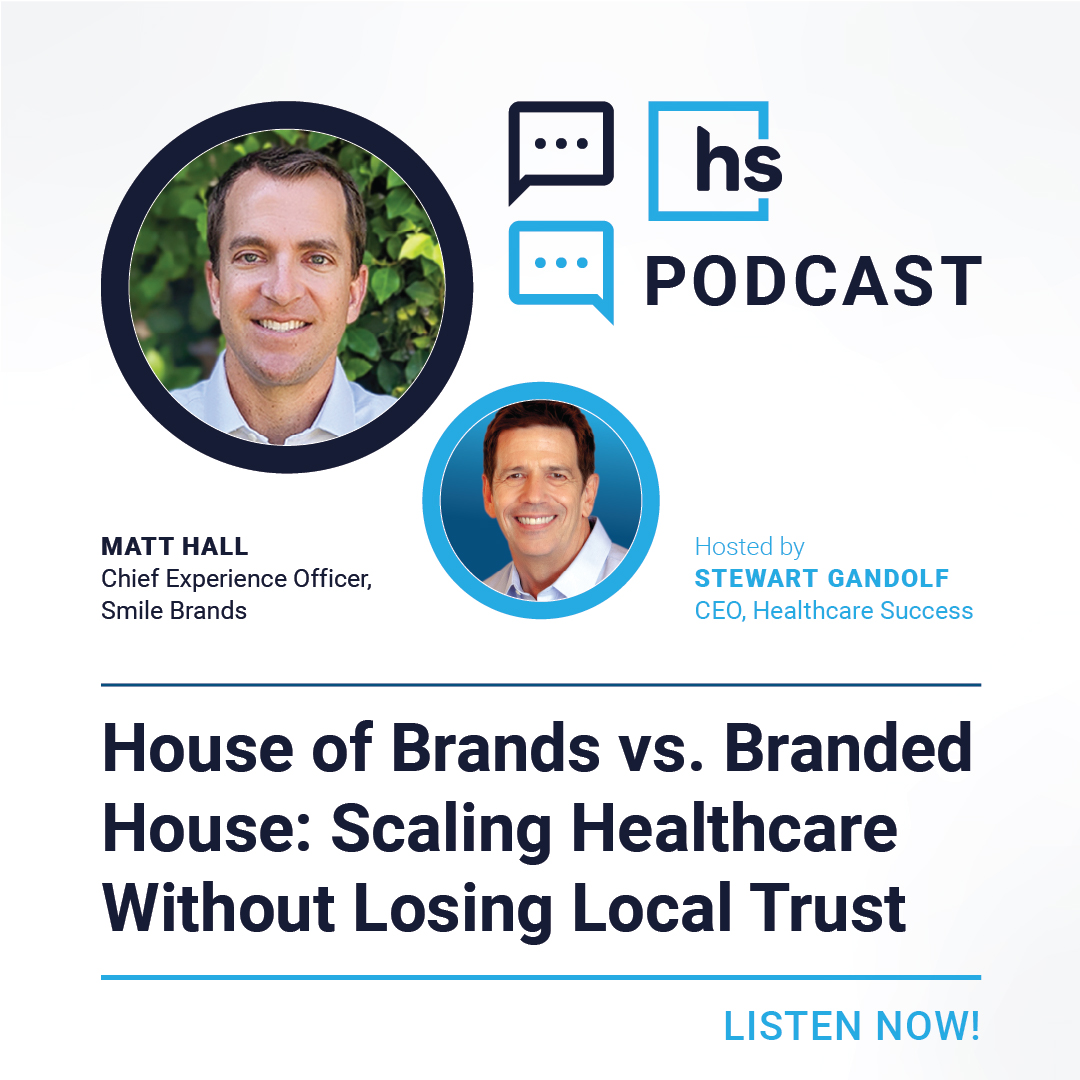
Matt Hall, Smile Brands

House of Brands vs. Branded House: Scaling Healthcare Without Losing Local Trust

Few healthcare executives have had a front-row seat to the growth of three major multi-location healthcare platforms. In this episode, Matt Hall shares lessons from Pacific Dental Services, Platinum Dermatology Partners, and Smile Brands, offering practical insights on brand strategy, acquisitions, culture, and how successful organizations balance enterprise scale with local relevance.
Read More

Leading Through the Next Crisis: Lessons from COVID That Apply Right Now

What can healthcare leaders learn from the COVID pandemic that still applies today? Amy Comeau reflects on leadership, communication, trust, and organizational resilience, offering practical lessons for navigating uncertainty, workforce challenges, and future crises.
Read More
reaching HCPs

Digital Media That Actually Reaches HCPs and Healthcare Decision-Makers

A practical guide to the channels, messaging, and targeting strategies healthcare organizations need to reach referring physicians, healthcare professionals, administrators, and executive decision-makers effectively.
Read More

Agencies, Consultants & Advisors

At Healthcare Success, we regularly partner with other agencies, consultants, and in‑house teams as part of a larger ecosystem rather than trying to replace them. We’re comfortable acting as a behind‑the‑scenes specialist, a strategic bolt‑on, or a visible collaborator—whatever best serves the mutual client and respects existing relationships. We most often support generalist agencies, niche […]
Read More
Read Our FAQs image

Do you work with healthcare organizations outside our state or outside the U.S.?

Yes. Healthcare Success works with healthcare organizations across the United States and in select international markets. Our team is built to support organizations with regional, multi-state, and multilocation growth needs, as well as certain international engagements. Do you work with healthcare organizations outside our state or outside the U.S.?
Read More
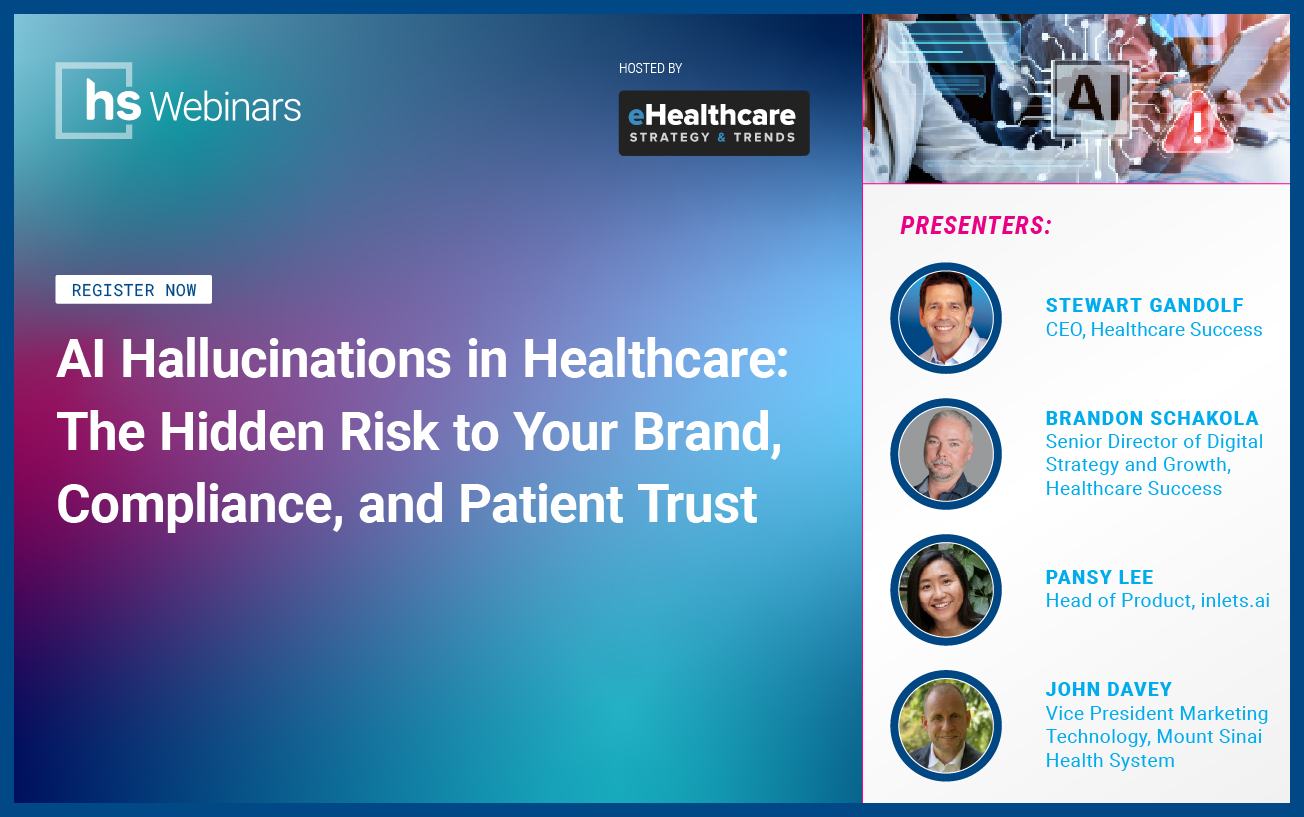
AI_Hallucinations-Webinar

AI Hallucinations in Healthcare: The Hidden Risk to Your Brand, Compliance, and Patient Trust

This session is part of AI in Healthcare Marketing Week, a virtual summit for healthcare marketers and digital strategists from eHealthcare Strategy & Trends. AI is rapidly becoming the front door to healthcare, shaping how patients discover providers, evaluate treatment options, and make care decisions. But as large language models increasingly sit between your organization […]
Read More
Richard Wong

Did AI Just Kill Marketing Tracking Attribution?

As AI-powered search changes how people discover and evaluate brands, traditional marketing attribution is becoming harder to trust. In this episode, Stewart Gandolf, Brandon Schakola, and Richard Wong discuss how AI is compressing the search funnel, why traffic is becoming a weaker KPI, and what marketers should focus on instead. They explore AI visibility, prompt tracking, media mix modeling, SEO measurement, and why authority and retrievability may matter more than clicks in the years ahead.From call center inefficiencies and EMR limitations to the role of data in driving change, they share practical strategies for improving patient access, increasing conversion, and turning these traditionally siloed teams into true collaborators.
Read More
Digital Media

Digital Media in the Age of AI: How Healthcare Leaders Should Rethink Paid Search, Paid Social, and Programmatic

AI search is changing how patients find care—and what digital media has to do to reach them. A strategic guide for healthcare leaders navigating paid search, paid social, and programmatic in 2026.
Read More
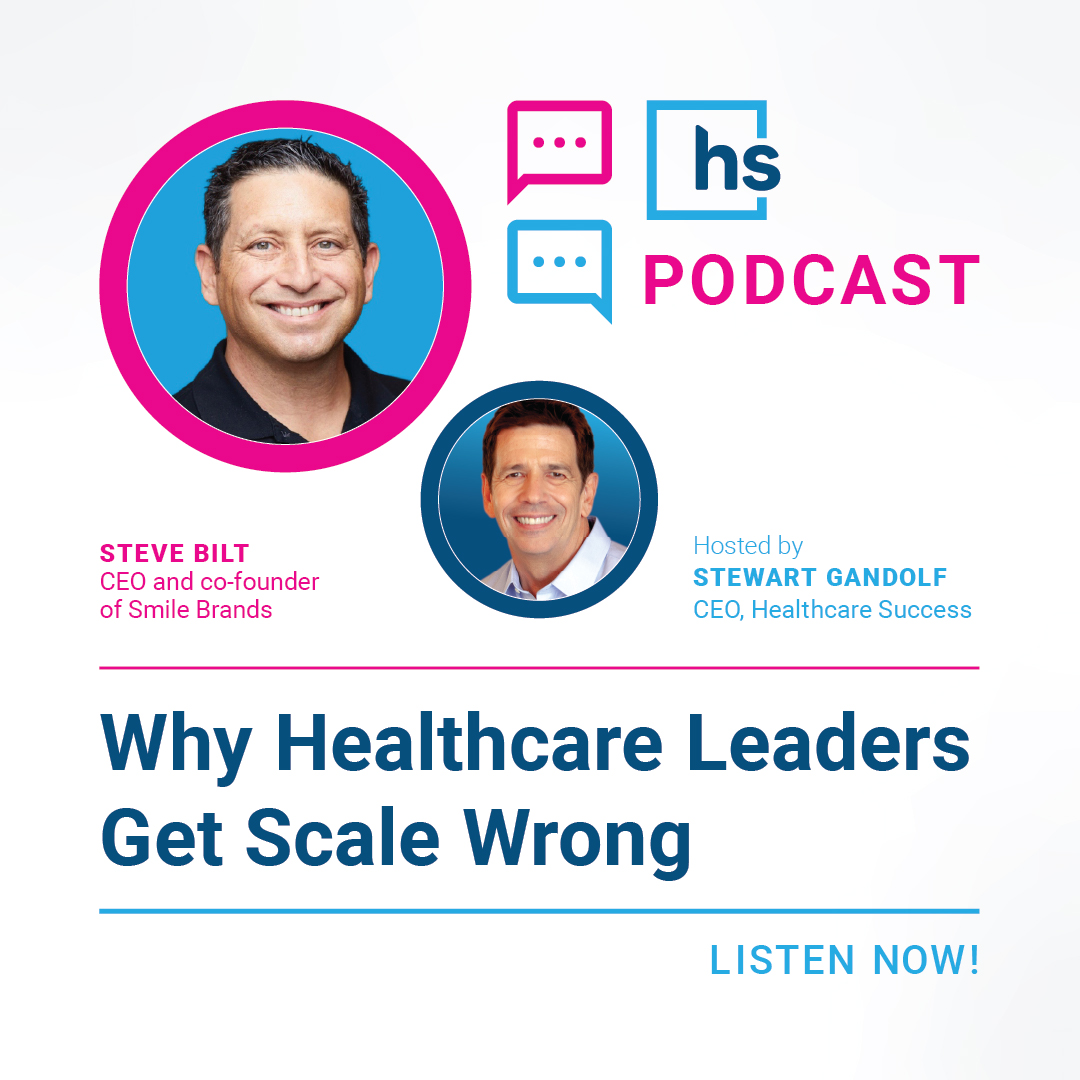
Steve Bilt, Smile Brands

Why Healthcare Leaders Get Scale Wrong

In Part 2 of Stewart Gandolf’s conversation with Smile Brands CEO Steve Bilt, dentistry becomes the case study for a much broader healthcare leadership lesson: sustainable growth comes from solving enduring market problems, reducing friction, and building systems that work before attempting to scale them. From call center inefficiencies and EMR limitations to the role of data in driving change, they share practical strategies for improving patient access, increasing conversion, and turning these traditionally siloed teams into true collaborators.
Read More
Nicole Vafadari

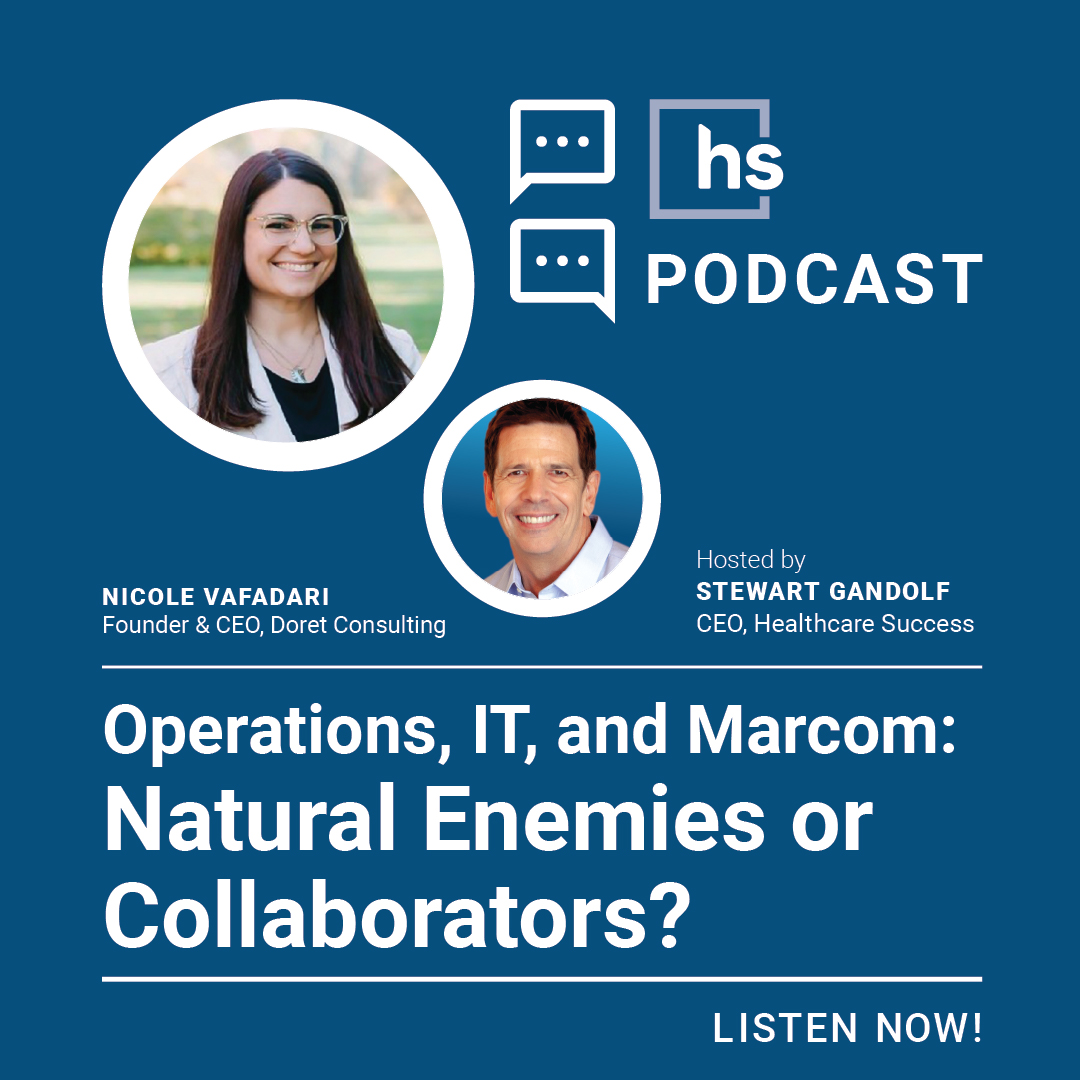
Operations, IT, and Marcom: Natural Enemies or Collaborators?

Healthcare organizations often invest heavily in marketing—but struggle to convert that demand into patient care due to disconnected systems and siloed teams. In this episode, Stewart Gandolf is joined by Nicole Vafadari, Founder of Doret Consulting, to explore how misalignment between marketing, operations, and IT creates friction in the patient journey—and what it takes to fix it. From call center inefficiencies and EMR limitations to the role of data in driving change, they share practical strategies for improving patient access, increasing conversion, and turning these traditionally siloed teams into true collaborators.
Read More

AI Without Oversight: Why Healthcare Content Can’t Be Left to the Machines

AI is transforming healthcare content—but it’s not a set-it-and-forget-it solution. In this episode, Stewart Gandolf is joined by Melanie Wilson and Mary Hayes to break down how AI is actually used inside a healthcare marketing agency, where it adds value, and where human expertise is still essential. From strategy and SEO to brand voice and patient safety, they explore why AI works best as an accelerant—not a replacement—in healthcare’s high-stakes, “your money, your life” environment.
Read More
Dr. Kenneth Holmen

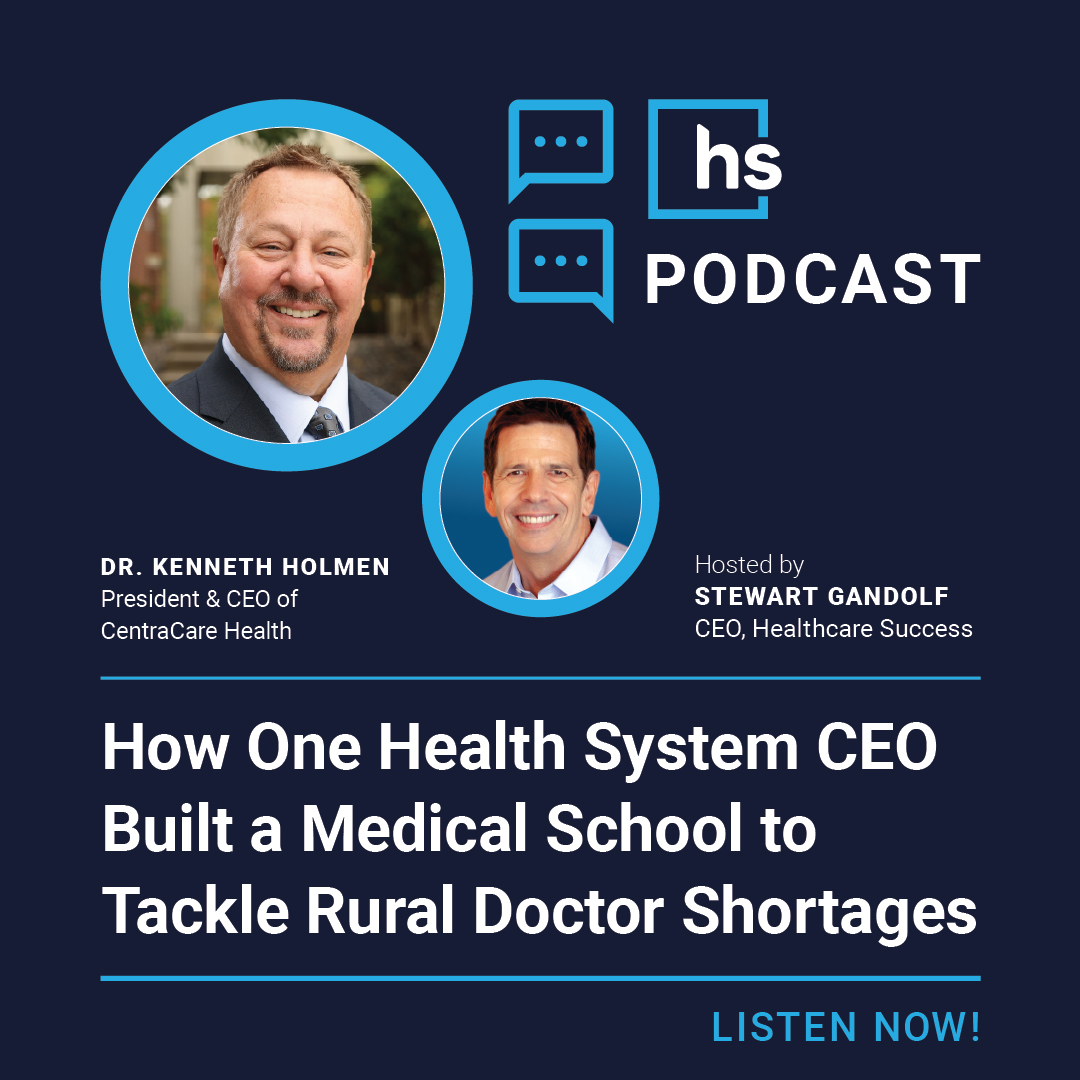
How One Health System CEO Built a Medical School to Tackle Rural Doctor Shortages

Rural healthcare systems across the U.S. are facing a growing physician shortage—and traditional solutions aren’t enough. In this episode, Stewart Gandolf is joined by Dr. Kenneth Holmen, President and CEO of CentraCare, to discuss how his organization is tackling the problem head-on by helping launch the first new medical school in Minnesota in over 50 years. From workforce shortages and aging populations to siloed systems and outdated thinking, they explore what’s driving the crisis—and how a new, community-centered model for education and healthcare delivery could help solve it.
Read More

TMS

TMS and interventional psychiatry are some of the most exciting growth lines in mental health—for you and for the patients you serve. For the right people, these treatments can change the trajectory of a life that has already been through meds and therapy and still isn't where it needs to be. For your platform, group, […]
Read More
Steve Bilt, Smile Brands

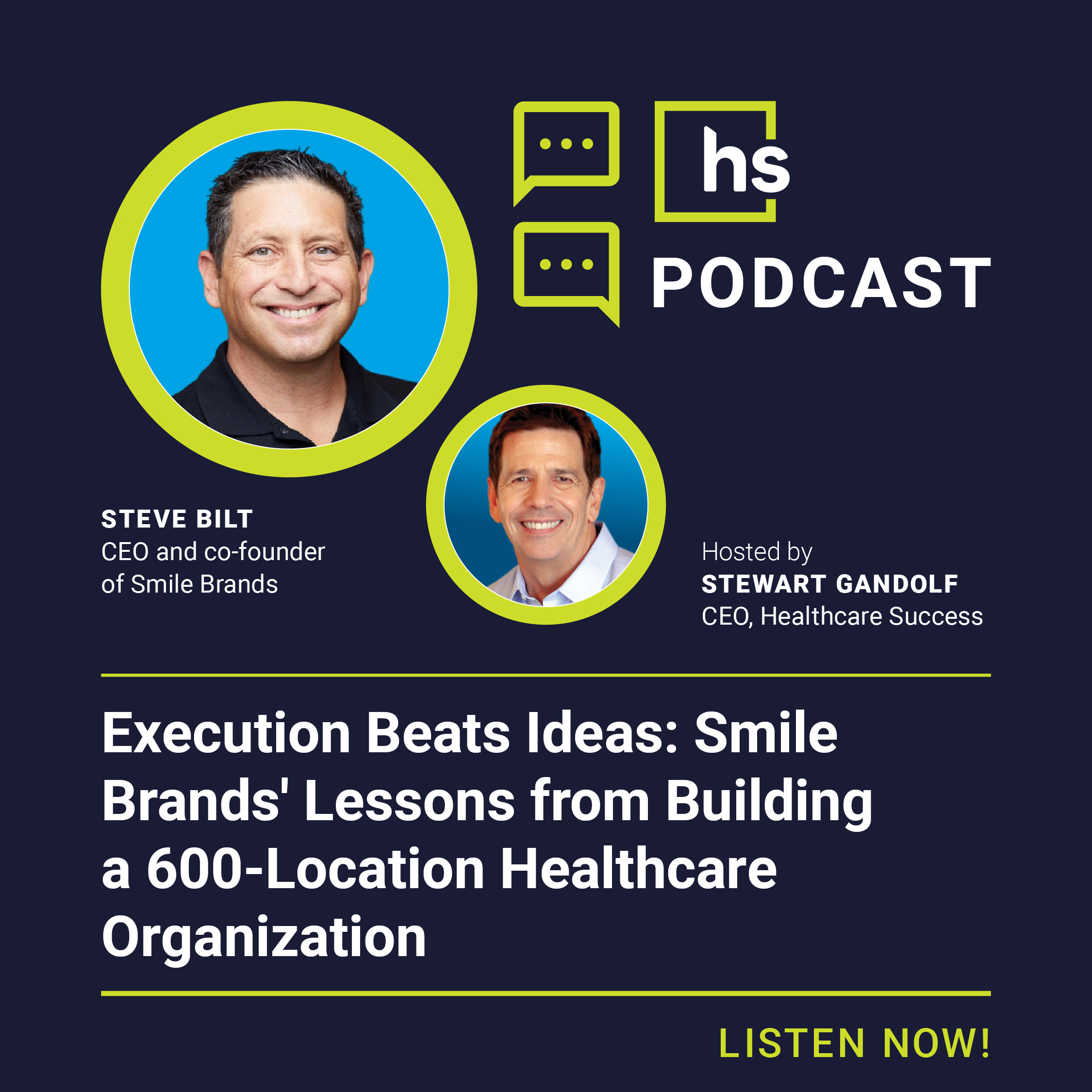
Execution Beats Ideas: Smile Brands’ Lessons from Building a 600-Location Healthcare Organization

Steve Bilt, CEO and co-founder of Smile Brands, joins Stewart Gandolf to discuss what it takes to scale a 600-location healthcare organization through disciplined execution, leadership alignment, culture, operational focus, and strategic decision-making. Drawing on 25 years of DSO leadership, Steve shares practical lessons on growth, technology adoption, acquisitions, organizational change, and creating sustainable enterprise value.
Read More
marketing engine

Underestimating a Successful Marketing Engine Could Cost You Millions

When healthcare marketing is working, it often fades into the background—and that's exactly when organizations are most likely to make costly mistakes. In this article, Stewart Gandolf explores why successful marketing programs are frequently underestimated, the risks of replacing specialized expertise with inexperienced resources, and how executive disengagement can undermine growth. He also examines the critical connection between marketing performance and patient access, highlighting how AI-powered call tracking, attribution, and patient access technologies are transforming the way healthcare organizations measure and improve patient acquisition.
Read More

Surgery marketing

Surgery is increasingly consumer-driven. Patients research surgeons, procedures, complication risks, and recovery timelines long before they ever see a referral slip—and they often have real options across hospitals, ASCs, health systems, and private groups. They expect clear information, social proof, and a smooth digital experience, not just a name handed to them in clinic. Healthcare […]
Read More

Women's health

Women's health is bigger than OB/GYN and pregnancy. Women expect care that follows them through every life stage—from first periods and contraception through fertility, pregnancy, postpartum, perimenopause, menopause, and healthy aging. They look for integrated support for hormones, sexual wellness, pelvic floor care, mental health, nutrition, and prevention, not a series of disconnected visits. Healthcare […]
Read More

Primary Care

Primary care is the front door of the healthcare system and one of its most financially pressured, operationally complex sectors. Family medicine and internal medicine practices manage acute visits, preventive care, chronic disease, value-based contracts, and telehealth—often across multiple locations and in partnership with health systems—while competing with retail clinics, virtual-only providers, and urgent care […]
Read More

Functional Medicine

Functional and integrative medicine are built for people who want more than a long life—they want years that are strong, clear, and fully lived. Healthspan, not just lifespan. More energy, sharper cognition, better metabolic health, hormonal balance, and the kind of vitality that makes the years ahead worth having. Your patients aren’t passive healthcare consumers. […]
Read More

Pediatrics

Pediatric practices sit at the intersection of family medicine, urgent care, telehealth, and public health. You manage everything from newborn care and vaccines to school and sports physicals, adolescent mental health, and late-night fevers—while competing with urgent cares, retail clinics, online advice, and misinformation, especially around vaccines. Healthcare Success is a pediatric marketing agency that […]
Read More

Nephrology

Nephrology and dialysis sit at the center of chronic disease management for patients with advanced kidney disease, hypertension, and diabetes. Nephrologists manage CKD progression, oversee in-center and in-home dialysis, coordinate vascular access, and often participate in transplant evaluation and follow-up—all while operating under tighter margins, value-based contracts, and growing expectations around home therapies. Healthcare Success […]
Read More

Men's Health

Men's health now lives across brick-and-mortar clinics, hybrid models, and pure telehealth brands. A patient can tap a few buttons and find Hims, Ro, Roman, BlueChew, Rex MD, Gameday Men's Health, and dozens of other platforms promising quick, discreet solutions for ED, Low T, hair loss, and more. The demand is real and growing. So […]
Read More

Interventional radiology

Interventional radiology sits at one of the most competitive intersections in medicine. IR groups are building minimally invasive programs that compete with surgery, vascular medicine, women's health, oncology, pain management, and office-based endovascular care—often within delivery models that give physicians more control over both the patient experience and the economics of growth. That opportunity is […]
Read More

Infusion Centers

Outpatient infusion is one of the fastest-growing areas of healthcare, driven by biologics, sustained pressure on hospital costs, and patients who would rather not spend a day in a hospital outpatient department or sit next to oncology patients when that setting isn’t the right fit. Outpatient infusion centers offer a calmer, more convenient experience for […]
Read More

Podiatry

Podiatry sits at the intersection of orthopedics, wound care, sports medicine, and chronic disease management. Your physicians treat everything from heel pain and bunions to sports injuries, diabetic foot complications, and limb-threatening wounds—often across multiple locations and in close collaboration with primary care, endocrinology, vascular, and wound care specialists. At the same time, you compete […]
Read More
Read Our FAQs image

How should private equity-backed platforms think about scaling digital media across multiple brands and markets?

Private equity-backed healthcare platforms should scale digital media with centralized strategy and governance, but local market execution, because each brand and location has different economics, competition, and growth potential. A platform model that treats all markets as interchangeable usually wastes spend and misses demand. Centralization is useful for setting budget rules, measurement standards, compliance processes, […]
Read More
Read Our FAQs image

What’s the role of digital PR and thought leadership in amplifying paid media and AI search visibility?

Digital PR and thought leadership make paid media more effective by increasing credibility, improving conversion efficiency, and strengthening the authority signals that influence AI search visibility. Paid campaigns can generate attention, but trusted content helps that attention turn into action. This matters more in the AI era because visibility is no longer determined only by […]
Read More
Read Our FAQs image

How do we tie digital media performance back to actual patient visits, downstream revenue, and physician referrals?

Healthcare organizations tie digital media to real business outcomes by connecting campaigns to scheduled appointments, qualified calls, patient value, and referral activity instead of relying only on clicks, form fills, or platform-reported conversions. That’s harder in healthcare than in most industries, but it’s still the standard that matters. The first challenge is that many healthcare […]
Read More
Read Our FAQs image

What guardrails do we need for compliant healthcare digital media, including claims, targeting, HIPAA, and platform policies?

Compliant healthcare digital media requires guardrails in targeting, ad claims, landing page experience, and tracking technology, because risk can enter the campaign long before an ad goes live. Compliance should be built into workflow, not treated as a last-minute legal review. The most urgent issue for many healthcare organizations is tracking technology. Standard advertising pixels […]
Read More
Read Our FAQs image

How does AI-driven targeting and optimization change how we plan and buy digital media in healthcare?

AI-driven targeting and optimization can improve healthcare media performance, but only when the inputs are well defined and the outcomes being optimized actually matter. AI doesn’t remove the need for strategy. It raises the stakes on getting strategy and measurement right. Platforms like Google and Meta now automate large parts of bidding, audience expansion, and […]
Read More
Read Our FAQs image

How should we adapt paid search and paid social for multi-location providers and service lines?

Multi-location healthcare organizations should treat each location as its own market, because every location is effectively a separate business with different demand patterns, competitors, and patient expectations. A campaign structure built only at the corporate level usually misses local search intent and local conversion behavior. In paid search, that means organizing campaigns or ad groups […]
Read More
Read Our FAQs image

What types of creative and messaging perform best in healthcare digital campaigns today, especially short-form video?

Authentic, specific, trust-building creative performs best in healthcare digital campaigns, especially in short-form video. Patients respond more strongly to content that feels real and useful than to polished but generic brand advertising. In practice, that usually means physician-forward or staff-forward content. A doctor answering a common question, explaining what to expect from a procedure, or […]
Read More
Read Our FAQs image

How do we use digital media to support both brand trust and performance, including appointments and referrals, at the same time?

Healthcare digital media works best when brand building and performance marketing are planned together, because trust is what makes conversion possible in healthcare. Patients rarely move from complete unfamiliarity to scheduling a complex procedure after seeing a single ad. They convert more efficiently when they recognize the brand, understand the offering, and feel confidence in […]
Read More
Read Our FAQs image

What mix of channels works best for healthcare marketing in 2026?

The best channel mix in healthcare usually starts with paid search and paid social, then adds programmatic display and connected TV where budgets and goals support broader reach. There is no universal formula, but most organizations perform best when they concentrate investment in a few channels with clear roles rather than spreading budget thinly across […]
Read More
Read Our FAQs image

How should healthcare organizations rethink digital media strategy in light of AI search and collapsing patient journeys?

Healthcare organizations should rethink digital media as a full-funnel system that builds trust earlier and captures demand later, because AI search has compressed the traditional patient journey. Patients often get initial answers from Google AI Overviews, ChatGPT, or Perplexity before they ever visit a provider's website, which means digital media can no longer assume awareness […]
Read More
Read Our FAQs image

Digital Media

Digital media in healthcare has never been more powerful—or more complicated. AI search is compressing patient journeys, HIPAA requirements are reshaping how campaigns are tracked and targeted, and the gap between organizations that can connect media spend to actual patient revenue and those that can’t is growing wider. These FAQs answer the questions healthcare leaders […]
Read More
Read Our FAQs image

Should we use AI to create social content for healthcare organizations

AI is a legitimate and useful tool for social content production in healthcare—for the right tasks, with the right oversight. Where AI adds real value: drafting post copy for human review and editing, generating multiple creative variations for A/B testing, repurposing long-form content into social formats, suggesting caption options for photos and video, and handling […]
Read More
Read Our FAQs image

What role does social media play in reputation management, and how should we handle negative comments and reviews?

Social media is now a front-line reputation channel for healthcare organizations, and how an organization responds to negative comments, reviews, and public criticism is as visible as the content it publishes. The starting point is distinguishing between different types of negative engagement. A patient complaint in a comment or review requires a prompt, HIPAA-compliant response […]
Read More
Read Our FAQs image

How do we coordinate social media with SEO, AI search, and paid media so they reinforce each other?

Social media, SEO, AI search visibility, and paid media are most effective when they’re coordinated around a shared content strategy rather than managed as separate channel silos. The connections between them are direct and compounding. Strong organic social content—particularly video—generates engagement signals that contribute to brand authority, which in turn supports SEO and AI search […]
Read More
Read Our FAQs image

How do we measure social media's real impact beyond likes and followers?

Likes, followers, and impressions are visibility indicators, not business outcomes. The measurement framework for social media should connect activity to the goals the organization actually cares about—and those goals differ depending on whether the investment is in organic or paid, and what the campaign is designed to do. For paid patient acquisition campaigns, the relevant […]
Read More
Read Our FAQs image

How should physicians, executives, and service lines participate in social without creating compliance or brand risk?

Physician and executive participation in social media is one of the highest-value activities a healthcare organization can invest in—and one of the most commonly mismanaged. When done well, physician content builds trust, drives patient acquisition, and establishes the organization as a credible voice in its specialty. When done without guardrails, it creates compliance exposure, brand […]
Read More
Read Our FAQs image

How do we handle HIPAA, privacy, and clinical accuracy when creating social content?

HIPAA compliance in social media requires treating patient information with the same rigor applied to any other communication channel—and understanding that the risks on social are distinct. Patient comments on posts, direct messages, and photo tags can all introduce PHI into public or semi-public spaces in ways that require immediate attention. The foundational rule is […]
Read More
Read Our FAQs image

What types of content and formats perform best for healthcare on social

Short-form video consistently outperforms static content across healthcare social platforms, particularly for awareness and top-of-funnel engagement. A 30- to 90-second video in which a physician directly addresses a patient concern, explains a procedure, or introduces themselves generates significantly more reach and engagement than a graphic or stock photo post on the same topic. The content […]
Read More
Read Our FAQs image

How do we use social media differently for patient audiences vs. HCP and B2B audiences?

Social media strategy for patient audiences and HCP or B2B audiences differs fundamentally in platform, content, tone, and objective—and organizations that try to serve both from the same campaign consistently underperform on both. For patient audiences, the primary platforms are Facebook, Instagram, and YouTube. Content should be accessible, visually engaging, and education-first—building awareness and trust […]
Read More
Read Our FAQs image

Which social platforms matter most now for hospitals, medical groups, and behavioral health organizations?

The social platforms that matter most for healthcare organizations in 2026 depend on the audience being reached and the goal being served. For patient-facing brand building and paid patient acquisition, Facebook and Instagram remain the dominant platforms. Their combined user base spans the full range of healthcare consumers, and Meta's ad targeting capabilities are the […]
Read More
Read Our FAQs image

What should healthcare organizations realistically expect from social media in 2026

Social media in 2026 serves three distinct functions for healthcare organizations: brand building and community presence, patient acquisition support, and recruiting—and realistic expectations differ for each. For brand awareness, social remains one of the most cost-effective ways to maintain visibility and trust with existing patients, prospective patients, and the community a healthcare organization serves. For […]
Read More
Read Our FAQs image

How much can organic social realistically accomplish for a healthcare organization in 2026

Organic social in 2026 has meaningful limitations on reach but remains valuable for brand trust, culture, physician visibility, and recruiting—provided the organization is willing to be a genuine content partner. Organic reach on platforms like Facebook and Instagram is low without paid amplification, typically reaching 2% to 5% of followers for a given post. That […]
Read More
Read Our FAQs image

What’s the difference between organic social, paid social, and boosted posts

Organic social, paid social, and boosted posts are three distinct approaches to social media, each with different reach, cost, and purpose. Organic social refers to content a healthcare organization publishes on its social profiles without paying to distribute it—posts, stories, videos, and updates that reach followers and anyone who engages with or shares them. Paid […]
Read More
Read Our FAQs image

Social Media

Social media is one of the most misunderstood channels in healthcare marketing. Some organizations treat it as an afterthought delegated to whoever has time. Others invest in it without a clear sense of what it can and can’t realistically accomplish. The gap between those two extremes is where most of the strategic questions live. These […]
Read More

Lab & At-Home Diagnostics Marketing

Few healthcare categories are as complex to market as lab and at-home diagnostics. You’re managing consumer acquisition, physician and provider ordering relationships, health system partnerships, retail distribution, and in some cases payer positioning—all at the same time. Each of those audiences requires a different message, a different channel strategy, and a different definition of success. […]
Read More
1 2 3 4 … 47
© 2026 Healthcare Success, LLC. All rights RESERVED.