Organic Growth Podcast: Organic Growth vs. Roll-Ups: What Buyers Really Value in Healthcare







Recorded live at the McGuireWoods Healthcare Private Equity & Finance Conference, this episode of the Organic Growth Podcast takes a buyer’s-eye view of growth in healthcare.
Stewart Gandolf speaks with Barry Freeman, Managing Director at Lincoln International, about how private equity firms and strategic buyers are evaluating healthcare companies in today’s market.
While many organizations have grown through acquisitions, buyers are increasingly focused on what’s underneath that growth. How much is truly organic? And can it be sustained?
The answer to those questions can significantly impact valuation—and ultimately, the success of a transaction.
Why Listen?
- Understand how buyers differentiate organic growth vs. acquisition-driven growth
- Learn why organic growth is often more valuable and less risky
- Discover the key components of a strong organic growth story
- See how technology and AI are becoming central to diligence and valuation
Key Insights and Takeaways
- Buyers Are Disaggregating Growth to Find the Real Story.
Strong top-line growth isn’t enough. Buyers are increasingly breaking down performance to understand how much growth comes from acquisitions versus same-store, organic performance. Companies that rely too heavily on M&A without a clear organic story may face valuation pressure. - Organic Growth Is More Valuable Than Acquired Growth.
Organic growth leverages existing infrastructure—locations, teams, and systems—allowing incremental revenue to flow more efficiently to the bottom line. In contrast, acquisitions require capital investment and introduce integration risks, making organic growth inherently more attractive. - A Strong Organic Growth Strategy Has Multiple Layers.
The most compelling growth stories go beyond a single lever. They include same-store growth, expansion within existing markets, de novo locations, and the addition of complementary services. Together, these layers create a scalable and sustainable growth model.
4. Sophistication in Marketing and Operations Is Increasing.
Healthcare growth has evolved from simple referral strategies to highly sophisticated approaches, including digital marketing, payer strategies, and specialized clinical programs. Organizations that invest in these capabilities are better positioned to grow and compete.
5. Technology Strategy Is Now a Core Part of Valuation.
Buyers are asking deeper questions about technology—especially AI. It’s no longer enough to have strong financials; organizations must demonstrate how they are using or planning to use technology to drive efficiency, growth, and differentiation.
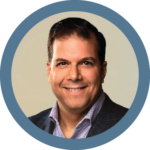
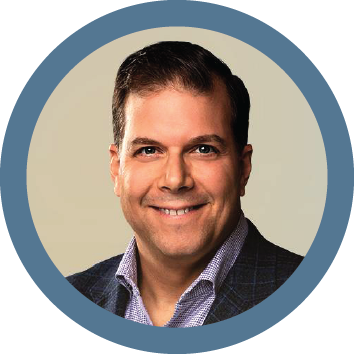
Barry Freeman
Managing Director, Healthcare, at Lincoln InternationalSubscribe for More
Don’t miss future insights—subscribe to our blog and join us on LinkedIn: Stewart Gandolf and Healthcare Success.
Note: The following AI-generated transcript is provided as an additional resource for those who prefer not to listen to the podcast recording. It has been lightly edited and reviewed for readability and accuracy.
Read the Full Transcript
Stewart Gandolf (Healthcare Success): Welcome again to the Healthcare Success Podcast. We’re talking about organic growth here at the McGuireWoods Healthcare Private Equity & Finance Conference. And a shoutout to our content partners and friends over at Levin Associates.n this podcast, we’re speaking with Barry Freeman. He’s Managing Director at Lincoln International. Welcome to the podcast.
Barry Freeman (Lincoln International): Thank you, Stewart. Great to be here.
Stewart Gandolf (Healthcare Success): So, Barry, you’ve been around this space for a while.
Barry Freeman (Lincoln International): A while I care to admit, but yes.
Stewart Gandolf (Healthcare Success): We were just talking offline. To help our listeners understand, you’re an investment banker and healthcare is your sector. Tell me a bit about what you do.
Barry Freeman (Lincoln International): Sure. I’m a Managing Director with Lincoln International. I’m based here in Chicago. I’ve spent about 32 years focusing on two main sectors.
The first is healthcare services, particularly care delivery in the home. That includes hospice, skilled home nursing, personal care services, home infusion, and really any kind of care delivered outside of a facility.
The second area is payer services, which includes health plan outsourcing, payer BPO, employer-sponsored benefits, third-party administrators, and cost containment solutions that support how employers fund healthcare for their employees.
Stewart Gandolf (Healthcare Success): Very good. So, Barry, we’ve been talking over the last couple of days about organic growth. This idea was inspired by a large private equity player I met with recently here in Chicago. They emphasized how important organic growth is—not just acquisitions.
As you think about this, can you share examples where organic growth played a big role in valuation or exit outcomes?
Barry Freeman (Lincoln International): Sure. It’s a great point. Increasingly over the last several years, in M&A, one of the big focal points in due diligence has been understanding the composition of growth.
A lot of companies have come to market with strong growth driven by acquisitions—roll-ups or private equity-backed platforms that have aggregated growth. But buyers want to disaggregate that and understand how much of that growth is truly organic versus acquisition-driven.
There’s an understanding that businesses with a strong organic growth story are inherently more valuable. Aggregated growth can sometimes mask weaker same-store or organic performance. So companies that rely primarily on acquisitions without a strong organic story are often discounted.
Stewart Gandolf (Healthcare Success): That makes sense. If you combine a bunch of companies that aren’t performing well, you just get a bigger company that still isn’t performing well.
Barry Freeman (Lincoln International): That’s right. It’s about feeding the machine to drive growth versus having something that can scale organically.
Organic growth is more accretive because you’re leveraging existing infrastructure—your locations, your people, your systems. That incremental revenue flows more directly to the bottom line.
With acquisitions, you’re paying a multiple of EBITDA to buy that growth. And you also take on integration risk—systems, culture, operations. Organic growth doesn’t come with those risks because you’re already operating within your existing platform.
Stewart Gandolf (Healthcare Success): That’s really helpful. As you think about sophisticated buyers, how much are they digging into organic growth during diligence?
Barry Freeman (Lincoln International): Very much so. It really behooves any seller to have a clear and multifaceted organic growth story.
I think about it like concentric circles. At the center is same-store growth—getting more out of your existing locations and customers. Then you move outward to adding new clients within your current geographies. From there, it’s de novo expansion—opening new locations in adjacent markets. And then there’s adding complementary services that you can cross-sell to your existing customer base.
All of those elements together create a compelling organic growth story.
Stewart Gandolf (Healthcare Success): I like that framework. When we talk to clients, we think about similar things—brand, marketing, patient experience, referrals, and cross-selling.
In areas like home health or senior care, growth can come from consumer demand or professional referrals. As you think about that space, what levers have you seen work well?
Barry Freeman (Lincoln International): We’ve seen a lot of change in the home healthcare space over the years.
If you go back to the late 1990s, the referral model was very simple. People would show up at hospitals with donuts or flowers to build relationships with discharge planners.
Today, it’s much more sophisticated. You’re seeing digital marketing, search engine optimization, specialized clinical programs, and payer-facing strategies to develop preferred referral relationships.
That level of sophistication creates opportunity, but it also requires more resources and expertise to execute effectively.
Stewart Gandolf (Healthcare Success): We’ve seen that too. Even years ago, smaller operators struggled to keep up with that level of sophistication.
Barry Freeman (Lincoln International): Exactly. And now technology is taking it even further.
I recently spoke with a home care provider who is using AI in three different ways. They’re using AI for marketing outreach and identifying potential clients. They’re using it to screen caregiver candidates during recruitment. And they’re also using it as a digital companion for patients—helping reduce loneliness while monitoring for signs of cognitive decline or changes in speech patterns.
So you’re seeing technology enhance both operations and clinical delivery.
Stewart Gandolf (Healthcare Success): That’s incredible. It really highlights how scale enables those kinds of investments.
Barry Freeman (Lincoln International): Exactly. Scale allows organizations to invest in better marketing, better operations, and better systems. Smaller operators just don’t have the resources to do that at the same level.
Stewart Gandolf (Healthcare Success): Have you seen examples of companies that have executed organic growth particularly well?
Barry Freeman (Lincoln International): Yes. I worked on a home healthcare company that grew entirely organically—from about $10 million to $45 million in EBITDA over a five-year period.
They were very strong at entering new markets and expanding locally. They focused on building community relationships and educating families about their services. They also had a strong recruitment engine and used technology to identify both clients and caregivers.
They were very disciplined in how they executed, and they were able to scale efficiently without relying on acquisitions.
Stewart Gandolf (Healthcare Success): That’s a great example.
As we wrap up, what advice would you give to organizations thinking about growth or preparing for a sale?
Barry Freeman (Lincoln International): Organic growth is critical, but increasingly, so is having a clear technology strategy.
AI is a major focus in diligence today. Buyers want to understand how technology will impact the business over time and how the company is preparing for that.
You don’t necessarily need a fully built technology platform today, but you do need a strategy. You need to be able to articulate where disruption could occur and how you plan to address it.
So in addition to organic and inorganic growth strategies, having a well-defined technology roadmap is now essential.
Stewart Gandolf (Healthcare Success): I see that as well. Conversations today often focus on tech stack and capabilities, not just revenue and growth.
Barry Freeman (Lincoln International): Exactly. Healthcare—especially home-based care—is becoming increasingly tech-enabled. Conferences that used to be focused on operations now look more like technology conferences.
Stewart Gandolf (Healthcare Success): Barry, this was great. Thanks so much.
Barry Freeman (Lincoln International): Thanks, Stewart. I appreciate it.