Organic Growth Podcast: Organic Growth Through a Lender’s Lens: What Actually Drives Value in Healthcare








Recorded live at the McGuireWoods Healthcare Private Equity & Finance Conference, this episode of the Organic Growth Podcast examines healthcare growth from a lender’s perspective.
Stewart Gandolf sits down with Donika McKelvie of Sunwest Bank to discuss how financing decisions are made—and why organic growth is increasingly important in underwriting.
While acquisitions have long driven expansion, lenders are focused on something more fundamental:
Can this business generate sustainable, predictable cash flow?
From payer mix to marketing investment, this conversation highlights how lenders evaluate risk, opportunity, and long-term viability in healthcare organizations.
Why Listen?
- Understand how lenders evaluate organic growth and financial performance.
- Learn what drives confidence in cash flow and repayment.
- See how factors like payer mix and marketing investment are assessed.
- Discover what operators need to prepare for financing or exit.
Key Insights and Takeaways
- Lenders Focus on Cash Flow, Not Just Growth.
At the end of the day, lending decisions are driven by one question: can the business reliably generate cash flow? Growth is important—but only if it translates into predictable revenue and repayment ability. - Organic Growth Signals Stronger, More Sustainable Performance.
Founder-led and operationally strong organizations often demonstrate organic growth through consistent performance and smart expansion. These businesses are typically more attractive to lenders because they show discipline and long-term viability. - Payer Mix Is a Critical—and Often Overlooked—Lever.
The composition of payer mix can significantly impact risk and profitability. Lenders evaluate whether organizations are overly exposed to lower-reimbursing payers and whether their mix aligns with sustainable growth.
4. Marketing Investment Must Be Understood, Not Feared.
For many healthcare organizations—especially consumer-driven models—marketing is essential to growth. Lenders don’t automatically view it as a risk, but they do expect clear measurement and evidence that it drives patient acquisition and revenue.
5. Preparation and Financial Clarity Are Essential for Growth and Exit.
Organizations seeking capital or preparing for a transaction must have a clear story supported by strong financials. That includes reliable reporting, defensible projections, and readiness for third-party validation such as quality of earnings reviews.
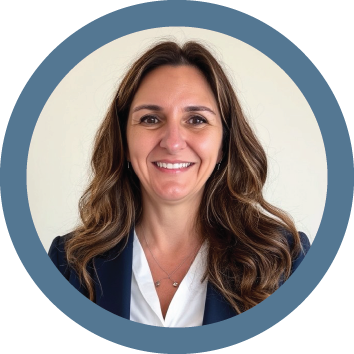
Donika McKelvie
Senior Managing Director, National Healthcare, Sunwest BankSubscribe for More
Don’t miss future insights—subscribe to our blog and join us on LinkedIn: Stewart Gandolf and Healthcare Success.
Note: The following AI-generated transcript is provided as an additional resource for those who prefer not to listen to the podcast recording. It has been lightly edited and reviewed for readability and accuracy.
Read the Full Transcript
Stewart Gandolf (Healthcare Success): Hi again, and welcome to the Healthcare Success Podcast. We’re live at the McGuireWoods Private Equity and Healthcare Conference, talking about organic growth. We’re speaking with Donika McKelvie from Sunwest Bank—and I also want to shout out our friends at Levin Associates, who helped put this event together.
First of all, welcome, Donika.
Donika McKelvie (Sunwest Bank): Thank you, Stewart. Great to be here.
Stewart Gandolf (Healthcare Success): We were just talking offline and decided to go a little off script and dive into organic growth. To set this up, over the past few years, so much growth has been driven by roll-ups and M&A. I was just speaking with an investment banker who said that combining multiple smaller companies into one larger entity isn’t necessarily as exciting anymore.
So organic growth has become much more important. Tell me about your experience in this space.
Donika McKelvie (Sunwest Bank): Sure. As a lender, I helped launch a healthcare lending platform at a West Coast bank about 14–15 months ago. The timing was great because we saw legislative changes that created ripple effects across healthcare.
Whenever there’s major policy change, there are winners—and we’ve positioned ourselves to support those winners. By “winners,” I mean providers who are already strong operators. They deliver quality care, think ahead about value-based care, and are expanding access to patients as payer models evolve.
There’s always opportunity for organic growth. Healthcare spending is projected to reach $5.3 trillion this year, which means there’s significant demand and growth potential. Multiple generations are actively using healthcare services, and as lenders, we aim to support providers who are positioned to meet that demand.
Stewart Gandolf (Healthcare Success): When you evaluate these organizations, is organic growth something you specifically look for in their business model?
Donika McKelvie (Sunwest Bank): Absolutely. And it’s not limited to private equity-backed companies. I really like founder-led organizations that are on a trajectory toward growth and may eventually have an equity event.
These operators often grow organically because they’re strong at what they do and focused on patient care and outcomes. Sometimes they pursue acquisitions along the way, but organic growth is a core driver.
Stewart Gandolf (Healthcare Success): What types of loans and sectors are you working in?
Donika McKelvie (Sunwest Bank): We’re fairly broad—we’re sector-agnostic and lend nationally. That gives us visibility into which providers are performing well.
We’ve seen some really interesting opportunities in areas like hormone replacement therapy (HRT), which is gaining more attention for both men and women. Many of these businesses are leveraging technology, including telehealth and telemedicine.
We’re also seeing strong activity in tele-mental health and across the broader mental health spectrum—psychiatry, psychology, substance use disorder, eating disorders. There’s a lot of innovation and demand in these areas.
Stewart Gandolf (Healthcare Success): We work in many of those same sectors—telehealth, mental health, eating disorders, addiction. A lot of those are consumer-direct, which brings me to marketing.
Marketing can be a significant expense—sometimes $100,000 to $200,000 per month or more. As a lender, do you see that as a concern, or do you understand the role it plays?
Donika McKelvie (Sunwest Bank): We absolutely understand it. If a lender doesn’t understand how a business acquires and retains patients, they may not be the right partner.
We look at how marketing investment is measured and whether it’s generating results. Marketing is critical—whether it’s digital, social media, print, or word of mouth—but it has to translate into patient acquisition, care delivery, and outcomes.
Stewart Gandolf (Healthcare Success): That’s encouraging. In mental health especially, things have evolved a lot. There’s still stigma, but it’s nothing like it used to be. And the field itself is still evolving in terms of how conditions are treated together.
Donika McKelvie (Sunwest Bank): That’s right. Mental health is still fragmented, and we’re continuing to learn about comorbidities—how conditions like anxiety, depression, and substance use overlap. Providers are still figuring out how to treat these holistically.
Stewart Gandolf (Healthcare Success): When you evaluate a business operationally, what metrics matter most?
Donika McKelvie (Sunwest Bank): As a bank, our primary concern is repayment, so we focus heavily on cash flow—how revenue is generated, how it converts to accounts receivable, and ultimately to cash.
We look at same-store performance and historical trends, as well as projections. If we see a “hockey stick” growth projection, we need to understand the assumptions behind it. Sometimes it’s driven by acquisitions, which is fine—but we still stress-test those projections.
We also analyze reimbursement trends and perform sensitivity analysis to understand how changes could impact performance. In many ways, our approach is similar to private equity, but with a lender’s perspective.
Stewart Gandolf (Healthcare Success): That makes sense. As we wrap up, what advice would you give to operators thinking about organic growth, financing, or preparing for an exit?
Donika McKelvie (Sunwest Bank): Have a clear, well-documented story. Your financials should be solid and reliable—ideally accrual-based and prepared by a CPA. While audits are preferred, not every company can justify the cost, so be prepared for a quality of earnings review.
You should also expect third-party validation—collateral exams, clinical reviews, and other diligence processes. These aren’t meant to be intrusive—they’re simply part of verifying the investment.
Ultimately, if you’re passionate about your business, that will come through. But you need the documentation and data to support your story.
Stewart Gandolf (Healthcare Success): Great advice. Thank you, Donika—and congratulations on all your success.
Donika McKelvie (Sunwest Bank): Thank you. I appreciate it.