Why Healthcare Leaders Get Scale Wrong








Healthcare consolidation is often discussed in terms of size, ownership structure, or capital strategy. But in this episode, Smile Brands CEO Steve Bilt makes a more fundamental point: organizations create lasting value when they solve enduring market problems better than the alternatives.
Using dentistry as the case study, Steve traces the market’s long-standing attempt to solve problems around access, affordability, fear, convenience, provider support, and patient experience. The history of DSOs, including the surprising story of Painless Parker, becomes a lens for understanding a larger healthcare reality: markets continue searching for solutions when existing models leave too many people underserved.
One of Steve’s strongest insights is that scale itself does not create value. Organizations don’t become successful because they get big. They become big because they first build operating models that work. As Steve puts it, “Economies of scale come from economies that you perfect, that you then apply at scale, not the other way around.” For healthcare leaders, investors, and operators, that distinction matters. Growth without systems can create disorganization, complexity, and waste rather than enterprise value.
The episode also explores why organic growth has become such a critical priority. Steve explains that sustainable value creation comes from improving return on existing assets, increasing operational leverage, improving patient experience, and creating better outcomes without constantly adding new capital. In healthcare, that often means addressing friction points that have persisted for years: unanswered phones, difficult scheduling, insurance confusion, unclear patient communication, incomplete treatment acceptance, and inconsistent follow-up.
Technology, including AI and automation, enters the conversation not as a trend but as a practical tool for reducing friction. The opportunity is not simply to be more “digital.” It is to make healthcare easier for patients, more efficient for teams, and more scalable for organizations.
Steve also challenges ideological debates about healthcare delivery models. His argument is that healthcare needs multiple market solutions because patients have different needs, expectations, access points, and financial realities. Independent practices, DSOs, and other multi-location models can all play meaningful roles when they solve real problems well.
For healthcare executives, private equity leaders, entrepreneurs, and multi-location operators, this episode is ultimately about disciplined growth: solve meaningful problems, build systems that work, remove friction, execute completely, and only then scale.
WHY LISTEN
In this episode, listeners will learn:
• Why healthcare leaders should focus on enduring market problems rather than short-term industry trends
• How scale can create value only when strong systems, processes, and operating models already exist
• Why organic growth is one of the most important drivers of sustainable enterprise value
• How reducing operational friction can improve patient experience, provider efficiency, and financial performance
• Why healthcare needs multiple delivery models to serve different patient needs and market realities
Key Insights and Takeaways
- Lasting organizations solve problems the market has been trying to address for years, not just the trends attracting attention in the current cycle.
- Scale doesn't create value by itself. Better systems, better execution, and better operating models create the foundation that can later be scaled.
- Organic growth improves return on capital because it creates more value from existing assets rather than relying solely on acquisitions or new investment.
- Healthcare organizations create meaningful value when they reduce friction in the patient journey, including scheduling, phone access, insurance verification, financing, education, and follow-up.
5. Technology should be evaluated by whether it improves access, convenience, communication, and operational efficiency, not by whether it sounds innovative.
6. Market-based healthcare solutions matter because not every patient wants or can access the same delivery model.
7. Execution discipline is a CEO-level growth skill. Too many 80% complete initiatives can consume capital without creating value.
8. Small operational improvements, when applied at scale, can produce significant financial, cultural, and patient experience benefits.
P.S. If you happen to be going to Dykema 2026, be sure to catch Steve’s keynote where he will drill down on some of the topics we cover in the podcast.

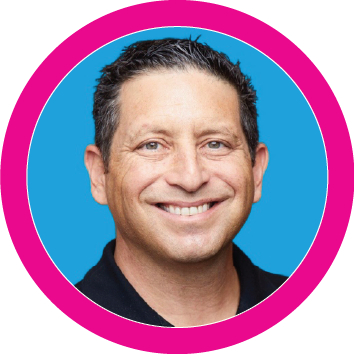
Steve Bilt
CEO, Smile BrandsSubscribe for More
Don’t miss future insights—subscribe to our blog and join us on LinkedIn: Stewart Gandolf and Healthcare Success.
Note: The following AI-generated transcript is provided as an additional resource for those who prefer not to listen to the podcast recording. It has been lightly edited and reviewed for readability and accuracy.
Read the Full Transcript
Stewart Gandolf (Healthcare Success): Welcome to the Healthcare Success Podcast, and I am pleased again to host Steve Bilt, CEO of Smile Brands. Welcome back, Steve.
Steve Bilt (Smile Brands): Thank you, Stewart. It’s great to be back.
Stewart Gandolf (Healthcare Success): Yeah, I love it. And our last podcast was awesome. And you’re about to travel to ADSO and shortly after that to Dykema, two of the biggest conferences, probably the biggest for sure, in the world of DSOs. And today we’re gonna talk about something different. And I think this applies to a lot of our listeners, the history of DSOs and the role of independents and the history of multi-location practices and how this all fits together. And of course, there is lots of consolidation across healthcare.
And, you know, in healthcare, I don’t know, Steve, some people have opinions on what’s good and not. You may have noticed that.
Steve Bilt (Smile Brands): Healthcare and everything else for sure. Yeah, there’s a lot of platforms out there to get opinions out.
Stewart Gandolf (Healthcare Success): Yeah, for sure. You think? So anyway, I think it’s gonna be really exciting to hear your keynote. And when we talked about this in the pre-calls, there’s a history there that most people aren’t really aware of. Like how did this stuff all evolve? Everything starts from somewhere. But DSOs might be surprising. So let’s just talk a little bit about the history of this whole world that we’re talking about.
Steve Bilt (Smile Brands): Sure. And I think to answer your, or at least to speak in the direction of your other point with regard to other sectors as well, is I’ve studied the DSO space and been in it a long time, but also prepping for a keynote to say, where are we today and where is it going? What I really settled upon, it was something that I’ve premised for as long as I’ve been in the space, but I’ve really settled on, and I think it’s relevant to every other space out there, is look at the sector you’re in and see what problems the market’s been trying to solve for for a long time. If you are part of the solution to that long-term problem, you’re going to be here. The form may change, the capitalization, whether you’re in season or out of season, is always going to flow. But is the market trying to solve for a problem prior to you even being here that you’re helping solution for?
So you look at the DSO space to your point, about 150 years ago, a guy who actually changed his name to Painless Parker, and that’s a funny backstory.
Stewart Gandolf (Healthcare Success): I’ve heard of Painless Parker from Dennis for years, but I didn’t know that this is the same guy. That’s crazy. Go ahead.
Steve Bilt (Smile Brands): Yeah, Painless Parker had something called the traveling dental circus, and he was trying to tackle two things. One was access to care, and the other was the fear of getting care, which you can imagine coming out of the barber chair was probably pretty well founded. So he was focused on a certain type of anesthesia he could apply. He said he could deliver this procedure painlessly. He would give you a money-back guarantee if you felt any pain, and he would do this in a traveling road show called Parker’s Dental Circus, ultimately called Painless Parker’s Dental Surgery.
The American Dental Association called him a blight on the profession. The California Dental Association tried to take his license for making false claims as Painless Dentistry. So being a marketing genius, you’ll appreciate this. He just physically changed his first name legally to Painless, and then he could advertise under his known name, Dr. Painless Parker, and they couldn’t stop him.
What’s really interesting about this is he actually grew to 30 franchise locations doing $60 million a year in dentistry in today’s dollars. What does that tell you? It tells you that the market had this need and the need wasn’t gonna be met just by the single high-end private practitioner. He wasn’t better than the private practitioner by any stretch, but he was a lot better than no care.
And that’s one of the conundrums we face in the sector. So I’ll talk about it in the keynote. If everyone could be a king and have a royal tailor to make all of their clothes, it’d probably be a wonderful solution to the clothing issue. However, people can’t afford that. So they shouldn’t say, just run around naked or shoeless because you can’t get a custom tailor or cobbler to make your attire.
You should have other market solutions like we do in clothing. You don’t question that. Like we do in restaurants. You don’t question that, right? You don’t compare Ruth’s Chris and McDonald’s and say, well, they’re both red meat. Who’s doing a better job? Or Five Guys or In-N-Out. So for some reason in healthcare, the purists, and that’s most people, and it’s a lot of regulators as well, want to look for the single best solution, the only solution to something that needs a market solution because every single person needs it.
And so it’s not, is a DSO better than a private practice? It’s not even, in DSO industry, you say, if you’ve seen one DSO, you’ve seen one DSO, right? They’re all different also. So we need to understand the market is as diverse as the clothing market, the restaurant market, and everything else. And there needs a variety of solutions. And if you look back in history and dentistry, it’s over 150 years. The market’s been trying to solve for this problem. And I suspect the same is true if you were in any other aspect of healthcare, but that’s the way I would look at it. And if you’re going to solve that problem that the market’s been feeling around in the dark and trying to solve, you’re on the right track or you’re at least in the right room. A lot of work to do, but you’re in the right room.
Stewart Gandolf (Healthcare Success): So I think there’s so many things I could talk about. But first I gotta say I heard of Painless Parker back in the nineties, back when I used to do consulting seminars with Dennis, and I always heard about this guy. It wouldn’t come up every week, but I remember that distinctively. I had no idea he was that successful though. And I remember the whole story of changing his name. I think that’s really funny. So thank you for completing that loop for me. The oddest things that I know from doing what I did for so long, and now you brought it together and brought me back. That’s fun.
The other thing that we talked about and we’ll get into a little bit later is how do you scale all these things too and how do you manage it and different types of, as humans, we all have different skill sets. So I wanna come back to that too before we’re done here. But before I get to any of that stuff, let’s talk about the space itself, how it’s evolved. And there’s been different cycles, and Painless isn’t around anymore, I’m presuming anyway. And as you know, you and I’ve discussed in the past, we’ve worked with Pacific Dental back in the day when it was just getting started. So we haven’t been as close to this as you have, but we’ve definitely seen this. But I’d love to hear from your point of view, how did it evolve? What were the key milestones or the key changes that you’ve seen?
Steve Bilt (Smile Brands): You know, most of the companies that came into the space early had a premise for one of these market problems they wanted to solve. So it could have been Painless Parker and the fear and the access. It could have been Sears Dental, which was access and credit. It could have been Monarch Dental, which was who takes managed care. It could have been Heartland Dental, which was about supporting doctors in their practices, particularly at the time smaller town doctors who really were up against the system and administrative processes was very difficult and they were lonely in the profession. And so they created a community around the doctor side. And to this day, they’ve done an incredible job staying true to that mission.
You mentioned PDS. PDS had the doctor partnership model, went into major metros, really good marketing engine to drive a lot of patient traffic, great education and training to help doctors develop, and PDS has stayed really true to that model all these years. Same thing with Aspen. Aspen’s on underserved marketplace and said, we need to go create dental access in these rural marketplaces that’s very affordable and activate people who aren’t into care.
So it’s no coincidence that those three are very successful to this day and have gained significant scale sticking with that model. So there’s this, do you have a market issue? Do you have a solution to it? And can you relentlessly pursue perfecting that model?
What the free money era did in dentistry is it got a lot of people to come in and say, well, these guys are successful because they have scale. And none of us were successful because we had scale. We were successful, and then that success dragged us towards scale, not the other way around.
And I’m fond of saying that my undergraduate degree, I don’t get a lot of use out of it in business economics, but one use is, there’s a famous premise around economies of scale. And I actually think the premise of economies of scale is among the most misunderstood by business people anywhere. Business people have inverted that formula to imply that scale brings you economies. And when you don’t have economies and you bring them to scale, you just get disorganization, chaos, and breakdown.
Economies of scale come from economies that you perfect, that you then apply at scale, not the other way around. And that really rings very true for the whole dental sector. You don’t get value creation because you got big. You create value at a small scale, and then you replicate that furiously at scale, which is where the value comes in. And I think when money was free and multiples kept expanding because scale was greater, the market rewarded the inversion of that concept and just said, well, if you’re big, you’re worth more. And it’s just not the case.
And you’re seeing it in all the meltdowns in dental. You’re seeing it in the meltdowns around healthcare. They got big without clear systems and platform thinking. And in absence of that, there’s no value to being big. In fact, there’s a tax for being big in that scenario.
Stewart Gandolf (Healthcare Success): That is, I love that insight and that’s one of our little pull quotes for the episode probably. I just got back from McGuireWoods. We did a podcast live there, and it was all about organic growth, and that’s the hot thing. And I recently was invited to spend some time with some friends in the private equity world in Chicago and spent a couple of days with them there. And again, it’s all about organic growth. That was the big aha I had. It’s like, how can we get organic growth? I’d love you to speak to organic growth just a little bit because, again, all you’re doing is trying to build value by just building a bigger beast. That’s not gonna do it. So what are some of the levers that you feel like the multi-location businesses can pull for organic growth?
Steve Bilt (Smile Brands): And I think it ties into that economies of scale concept, right? Those are economies, right? You’re saying I have a practice, I’ve spent all the money on it. And now if I can get organic growth, I get this pull-through of earnings, right, for the providers, for the employees, and for the business, because I don’t have to invest more capital. So my return on capital goes up with every dollar of organic growth because there’s no new capital. So nothing new in the denominator and the numerator is getting bigger. That’s value creation, right? Because you’re getting a return on that capital. Somebody gives you a dollar and you can give them back a dollar five, a dollar 10, a dollar 20. This is super valuable because you don’t have to put more capital in. You’re getting more return.
So organic growth is always going to be at the heart of any value-creating model. It’s great to say, if I can deliver organic growth and someone else in the market can’t, that asset’s worth more in my portfolio than theirs. Just like if my cost to support that asset is lower than their cost to support that asset, that asset’s worth more in my portfolio than theirs.
Now you parse between those two, cost savings are great. People tend to look at them a little bit as a one-timer. So it costs you 100 to support those practices. I can do it for 90. Okay. There’s 10 of value creation. People don’t necessarily believe that you’ll do it for 85 the following year, 75 after that, just because of the nature of costs. Now the AI might help them that, right? You think about offshoring things. You think about process engineering. You think about AI. That may be a little bit more sustainable value creator for the next five or six years than it has been with just pure synergies of you have one of these and I have one of these, so we can eliminate one of those. That’s a one-timer.
But true process re-engineering, true AI brought to administrative processes, those things can be probably multi-year value creators. The permanent value creator is can you get some price leverage year in, year out that hopefully keeps up with CPI, hard to do in dental? Can you create procedure volume that’s beneficial to all the constituents that happens inside the same four walls and creates benefits?
So you think about going from a three-unit bridge to a single tooth implant, huge value creation for the patient. I mean, it’s night and day different in terms of the value of that service and product being provided. And it’s a revenue generator. So that’s sustainable, same-store growth.
So then you think about malocclusion. Seventy percent of the population having malocclusion and I don’t know, 2%, 1% of the population being treated year in, year out, huge opportunity going through the doors of the practice to create more value. Periodontal disease, same issue, 50% of the population walking around with it, 20% of them getting treated. So there’s all these huge opportunities to educate the patient and make no mistake, that patient’s lifetime cost of care in every one of those scenarios goes down, not up, even though it’s a revenue generator.
A three-unit bridge is gonna last, I don’t know, eight, 10 years. An implant properly cared for lasts your life. When you correct malocclusion, you stop creating those collisions in your mouth, you stop destroying good teeth because your bite’s lined up. You treat periodontal disease, you keep your teeth, right? Not to mention all the other health aspects. So these are all actually massive societal value creators because the cost of care goes down, the quality of life goes up.
And at the same time, they’re value creators because you’re creating this revenue stream in the practice that’s bigger than it was before. And the other thing you create, which is great in dentistry, is people running around going, I have a great dentist, you should try her. And so you’re creating this free referral base also because you’re providing the kind of care you want your friends and family members to get.
Stewart Gandolf (Healthcare Success): That’s great. I love it. I have another question I want to come back to that you had alluded to a few minutes ago, which was about if you’re solving a problem that’s a longstanding problem. And I think that’s a really intriguing idea. And I’ll just give you an example. For me and my career of doing this for a few decades, it’s been, how do you get the answer to the phone? The phones are still the number one thing. So we have call centers, we have this or that.
And to me, one of the biggest levers in our business is AI-assisted call tracking or bots to answer the phone. That’s an area of just growth. It’s one of the things that we look at a lot. I’m curious from your point of view, what are some of the problems that are longstanding in your business that new technology might be answers to that get you excited these days? Because that happens to be one of mine, but I’m assuming you may have some things where these are really breakthroughs right now that can have a big impact on longstanding problems.
Steve Bilt (Smile Brands): Well, that one’s an incredible win-win-win opportunity, right? The person in the front office doesn’t like the phones, right? It’s a lot of work, it’s distracting, taking care of people in the office, so they don’t like it. The patient really just wants to know, can I get my appointment? And we just assume, select it. The providers obviously want the traffic. The cost is high of having a human answer the phone. And the ring-no-answer rate, even in the best scenarios, is 25, 30%.
You say, well, how’s that? Why can’t you get them to answer the phone? It’s like, well, people call. Let’s just say they call within a 50-hour block during a week, which is probably bigger than that. It’s probably 60 or 70 hours. Dental offices open 40 hours. So by definition, you already have a 30% ring-no-answer rate just because you’re not there when the phone’s ringing.
So I’ll put it in a call center. Great, but the call center costs a lot of money to operate. And even that’s not staffed 24 by seven. And it’s not what people necessarily want anyway. So you can create this world, and that’s a very sustainable change of growth. May not be in perpetuity where you go, can keep getting value from this forever. You’re not gonna lose the value. But there’s a lot of incremental value. Answer the phone 100% of the time, not two-thirds of the time. Huge value creator.
Perfect that program to make sure it speaks every language people want to speak. Perfect that program to give people the options to select the appointment time they want. And if they don’t get the one they want, offer it in a sister location. Like you can keep innovating around that for a very long time and keep creating same-store growth value. So that’s one massive track about community, which I know you’re on.
Stewart Gandolf (Healthcare Success): I’m on my way to a conference next week with Sword Health. They’ve got a retreat about this because it’s such a big deal. It’s so exciting.
Steve Bilt (Smile Brands): It’s huge. It’s just huge. And then what about calling people back when they miss appointments and getting them back in, right? So have the bot do that. And what about calling them for incomplete treatment? I mean, it just goes on and on in terms of the opportunity there and the ability to educate people. Your procedure, do you want to hear something about the procedure that was diagnosed? Do you want to learn something about it, right? And obviously with AI, you can go on forever to think about how well you could educate someone at the pace they want to be educated around.
So that’s pretty exciting. But now you talk about the front end, does this patient have insurance? Does the insurance pay for what they think it is? Can we connect with that insurance company and figure out exactly what’s gonna be paid so we can give the patient a guarantee of what their copay is? Hugely valuable, one of the bigger frustrating points.
If the office is running late, can you get ahold of that patient and tell them, let’s get you in 10 minutes from now or 20 minutes from now or reschedule you? Combination of your schedule, your outbound calling. So there’s all this friction in the system, which is massive. And it always ends up pointing its finger at someone as the bad guy. It’s the insurance company. It’s the dentist. It’s the staff. It’s the DSO. Or maybe it’s just the system and it’s the technology not talking to one another.
And so there’s this huge opportunity to make this much more friction-free for the patient, whether it’s the initial phone call in, whether it’s making sure they’re eligible under their insurance, making sure they understand what their copay is, making sure their financing is wrapped up tight and clean and is the best deal they can get. So it keeps going.
Now you start getting into the care cycle. The digital radiography is hugely valuable for people because they can co-diagnose. They can see a second opinion real time from the AI, and they can work with the doctor to understand what’s needed. So that’s hugely valuable. And just a lot of the care visualization. Here’s what you look like today. Here’s what you look like as we correct this. Here’s how your bite lines up today. Here’s the damage that can cause. Here’s how your bite lines up tomorrow.
So I think there’s a lot of things we can do and put it in their hands, right? So take a picture of this QR code. Take it with you. You can see, you think about it. Do you want this care done? If you do, push this button and we’ll get you scheduled. If you’re not ready, that’s okay. It will be here.
So there’s also this massive opportunity. It’s kind of interesting. And you’ll probably like this, given your background. There’s a whole evolution that can happen inside the dental and the rest of the healthcare spaces. When we grew up, you and I are similar vintage. We were told you have to go to the dentist every six months or you’re not a patient in regular care, right? You come a generation or two behind us and people are like, I’ve never even had a cavity. Like why do I have to go to the dentist every six months to get my teeth brushed or to get floss? I don’t need that.
Now a lot’s changed since you and I. You know, think about it in terms of your ability to do home care if you want to, right? Between the rinses that are available to you at home, the quality of electric toothbrushes that are available to you at home, the quality of the toothpaste that’s available to you. I mean, there’s a ton that’s happened that says, and by the way, every individual is different. Some people need to go every three months to get their period taken care of. And some people have dentition that says, yeah, come every couple of years. You’re fine.
And so why not create a world where, through technology, we’re your dentist whenever you’re coming in? And that might be every three months. That might be every two years. But we’re still your dentist. And that’s really technology aided and communication. Pick your communication platform. How would you like to stay in contact with us? Do you want to ask questions and say, do I need to come in for this? And maybe the answer is perhaps through the AI. No, you’re fine. Just do the following, right? Or it’s like, nope, let’s get you in tomorrow. Here’s the appointments available.
So being there for the consumer, which is ultimately what a dental patient is until they’re in your chair and they’re a patient. You say, let’s meet them on their terms. Because it’s the only way we’re going to engage them, right? You go back to where we started on this, what’s the persistent issue we’re trying to solve for? You know, 50-plus percent of the country is not in regular care. Well, what is regular care? Does 50% of the country think they have a dentist? Right? And the answer is they don’t, right? But if I was engaging with the way I was just describing, maybe 70% would say, no, I do have a dentist. I don’t see that dentist every six months, but I have a dentist. That engagement will lift the whole category and be better for the patient.
Stewart Gandolf (Healthcare Success): I love it. I wanna switch back to something we talked about at the very beginning, which was the inherent skepticism that DSOs have faced before, from some people at least, to say the least, but really every multi-location provider. How’s that perception changed over time, and why is that shifting?
Steve Bilt (Smile Brands): I’m fond of saying, and it’s not my saying, but that all truth passes through three phases. First it’s ridiculed and ignored. Then it’s violently opposed. And then it’s accepted as self-evident.
And it’s just the way it is. For years, we were hacking away at the DSO space and no one even knew we existed, right? We weren’t even called the DSO space. And whenever I met someone and I said, oh, this is what I do, I’d have to spend the next 20 minutes explaining what it was. They’re like, it’s pretty interesting. I’m like, it’s not that interesting to explain it for the thousandth time, because people just didn’t know what it was.
And they’re like, why? I have a private practice dentist. Why would I come to you? And I’d say, you shouldn’t come to me if you have a private practice dentist and you’re happy. I’m talking about the other 50% of the population that doesn’t go. You know, that’s a really interesting idea.
So that was like during that ridiculed and ignored phase, depending on which aspect you were dealing with. Then there was this violent opposition. Let’s just legislate you out of business. And then there was a five or six year period where everybody was like, wow, DSOs are amazing and we love it. Look at these returns. And obviously part of that was going to happen.
And now it’s back to maybe not violent opposition, but there’s some opposition. There’s some, maybe it’s not so self-evident that this is the value creator in the market. That’s where I go back to the fact the market’s been trying to solve for this problem for 150 years. It is self-evident, but money costs money now and you have to execute at a rate that’s dramatically better than what you had to do before. Labor’s more expensive than it was. You have to execute better than you did before.
It’s a typical business cycle that you’re going through where it gets harder, there’s more competition, you gotta be better at it. We’re in a difficult period where input costs have went up to the point where you have to be better at it. It’s be where you thought you’d have to be in 10 years now. That’s kind of how I think about it.
Now the good news is I think the technology is moving at a pace where you can get there faster, but you still have to do these things. Still have to stay focused on how much pig can move through the python, if you will. You have to be careful on how much you take on because you have to get this stuff to done. Unfortunately in business, a bunch of 80% done projects just cost you a fortune. You have to actually get them done to all the way done. And you’d be way better off getting one or two done than getting five or six or eight, 80% of the way there. You’re just burning capital, right, by having all these things in flight.
It’s getting them to done. So it’s picking which ones, not just which one’s the most impactful, which one can you actually complete? That’s the most important thing. Go get some little wins, little wins that you can actually put on the board. They create value. They build confidence in the team. They’re incredibly important versus the big monster ones that, let’s go down that path. I’m pretty sure we’ll figure out how to get it landed at the end. And you’re like, maybe not.
So I really recommend taking on smaller things, getting them to complete, exercising that muscle. And it’s a little bit like, I guess, weight training or something like that. You want to deadlift 500 pounds? I don’t know, maybe start with 100. Don’t start with 500 and just see what happens.
Stewart Gandolf (Healthcare Success): I love it. You know, it’s funny, a couple comments. One is it reminds me just the discipline to do that, to focus. Because that’s not where a lot of people, especially marketing CEOs, are designed to do. It’s like everything is a shiny object. That looks really pretty. Let’s go chase that. No, let’s go chase that. To have that discipline to actually focus is really crucial.
And then another thing that you mentioned a moment ago that I’m gonna do a callback to is this idea of okay, you’ve optimized this and eventually the marginal returns are there. But what’s your next big thing? So just a fun fact. I was looking this up this week. I’m curious about just about everything. And I didn’t know this, but electric power usage stayed flat for years. And it turns out it’s because LED lights were switched. It was that big a deal. LED lights used to be the biggest power consumption in houses, and now LEDs made that a non-issue. So it’s like the curve is like da da da da da and then flat flat flat flat flat and now it’s raising again. So it’s like okay, we got the benefit of that. But it’s these little innovations, the simple light bulb, you had no idea how impactful that was, the change to LED lights. I don’t know if you have anything in dentistry with these things that are just so powerful that may not be so obvious.
Steve Bilt (Smile Brands): Well, and that’s adoption at scale, the power of adoption of something smaller at scale. So if I could innovate around eligibility in my business, and even though it might not mean that big of a thing in a single unit, the fact that every single patient I have is impacted by it, or at least every insured patient, 70% of my patients are impacted by it, massive impact.
I laugh, I go back to this old, old story, but when we were building the company called Bright Now Dental, we bought this business called Monarch Dental, which was a national DSO. So we ended up acquiring from the West Coast. They weren’t national, but they covered the other two-thirds of the country that we didn’t. And so all of a sudden we acquire them in ’03 and we’re suddenly the first national DSO.
And it was interesting. You think about the economy of scale story. We had a form back then that we used to fill out for referrals. And it was like for an orthodontic consult referral. And it was in triplicate. So one would go in the patient’s chart. They were paper back then. One would go with the patient. And one would go to the provider who was accepting the referral. Well, it turns out that was like $1.25 a form. And we were seeing like 300,000, 400,000 people a year at that point. And it was like, my god, that’s a big number if we can get rid of that.
And sure enough, we were able to make an electronic form and you save $325,000. But we go to acquire Monarch, turns out using the same form from the same printer. And now suddenly we’re seeing a million-plus people. And now you get an economy of scale because you get to apply it to every referral. I use that as a very pedestrian story and it’s old, but there’s lots of little things like that in the business where you do things just because, and you don’t really realize you’re doing them at scale suddenly and you’re getting a diseconomy at scale because something that really didn’t mean much to you when you were little, suddenly you’re doing it a million times and you’re like, I would have never made the decision to use that form for a million and a half dollars.
When someone made that form, it was like, this happens in one practice or two. That’s when it got started. So there’s this incredible value. We tend to call it painting the wall white, right? So you paint over the mural that exists in your business historically, get a white wall, and redesign again. Would we do this? Would we do that? It’s kind of zero-based concept of challenging everything.
And I would tell you that a lot of the big wins are very, like I said, pedestrian things like that form in today’s creation, not in that exact example. But there’s a lot of these little things like that that you say, let’s just stop doing it or do it a different way.
And the reason I linger on a little bit, Stewart, is that it’s a culture creator. And as you know, I’m very big on what impacts culture in a business. Looking at every little thing and saying, if it’s waste, it’s waste. And let’s get rid of it if it’s waste. Not just saying, this is a big bang, or this is the shiny object, or the AI revolution is coming, and the board’s not going to be interested in hearing about us eliminating a form. They’re going to want to know that we are on the cutting edge of something else.
Well, what the board mostly wants to know first and foremost is, are you cash flowing? The next one might well be, are you a good steward of the business? Their capital is tied up in this business. Are you a good steward of this business? Looking at every nickel is good stewardship, right? Even if it’s not adding up to something, you’re going like, wow, this is going to change the trajectory of the whole business. It’s still really good stewardship.
So I wouldn’t be shy about those things, both for the cultural value, the stewardship, and then they also encourage people, I guess this is the cultural play, but they encourage people to look at everything. And that’s where the value comes in, right? And if you don’t look at everything, it’s amazing how much it creeps away.
Stewart Gandolf (Healthcare Success): Yeah. So it’s funny, I often share this with people. It’s hard to comprehend at some point, and it must be really hard at your scale, to think of the numbers that we’re talking about here. There’s times where if I have an employee that’s not really performing and that position doesn’t really matter, it’s like that’s a hundred thousand dollars. Meanwhile, like I’ll go back if I forget a coupon for the pizza, I’ll go back home to get it. So it’s like, wait a minute, how could that matter as much as this? Like we really have to think through what matters at every stage because it’s really easy in a business to get caught up in the status quo and to continually be looking for opportunities to reduce waste. And it’s everywhere and it’s maddening and it can be really subtle.
Steve Bilt (Smile Brands): Yeah, and it creeps up on you. Again, it comes to this cultural thing where you just don’t take the cost side seriously. And I’ve seen it. I started my career in public accounting, and not every time, but a number of times, companies got outside capital in, suddenly everything changed. You know, the office, we took that office suite next door and we always order extra lunch for everybody every day. The travel is the same-day booking on everything, and suddenly you look up and your next project was, okay, tell the board where all the money went.
And invariably they sent you in because they figured somebody stole a million dollars, and it was like, sorry, man, it bled out. $1,000 at a time, it just did.
Stewart Gandolf (Healthcare Success): So I want to bring you back to the keynote that you’re about to talk about. And you argue strongly there’s a role for both, both the multi-location provider and the private practice. So I’d love to get some of your thoughts on that one.
Steve Bilt (Smile Brands): This is a broad market that needs to serve everyone. And there’s different practice modalities that are going to be right for each individual, right? And so you need to create access, you democratize access, and this notion that there’s only one way to do it, and it’s the highest-end way, just isn’t going to get to everyone. It’s just not.
Would I rather drive a Land Rover or a Range Rover or I don’t want to disparage any brand, but a lower-end value brand? Well, yeah, sure. I’d rather have the other one. But you’re talking to me about riding a bike to work or driving that new car, I’ll take the car every day of the week, right? So the market needs these various solutions to the problems. And we accept it in every category.
And then in healthcare, we like to just delude ourselves and pretend like, no, let’s just get everyone the highest-end private practice, concierge medicine. And it’s like, it’s great, but they don’t get it. And so you say, I’ll give you a great meal in two weeks, but sorry, you gotta go hungry till then. That’s a terrible solution for an individual, right? Feed the people.
And so these market solutions are needed, and there’s no compromise in quality of care. One of the things I’ll talk about, Stewart, is we’re a 25-year-old DSO. We serve three million patients a year. Private practice, if you look outside to metrics, it shows an NPS net promoter score in the 40s, usually maybe high 30s, 40s. We measure our NPS, we ask every patient through a process, they get a survey, our NPS is 81.
So these are not people that are going like, you’re sticking me in a second-rate setting. It’s a great setting. And I’m sure someone will argue, well, they have lower expectations than the higher. I said, stop it. Just stop it. They don’t. They are very satisfied with the care, and they say, I’ll recommend you to a friend or family member at a much higher rate than Netflix gets recommended, right? Netflix has an NPS in the 60s. You can go up and down the list of categories that you think would be spectacular, and our NPS is way up there.
So it’s a market solution that people are very happy with. And yet in the name of the people, some try to disintermediate it and it just makes no sense whatsoever. Because by the way, the patients we’re caring for are not the ones that the high-end private practitioner is pining for. They’re the ones that aren’t getting care if we’re not there.
Stewart Gandolf (Healthcare Success): Got it. That totally makes sense. And having worked with a lot of dentists, I can imagine that being the case. But where do you think the individual private practices have advantages over DSOs? Is it really that, just to go to the higher-end market, or where do you think their role will be as we go into the future?
Steve Bilt (Smile Brands): Categorically, the higher-end private practice does not have an advantage. You can see it in the NPS, you see it in how many people are getting care. The individual private practitioner who’s exceptional and decides to elevate her skills and decides to connect with his patients on a day-in-day-out basis, who keeps great stability with their staff and great relationships with their staff, sure, that’s a practice that has an advantage over, what I would say is that practice I just described is in the top decile. It has an advantage over 99% of practices in the country.
But I would also say in a DSO where those same conditions exist, they just have practice support, they’re also top decile. So I do think you have to look not how does a private practice compare to all the practices in a 600-office, in our case DSO. It’s how does that practice, depending on how it ranks, compare to our top-end practices and how they rank. And our top-end practices have waiting lists that can be eight months long and doctors that have been in the practice for 25 years and 20 years and the same thing with the hygienist.
So it’s not really a comparison of a private practice to a DSO. It’s where’s that practitioner with his or her skill set? How have they done retaining their staff? How seriously do they take reaching out to patients to provide a great experience?
Now, what I would say is that because a DSO tends to look at its data across the entire organization and has support around those practices, a practitioner who’s generating a lot of negative patient outcomes or a lot of noise in other ways, and you can imagine what I’m referring to, right? They don’t slip through the cracks in a DSO, right? A DSO has a ton of risk. It’s a big target. And so somebody who’s practicing below the standard of care, if you will, sticks out like a sore thumb in a DSO.
In private practice, I think they’re certainly regulated, but they don’t have the additional layer of exposure that says, what’s going on here? Let’s understand this. And they don’t have the additional place for patients to reach out and say, I don’t like what I’m seeing here, help.
So I do think that part, in that case, a DSO does provide an additional layer of exposure to an outlier. They can be coached, counseled, peer-to-peer handled, but they don’t just bounce around on their own and sweep it under the rug. Because there’s other people, other practitioners looking and saying, no, that doesn’t sound right.
Stewart Gandolf (Healthcare Success): So I’m gonna ask you a question on that note. You said something earlier that really caught my ear. And by the way, having been around dentistry for thirty years or something, there’s a lot of things I’ve noticed. And one of the things I’ve noticed in dentistry, at least my insight, having worked with lots of, back in the day especially when I was working with smaller businesses, the individual dentists versus medical doctors versus psychologists, psychiatrists, or versus PTs or whomever, optometrists. The dentists seem to have a need for the social part. You mentioned loneliness, I think, earlier. And it’s there because they have Seattle Study Club. They have different ways of getting together.
And maybe just because there’s more of them and they’re in a very similar model. But the idea that the social aspect, do you feel like that’s something that you find because it is lonely if you’re practicing by yourself and you’re responsible for everything? If somebody comes into a built-in system, I’m guessing that you have events where they’re really excited to go to and it’s not just their conference, they’re all in it together. So I’d love your thoughts on that one.
Steve Bilt (Smile Brands): You know, and I think it’s more necessary now even than it was over the past few decades. And so far as the technology and the procedure evolution is at the highest level ever. And so, whereas I think 25 years ago, someone could get out of dental school, do enough CE to maintain their license, and probably stay pretty fresh on the practice, now with the way dentistry has been evolving, I think three, four years, first of all, they’re not as heavily didactically trained in school post-COVID. So they need more early CE to be up to speed on the stuff that has to happen to probably be competitive in private practice or in any practice.
And then it’s changing fast enough that they have to develop new skill sets much more quickly than they would have 20 years ago, even 10 years ago. So I do think there’s a bigger need for this community from an educational standpoint. And when you’re trying new procedures that are harder and you gotta learn to use a CBCT and does an implant fit in this part of the jaw and, and, and, right? All these things are complicated. Peer-to-peer support is incredibly valuable, incredibly valuable.
And I think it’s easy to get in the right DSOs, and it’s hard to get out there in the rest of the world. It’s very expensive to get it out there in the rest of the world, and it’s very arranged in the DSO world, which is a really powerful thing. Like I have somebody whose full-time job is curating through what CE opportunities are out there. How do we get those classes put on for our doctors? I mean, it’s a full-time job. It’s not simple. So there’s a lot of complexity there that didn’t used to exist.
And then there’s the peer-to-peer side, insofar as these doctors are doing very demanding physical work. They’re doing it in the size of a baseball, right? And it’s exhausting. And you do want validation. You want support. You need a team around you. It’s harder and harder to staff these days. The equipment’s changing more quickly. So the administrative burden behind knowing what you should buy and whether you’re getting a decent deal for it’s higher. Payers are more complicated and prevalent than they’ve ever been.
So you just keep adding it up. It’s like it’s a very complicated world. Doctors used to graduate with virtually no debt, maybe 25 grand. Now they graduate with half a million in debt. So the burden on them to start being productive practitioners quickly is very high. DSO is wildly supportive of that. Spending another million bucks buying a practice on top of the debt, it’s more pressure.
Stewart Gandolf (Healthcare Success): For sure. Two last questions as we wrap up here. One is just the fact that healthcare is local, dentistry is local. So you have 600 different practices and probably nearly as many communities. Talk about that. How do you become integrated with the community, or how does it fit with the community? Because we could talk about that, it could be a whole episode by the way, and I did one with Matt years ago on that topic. But I’d love just a quick answer on that.
Steve Bilt (Smile Brands): The quick answer would be, you are the neighborhood or the community dental office. So first and foremost is be a great, convenient dental office where people have a really good experience for what they came for, which is the dental care. That’s really important. The listening to the patients, the making sure the outcomes are good, resolving, having a culture where you resolve issues rather than argue over issues.
So when a patient says, I’m not happy with this, make it better. Make it right. And sure, there’s a few unreasonable people and you can’t get there. But for the most part, I don’t want to be overly bombastic here, but I would say 70%, 75% of complaints we receive end up being raving fans by the time it’s done.
Someone says, I don’t like this, this is bad. I’m calling my lawyer, which by the way, the biggest tell for the fact you don’t have a lawyer is you say my lawyer because I don’t have a lawyer, right? My lawyer is just sitting here waiting for me to call him. Like really, you keep a lawyer on retainer full-time? Like I get it, but they always say that.
But 75% of people that start that way, if my team reaches out and says, can you tell me what happened? And then they work through it, they come back and they go, this is great, I’m super happy. Thank you for listening to me. So cut through the noise of the way people approach the situation and say, what’s going on here? You got someone who didn’t have the experience they wanted, they’re scared, they’re scared they wasted their money, they’re scared the condition’s never gonna get better, whatever it is, just slow it down, rewind the tape, understand what happened, make it right.
And lo and behold, it turns out really well. Not every single time, but I do think I could stand by that three-quarters of the time, which is a big number for starting when you start from a negative place.
Stewart Gandolf (Healthcare Success): That’s all. So the last question is what’s the future like for DSOs specifically, maybe multi-location providers in general? Where do you think it’s going to go?
Steve Bilt (Smile Brands): It’s going to be here because the market’s been trying to solve for it for 150 years. So it’s a need. The answer to this is not have a world where 40% of the people get care and 60% don’t. So it needs these market-based solutions and it needs a lot of them. And providers need a lot of solutions to be supported in that marketplace, right? You’re talking about all that debt. You talk about the demographics of the doctor population that have changed dramatically over the years. They need a variety of solutions to be able to be effective in serving patients and in having a life and a career.
It’s gonna be here. Everything takes longer than you want it to. So it’s gonna take longer than you want it to to get all the way back and be where you want to be. But there’s no question the sector will be here. There’s no question that value will be created for all the constituents over time, but it’s gonna be done the way we were describing. It’s gonna be great patient experiences. NPS is more like the 80s, like we were talking about. It’s gonna be providers who can have work-life balance, but also accrete their skill sets on a regular basis and provide great care.
And it’s going to create returns on capital that are there. They’re not going to be easy. They’re not going to be pure multiple arbitrage. It’s not going to be just because I got scale. It’s going to be because you create real operating efficiency in a business that allows the providers to deliver care in an efficient way that keeps patients really happy.
So it’s not simple, but the market needs the solution. The last 150 years have proved that. And it’s up to us to continue to refine the models so that the returns are reasonable, right? Not easy, but reasonable. And then it’ll be here, because it has to be here.
Stewart Gandolf (Healthcare Success): Awesome. Thank you, Steve. That was fun, just like the first one. I appreciate your time there.
Steve Bilt (Smile Brands): Yeah, that’s great. Okay. Thank you, Stewart. I enjoyed it.