

How Healthcare CMOs Can Win Their Rightful Seat at the Table
Why do healthcare marketing leaders so often get second-guessed, under-leveraged or left out of the most important strategic conversations—even when growth, brand, access and patient experience are all on the line?
In this week’s episode of the Healthcare Success Podcast, I sat down with Sean Young, former Chief Marketing Officer of Penn State Health, to talk about one of the most persistent challenges in healthcare leadership: the gap between what marketing can contribute and how the C-suite often perceives it.
Sean brings a rare mix of perspective: decades of healthcare marketing and communications leadership, firsthand C-suite experience in a major health system, and a practical understanding of why the chief marketing officer role has become both more essential and more fragile. We discuss why healthcare marketing is still widely misunderstood, why CMO tenure tends to be shorter than that of many other executives, and what marketing leaders can do to become trusted partners in organizational decision-making rather than just the team that makes ads, billboards and campaigns.
A standout theme throughout the conversation is this: Healthcare marketing leaders cannot wait to be invited into strategic conversations—they have to intentionally earn that seat through education, governance, data and operational credibility. Sean shares how he used a formal marketing governance structure, stronger executive relationships and more actionable performance data to build trust across the organization and elevate marketing’s role in shaping strategy, service-line growth and patient experience.
Why Listen?
If you’re a healthcare marketing leader, CEO, hospital president, physician executive or operational leader who has ever wondered why marketing feels underutilized—or why marketing teams struggle to gain traction with physicians and the C-suite—this episode offers a practical, experience-based perspective.
You’ll hear Sean and I dig into topics like:
• Why healthcare marketing is still misunderstood at the executive level
From physician-driven service decisions to oversimplified views of branding, Sean explains why marketing often gets treated differently than finance, legal or IT.
• What CMOs can do to earn more strategic influence
We discuss the importance of constant education, proactive governance, trusted relationships and showing executives not just the “recipe,” but the “cookie.”
• How data, call tracking and attribution can strengthen marketing credibility
Sean shares real examples of how actionable data—market share, conversion tracking, call performance and operational follow-through—can move leaders beyond billboard debates and into smarter decisions.
• Why patient experience and brand are inseparable
This conversation goes beyond campaign performance to explore a bigger truth: If access, phone handling, scheduling and follow-up break down, the brand breaks down too.
If you’re trying to help your organization move marketing from a support function to a strategic growth driver, this episode is well worth your time.








Key Insights and Takeaways
- Healthcare marketing still suffers from a credibility gap in many organizations.
Sean explains that healthcare executives often grant more automatic authority to disciplines like finance, legal and IT than they do to marketing. Part of the issue is that many leaders see marketing as ads, awareness or communications rather than as a strategic function that should help shape services, growth priorities and market direction. - The CMO role has become more important—but also more precarious.
Healthcare marketing has evolved dramatically over the last 20 to 25 years, driven by digital transformation, competition, consolidation and consumer expectations. But despite that growing complexity, healthcare CMO tenure remains relatively short. Sean points to financial pressure, high expectations for measurable results and the tendency to treat marketing leadership changes as an easier fix than deeper operational problems. - Physician influence often shapes service decisions in ways that bypass marketing logic.
One of the episode’s most useful observations is that physicians may push for new programs or services based on humanitarian need, clinical interest or vendor pressure—not necessarily on market demand. Those motivations can be valid, but they often create tension with marketing strategy, which begins by asking whether there is a viable audience, a differentiated value proposition and a sustainable path to growth. - Healthcare organizations often try to be everything to everyone.
Sean argues that many healthcare brands default to generic promises: high tech, high touch, great doctors, great care. The problem is that none of those messages truly differentiate an organization. Strong brands make a distinct, repeatable promise to the market—and healthcare organizations often struggle to define one. - CMOs need to “lean in,” not work around the problem.
Rather than resent marketing’s misunderstood status, Sean believes marketing leaders need to proactively educate the organization. That means constant conversations about what marketing is, what it is not, why certain decisions are being made and how results will be measured. Accountability, in his view, is something marketing should actively seek—not avoid.
6. Formal marketing governance can create alignment and prevent organizational chaos.
Sean shares one of the most concrete tactics from the episode: a structured monthly marketing and communications governance meeting that included C-suite leaders and hospital presidents. This gave marketing a regular forum to present priorities, get feedback, review campaigns, align on data and prevent the kind of end-runs and misalignment that often undermine marketing teams.
7. Actionable data is essential—but only if it drives conversation and trust.
Sean is careful not to glorify data for its own sake. He emphasizes that data has to be useful, interpretable and connected to relationships. Market share reports, campaign performance, call tracking, patient engagement metrics and attribution data can all help—but only if the marketing leader can explain what the numbers mean, anticipate objections and guide thoughtful discussion.
8. Patient experience is brand experience.
A major theme in the conversation is that marketing does not stop at awareness. Sean argues that if a patient can’t get through on the phone, gets poor service when they do or encounters frustrating access barriers, the brand has failed—regardless of how good the campaign was. This is where tools like call tracking and CRM integration become powerful: They help reveal not just marketing performance, but operational breakdowns that affect growth and reputation.
9. The most important C-suite relationships may be with IT, HR and Finance.
Sean highlights three especially critical partnerships. IT is essential because marketing’s technology stack depends on data integrations and system support. HR matters because recruitment marketing increasingly overlaps with employer brand and organizational growth. Finance may be the holy grail, because aligning on attribution can help prove how marketing contributes to revenue and long-term value.
10. Communications belongs in the room when reputational risk is on the table.
Near the end of the episode, Sean makes an important point: If a situation is serious enough to involve legal and HR, communications should be there too. Crisis communications, executive judgment and brand protection are tightly linked—and poor handling of a single issue can undo years of brand-building work.
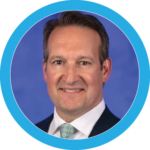
Sean Young
Former CMO at Penn State HealthSubscribe for More
Don’t miss future insights—subscribe to our blog and join us on LinkedIn: Stewart Gandolf and Healthcare Success.
Note: The following AI-generated transcript is provided as an additional resource for those who prefer not to listen to the podcast recording. It has been lightly edited and reviewed for readability and accuracy.
Read the Full Transcript
Stewart Gandolf (Healthcare Success): Hello, everyone, and welcome to the podcast today. I am pleased to have another guest that is extremely well-informed and expert in our field. Sean Young is the former chief marketing officer for Penn State Health. And we talked offline. I was introduced to him by another podcast guest and had so many wonderful things to say about healthcare. And we were talking about the topic today and we decided to talk about marketing and communications’ place and C-suite decision making. So first of all, welcome, Sean.
Sean Young (Former CMO, Penn State Health): Oh, nice to be here, Stewart. Thanks for having me.
Stewart Gandolf (Healthcare Success): So I love it i'm really excited to talk about this and we were talking offline just before we began today about the changes in healthcare and things are changing so fast not just on the consumer side and technology side regulation changes so kind of feels like a whipsaw effect sometimes with how we have to respond in the meantime in the middle of this fray of change constantly is marketing probably.
I don't know, Sean. I would argue among the most misunderstood departments in all of healthcare. Do you agree?
Sean Young (Former CMO, Penn State Health): I would wholeheartedly agree with you, Stewart. And we're going to talk about some of the reasons for that and what we ought to do about it as marketing leaders.
Stewart Gandolf (Healthcare Success): So I think that is such a key issue. And I want to jump into your questions in a minute. But for those of our listeners and viewers who aren't familiar with this podcast, you know, I've been doing this for a few decades now. Right. And we've seen marketing's role. In some organizations, it's central. It's a big part of the culture. It's really important. It's well funded. And in other organizations, not so much. Right. And it doesn't mean they're bad organizations, but it just can be very a lot.
Also, and I'm really curious if we'll talk about this later, the way the institution views itself in the community varies incredibly, too. There are some institutions that view themselves as “we're the leaders in the community. We have to do it this way. It's our mission to do this.” Others don't really look at it that way at all. So it's a really broad mix.
So, Sean, I'd like to, as we get into this, I would like to first of all talk about, before being retired, you were the chief marketing officer. How is that role evolved, where do you think it's going like what's the status and you know help people understand what a and also maybe because our listenership varies a lot we have people from the health system space from multi-location providers and all kinds of different people to you what is this chief marketing officers most important functions in a business?
Sean Young (Former CMO, Penn State Health): Well, I think there's a couple of things. You know, when I started in healthcare marketing and communications back in 2001, there really was no social media.
Digital marketing was an emerging early-stage concept. Websites were mostly brochu-ware renow, you couldn't do the kinds of transactional work that you do today over websites. So I would say over the last 25 years, healthcare marketing has evolved tremendously. The other piece of it is that you didn't have this market consolidation.
People grew up in a community and they went to the hospital that they lived close to. Right. And you didn't have this sort of competition. Everybody's territory was kind of its territory with a few exceptions in major metropolitan areas like Philadelphia or Chicago, where there were a lot of major hospitals, different story. But in places like central Pennsylvania, you know, if you grew up in one county, you went to the predominant hospital in that county. And if you grew up in another county, you went to the predominant hospital in that county. And so we really are neophytes in the world of marketing from a healthcare perspective.
We've got consumer brands and industries out there, cars and beverages and all sorts of different consumer goods where marketing has been a skill that they've been sharpening for a long, long time. And so in the healthcare space, and I don't know if there are any folks out there who have read the great Chris Bevolo series of Joe Public. Joe Public doesn't care about your hospital. It's a great sort of journey through where marketing used to be to where it is today to give people an understanding of how much it's changed in the last quarter century.
Stewart Gandolf (Healthcare Success): Absolutely. And I think it's interesting to have that perspective to remember how it used to be so different, right? It wasn't that long ago. And I remember earlier on back in the ‘90s consulting and there would be, oh, this system is encroaching in my territory. And that was new. It was kind of like the legs of an octopus moving into a marketplace.
“What are you doing? This is my area. Don't you dare.”
Sean Young (Former CMO, Penn State Health): And now you've got huge brands, right? You've got these massive mega health systems that are competing, not just within their own individual markets that were their original markets, but they're competing across large geographies for patients. And they've got different strategies that might be hub and spoke, or they might be different types of models where they want to capture the patient in that market so they can drive them back to the academic hub where they can do the really complex, also known as the high-paying procedures.
Stewart Gandolf (Healthcare Success): Yes. Very good. So the role of chief marketing officer we talked about is evolving a little bit. And then now it's, is it endangered? I mean, there's certainly a lot of people with short tenure. What's happening behind there? What's making this be such a difficult job?
Sean Young (Former CMO, Penn State Health): Well, I think it's a good point, Stewart, to talk about what's happened to the role itself, because it wasn't that long ago that Spencer Stuart, one of the great search firms out there, did a study that said Fortune 500 CMOs, their average tenure was about 4.2 years.
And then there was a Korn Ferry study that came out a few years before that. It was published in Becker's Healthcare and said that number was even shorter for healthcare CMOs. It was about three and a half years, a little less than three and a half years. And when you compare that to the tenure for other C-suite executives, that's about a year shorter than the average healthcare executive. And I think some of that might have to do with, you know, healthcare margins are under pressure, consolidation, competition, to a certain extent, consumerism.
Now, I think there's a tendency to overplay consumerism because at the end of the day, consumers are still, while they might search and do some research and so forth, they still principally want to go to the place that's closest to where they work and live. And if you don't take their insurance, they're not coming.
I mean, there's still a cost and convenience factor that's largely at play here. But I think CEOs, I think CFOs, I think boards, they want results and they want to see tangible results. And CMO transitions are a convenient lever, right?
It's a lot easier to replace the CMO and change up the marketing team than it is to fix access or length of stay or coding and billing issues. Those things are a lot more complicated, right? And CMO burnout from the pressure is real. I know a lot of CMOs over the last year who have done what I did and retired and stepped back from the role and said, “you know what? I could use a little breather. I could use a chance to recharge my battery” or “I want to get out of the industry” because the industry of healthcare brings a whole new set of pressures and responsibilities to the marketing team than you have in other industries where, you know, quite frankly, marketing has a different seat at the table.
Stewart Gandolof (Healthcare Success): Yeah, I agree. And It's funny, too, because, you know, this topic is at the big conferences, right? There was one in Chishmit about what's the evolving role or and how do we need to. One of the people speaking at the last conference I was at was saying, “Do a land grab! Do communications! Do this! Do all these other things too!”
Sean Young (Former CMO, Penn State Health): “I want to see our commercial out there; I want to see the billboard. Why so-and-so's doing this; why aren't we doing this?” Well the answer might be because their actual strategy is different than your strategy and that calls for different marketing right?
And I don't recall, you know, in my time in a C-suite, I don't recall a lot of other executives questioning finance or legal or IT in the same way that they might question marketing, right? There's a certain deference that's given to those professional disciplines that isn't quite as readily handed out to marketing and communication.
Stewart Gandolf (Healthcare Success): Sean, I've been speaking for years and that's one of the things I talk about, although I make it even more extreme.
I said, nobody goes and second guesses the architect or the engineer who built the bridge, but everybody gets a vote in marketing, right? My assistant, my mother, the guy cleaning up at the end of the day, the guy who cleans our lawn, everybody has, what do you think of this? It's a little tiring, but that's a topic for another day.
We've hinted about this a little bit, but why do you feel like, is it the fuzziness or the supposed fuzziness of marketing that makes it that CMOs don't seem to have the same influence as other healthcare executives? Is that a real thing? And if so, does that affect your ability to be effective with themselves and their teams?
Sean Young (Former CMO, Penn State Health): And, you know, I had an opportunity to talk and connect a lot with my colleagues at places like the Hershey Company when I worked for Penn State Health, because our flagship hospital was literally in the same town as the Hershey Company's headquarters.
And when you talk to people like my friend Dave Perry, who used to be at University of Utah Health and then worked at Stanford as a consultant for a while, he came from other industries and said, “boy, it's a lot different in here than it is over there.” Right?
And what I would find in talking to my colleagues at the Hershey company and other places is leadership might come to marketing and say, you know, “we need another X number of millions of dollars to the bottom line. Find me a market.”
Or “find me a market where we could gain market share, but we have to do something with our product or our services to make it more appealing to a particular market or demographic or geography” or whatever that might be.
And then marketing is tasked with doing the research, coming back with their findings, telling you what consumers want, what they think, and then working with product development or customer service to make alterations to deliver something to the consumer of those goods that they want and that they would find preferable.
And I think in healthcare, there's a tendency to forget that brands are specific, right? Brands have to offer a distinct and repeatable promise to the consumers they're trying to reach. You know, the classic example is you go back to cars, right?
How did Volvo differentiate itself? It differentiated itself by safety, right? It didn't spend time talking about its zero to 60 capability or how well engineered it was or how cost-efficient it was or what its gas mileage was. They picked a specific lane and they focused on that lane.
In healthcare, I think everybody wants to be high tech, high touch.
“We're really, really good. We're all experts. We have the best technology, the best doctors. And oh, by the way, we really care for you.” But that's not a distinguishing promise to the consumer. That doesn't tell the consumer how you're different and why you want to use me instead of my competitor, right? And so I think in healthcare, there tends to be an oversimplification. And one of the reasons for that is because in healthcare, I thin”k physicians drive the product a lot. Right?
And physicians might drive the product for a variety of reasons that have nothing to do with traditional marketing strategy. Right. They don't sit there and say, is there a market for this?
They might say, “I'm a physician and my job is to help people. And I see a humanitarian need for this particular service.” Never mind that there aren't more than 17 people who need the hangnail clinic that you want to open. And lots of people get hangnails. So maybe it's a bad example, but you get my point, right?
They don't do that in other industries. They decide that there's a certain number of people who might need or buy a product and they deliver on that product. But they don't just create a product without thinking about the market for it first, right?
The other thing that happens with physicians is you may have physicians who have a specific clinical or research interest in a discipline and they want to advance that, right? And that's a noble cause. It's a noble purpose. But again, it's disconnected from the marketing justification for why you might do something.
And then my favorite, right? My favorite is the vendors that come in from the outside and they have a device they want to sell or a pharmaceutical they want to sell or something else they want to sell. And they come in and tell the physicians, “boy, we have a marketing package all ready to do this.” But what those vendors really want to do is sell their thing to the public through you. They don't necessarily want to help you get more patients, right?
If that were the case they wouldn't sell you the latest and greatest of their surgical robot and then go across town to your competitor and sell them the next generation and then come back to you and sell you the next generation and keep this surgical robot arms race going, right? That's not the game.
But those three things influence physicians to drive products and services in a way that is not happening in other industries to the same extent, right? And then there's the example, like in the auto industry, if consumer needs evolve, it's engineered into the car, right?
We got cup holders because of that. We got Apple CarPlay because of that. We've got lots of features in cars that came because it's what consumers wanted, right? Fast food value meals were created in response to consumer needs and wants. Healthcare is often very slow and reluctant to shape its product to the needs of consumers.
Physician needs or operational barriers often supersede that because you want to get clinical efficiency or because clinicians need to be focused on certain things or because there aren't enough physicians to go around in a particular discipline. There might be a shortage in dermatology or neurology, for example. And so physicians may see marketing as unqualified to shape their clinical offerings because what do we know? We didn't go to medical school, right?
Again, it doesn't happen the same way in other industries. And then Stewart, to get a little long-winded on this, I think the other challenge is with executives, right? So most executives get an MBA or an MHA, right? It takes 30 to 60 credits to get an MBA or an MHA, right? And about a third of that has some relation to marketing.
But it's very generalized, especially in MBA programs, right? It's consumer focused. It's very focused on marketing management. It's focused on consumer behavior. There's some market research, like how does market research get done? There's some things done around global marketing and brand positioning, but it's not specific to healthcare.
And then these very bright and capable executives come into their jobs. And what do they spend their time focused on? Finance, facilities, supply chain, personnel issues, IT. Marketing is not anywhere near the top of their list until it's specifically brought in front of them.
So those muscles might atrophy a little bit, even if you have executives who really get it and understand it. It's not a space they play in as much as those other disciplines.
Stewart Gandolf (Healthcare Success): So it's funny, when you're talking it reminds me I really remember this my first days of marketing class I thought I was going to be an engineer because I was always good in science and math, but I took marketing and I just fell in love with the idea of it.
And the first class, they talked about the marketing concept which was exactly what you're referring to: typically the marketing concept is you design a product to make a market. Demand selling instead is like, you've got a product. You've already bought it. Now you're going to find someone to sell it to. Usually you want to start with that strategy part first.
And role of the various stakeholders in a hospital are legendary, right, like everybody—it's an open joke at any conference in healthcare about “we have to get a billboard.” It's become a meme.
So I don't think we can solve that in this call, but I think what we can talk about today then is, okay, so what can we do? And I think one of the things that really intrigued me when we first met was that you were successful in closing this gap. You were able to build greater confidence in what marketing can do.
So this is the part of Call where I'm really fascinated. Like, tell me about your story, how others can do it. What are the challenges? The dirt, Sean. Yeah. Tell it all to me.
Sean Young (Former CMO, Penn State Health): Well, I want to qualify it and say, you know, it wasn't a completely unmitigated success, right? Because you're always going to have these kinds of barriers that we just spent the last few minutes talking about. And there's more that I wish we could have accomplished, but there's always certain limitations: access to data, technological capabilities, skill sets of the people that work for you, willingness of leaders and physicians to engage in these conversations, et cetera.
But really the overarching objective for the CMO is to have a seat at the big table and help shape the direction of the organization. Not just the direction of how things look and how things sound and how things feel, but literally the products and services. How do you influence the outcomes of that?
And that doesn't just happen, right? We talked about the orientation of physicians and executives. So you can sit around as a marketing leader and resent that. You can sit around as a marketing leader and try to work around it. I'm a big fan of the phrase “lean in,” right? If something's going on, lean into it because you're going to have a lot more success steering the boat than if you're putting your oars in the water and trying to row in the wrong direction.
So you have to engage in constant conversations. Chief marketing officers have to assume the responsibility of continuously educating their organization about marketing: what works, what doesn't work, why we do things, why we don't do things. And not only do we have to not avoid accountability, we have to seek accountability. We have to go after it. We have to make it clear we want it. And we have to define the terms on which we want to engage folks and get their feedback and their input.
So one of the things that we did to try to build trusted relationships with physician and executive leaders was to be proactive. We created something we called “marketing and communications and strategy governance” because at my time, I had the strategic planning function reporting to me.
And so we would get together once a month with a core group of C-suite executives, including the hospital presidents. And we would run through with them the most important things we thought we needed them to be engaged in. If we needed to do a brand campaign review, we already had an appointment on the calendar and we could set our production schedules and our planning and research schedules to meet that schedule of the marketing governance committee, right?
“Well, it's got to be here on March 13th. So that means we got to be done with our work two weeks beforehand and ready to present. And oh, by the way, I got to make sure my boss sees it first before I share it with the rest of the C-suite,” right? So you have to be intentional about it from that standpoint. And you have to constantly ask them, “What is it that we're putting on the agenda that is of value to you? And what is it that we're putting on the agenda that is not of value to you?”
And keep massaging the agenda and the docket so that it fits the needs of the leaders you're working with. And as you do that, you're going to constantly be in a position of having conversations with those leaders to say, “well, why don't you guys do this?”
“Well, here's why we don't do it. And here's why we're doing this instead.” So that was very, very important. Structuring an effective marketing and governance that is consistent in terms of content and serves as added value for leaders that there is agreement and strict adherence to a review and approval process through that governance structure and clear rules of engagement, right?
And then the other thing you've got to do is make sure you've got your data systems and technology stack aligned so that if you want to present brand metrics, you're getting those brand metrics at the right period in your rotation of marketing governance meetings. And you know that that's going to go in front of them every six months or every three months or once a year or whatever you think the most appropriate cadence is.
Because some of this data doesn't change quickly enough that it's worth sharing with them too much, right? Market share reports, like how do we want to make sure we're sharing it with them? And then in that meeting, the agreement is nothing leaves the meeting unless we're all in agreement that it leaves the meeting, right?
So if you want us to take it to the department chairs at a hospital after you've seen it, everybody in the room agrees. Because then hospital president X can say to hospital president Y, “Well, if you're going to share it with your chairs, I want my chairs to see it too.” So we can coordinate the schedules for doing that. And people don't feel surprised.
Nothing burns a marketing team as quickly as having folks who feel like they should have had a voice or should have had an opportunity to see something and they didn't. But somebody else that they consider their peer did see it and did have a chance to weigh in, right? So that organized structure is really, really, really important.
And I think the other thing you have to have, Stewart, is effective demonstration projects. Like you've got to come in and say, “all right, we know that the plan here is for us to drive more heart and vascular volume. And we believe there's some opportunities in a couple of markets. And let's share with you what our plan is. But then let's also share with you how we're going to measure whether it's working or not.”
And in today's day and age with CRM and call tracking mechanisms and social media and paid social and all of the other things that we have in our toolbox, we should not only be able to show them the results of a campaign after the fact, we should be able to show it to them in near real time.
If you've got your EMR lined up with your CRM and your call tracking and your web metrics and everything else, you should be able to say, “hey, this campaign is working right now and it's working so well, we might create an access problem. We're thinking about dialing it back. Is everybody good with that?” “Not working as much as we think. Should we turn it up or should we let it ride as it is?” And it allows you to engage them in conversations that get them past the billboard.
It gets them past the “I don't see myself out there.” Well, you know what? 60 percent of our C-suite is white males over the age of 50. And we're running an OBGYN campaign right now. If you're seeing it, we're not doing our job right. You shouldn't be seeing it. But let me tell you who is seeing it and what it's turning into in terms of patient volumes.
Stewart Gandolf (Healthcare Success): So that's there's so much there. I often tell people that haven't worked with doctors.
or physicians that remain huge stakeholders in a hospital, the three things you always need to remember is expertise, expertise, and expertise. In other words, especially with marketing because they don't understand it well enough. They confuse it with marketing or communication side of it, right, ads, and the strategy that goes behind it. But what I've found from talking to you and other successful CMOs is that all of you have figured out it's engaging. You have to engage them you have to be close to them you have to be part of the discussion because otherwise they'll invent things that you know if you're not there and that little thing you just said there also like why am I not showing up in AI why am I not showing up there is another classic thing that happens every day and if you don't have an answer to it things won't go well I mean you really have to be leading the discussion I think any comment on that before we pivot to the next thing?
Sean Young (Former CMO, Penn State Health): Yeah. And, you know, I think it is about having respectful but practical conversations. Like I had a former VP of mine, great guy, used to say the quote, “show them the cookie.” Right. And we would have marketing people who'd want to spend lots of time talking about the recipe and how the cookie was baked.
And they just want to eat the cookie, right? Give them the cookie. And if they like the cookie, they'll ask you about the recipe and you can get into the details.
But we had an example where I had a neurosurgeon, a former chair of neurosurgery, and then a former CMO of ours who retired around the same time I did. Good friend of mine. And I remember back in the days when we used to talk about marketing, what that conversation looked like to what it looked like when we both stepped away.
And I remember having a conversation with him and his team one time saying, “I want you to tell me as a neurosurgeon, if you've ever had a patient drive past a neurosurgery billboard and go, that looks interesting. I think I'll have my brain operated on tomorrow. Did they ever come in and do that?”
No. And those kinds of practical, simple, humorous conversations help get the point across. And by the time we both left, my chair of neurosurgery, former chair of neurosurgery would tell that story. He would say that to people. I didn't have to say that anymore. He would.
And I think, in the process of doing that, it gave us an opportunity to talk about the things that actually worked. And it allowed us to start elevating appreciation for the specific over the general: distinct markets, target audiences, creating action, engagement and loyalty over awareness. And I often explain to them… I would occasionally do presentations to medical students about marketing to explain to them why healthcare is different. And I would say, you know, “here are a bunch of logos of companies: Blockbuster, Radio Shack, Kmart, Kodak. Raise your hand if you've heard of them all.” Everybody's hand goes up. And I'd say, how are they doing?
Well, everybody's heard of them. There's lots of awareness. So why are they bankrupt and not in business anymore? And I would explain to them it's because they forgot what business they were in. Kodak was never really in the film and camera business. They were in the memory collection business. And as soon as iPhones came along and you could do all of that with your phone and store it all in the cloud, Kodak became irrelevant.
You know, there's the old story about why did the United States fall behind in its leadership of railroads? Well, because old men fell in love with choo-choo trains and they didn't modernize and they didn't understand what business they were in. You know, we've seen that with newspapers, right? Newspapers missed the web-based content conversation when they should have paid more attention to it.
And I think it's really important for our folks to understand that it's not about everybody knowing what you do, right? If you're somebody with a rare illness, a rare cancer, you just need to know we can treat it. But that doesn't mean we tell everybody. We tell the people who want that information, which means targeted marketing, search engine optimization, search engine analytics, call tracking, all those sorts of things to make sure the right patients are getting the message and the right patients are getting to us.
Stewart Gandolf (Heatlhcare Success): That's awesome. You know, fun fact, very few people know this back in undergrad I wrote a pay I used to work at a newspaper and I wrote an article paper a extra credit paper about the likely demise of newspapers because you know already it was beginning there is CompuServe and different things coming up and it's just it was shocking to me how that played out.
The data is… You've alluded to this before earlier, but that it can be the lifeblood because there's nothing like data to prove a point. And again, it's like I don't think that physicians, I understand why they're skeptical. They're trained to be skeptical at their core. Data helps a lot.
So give me a sense of data and how that's helpful, not just for the physicians, but other healthcare leaders within the hospital or any organization. What's most actionable? Any tips you have on this topic?
Sean Young (Former CMO, Penn State Health): Well, again, I want to be very careful to say that data for data's sake is not the solution, right? First of all, it's got to be actionable data. And it's got to be data that helps you do the most important thing, which we talked about earlier, which is develop trusted relationships, right?
Relationships are currency. And if you have data that not only proves your point and supports the direction you want to go. Because remember, you're not always having rational conversations with people where your data is concerned.
You might be giving them information that isn't what they want to hear, right? If there's a physician that wants to start a program and you're telling them there's no market for it, they may not be incredibly receptive to the data, even though they had a rational data-oriented mind as physician investigators and researchers and so forth, right? Because it doesn't align with what they really, really want to do because they see a humanitarian need or they have a research or clinical interest in the space or something along those lines. So when you get the data, the data has got to be something that drives a conversation, not just an aha, right?
And you may have to interpret the data. You may have to explain the data. You may have to be willing to respond to questions about the data, which means as a CMO, you better know what you're talking about, right? You better understand the data.
And you better anticipate the questions that are coming, right? Just like you have to know the business, you have to know the clinical terms, you have to understand the operational barriers, you have to know why this procedure is different than that kind of a procedure, even though it might be for the same illness or ailment, right? And you got to be open to criticism, right? You can't let them argue the data with you and then get your back up and be angry about it and defensive about it.
You have to learn how to, diplomacy is the art of letting someone else have your way, right? So you have got to be able to take that feedback in and respond with a, “you know, that's a good point” or “you may be right, but have you considered this?” Or, you know, “that's a question that I asked too, but here's what the data told me,” right?
Don't get defensive about it. Because that transparency and that willingness to engage in a dialogue will get you the ultimate goal, which is the trusted relationship.
Stewart Gandolf (Healthcare Success): So today, I often tell people at almost every opportunity. To me this is the most exciting time i've seen in marketing since about 2006 when we started this company. Back in 2006 I was going to Google campus and Google parties and the whole world of search was changing.
We built our agency—call tracking came of age like a lot of different technologies came about and then it's been, in my opinion, incremental until now, and now it's explosive.
So talk about some of the marketing technology stacks that you think are important what you know there's a lot how do you decide which ones are important which ones are sort of next year and any comments you have on this topic at all
Sean Young (Former CMO, Penn State Health): It really depends on the audience. So if you're talking to physicians, they want to know about market share. Right. They want to know about market share in their particular discipline. They want to see the numbers of new patients coming in the door. Right.
If you're talking to a CFO, they might want to know cost per click. Right. How much is it costing us per acquisition or per engagement with a patient or prospective patient? And then if you can track EMR through CRM and tell me that 500 people got the marketing message. 120 of them resulted in an engagement or a scheduled appointment. 60 of them actually came in and saw the doctor and had a follow-up and 15 of them ended up in procedures. Those procedures were worth X number of dollars. We spent Y number of dollars on the marketing campaign, which means we got reach. We got connectivity, we got viable leads in the door, and it resulted in money in the bank, right?
And then from a humanitarian perspective, it resulted in people getting the care that they needed from us, which is what we want to have happen, right? I think that data is really important.
The other piece is efficacy data, right? Brand as the patient experience versus brand as an advertising campaign. You know, one of the things that Disney and Ritz-Carlton, and there's lots of literature and conversations out there about what if Disney ran your hospital, the Ritz-Carlton experience in your hospital, et cetera, they get that the experience is everything. We don't get that in healthcare.
A few organizations are really good at it and understand it. But by and large, the vast majority of healthcare enterprises don't understand that the experience is the thing, right? And if there is a healthcare system out there that can figure out the access, patient experience, follow-up, accurate billing conversation, and iron that out, make it work, they're going to be the gold standard.
And so one of the things we did at Penn State Health a little couple of years before I left was we acquired a technology called Invoca. There may be other competitors out there in that space, but it was basically call tracking technology. And when we ran a campaign, right, we do a specific phone number for that campaign and a specific web digital footprint for that campaign. And whenever anybody engaged with it, they would engage with that specific piece of information piece of data that would tell us whatever they did next came from the campaign.
Now we could anonymize the numbers mask them so that when the call came into the clinic it was the number that they always call right nobody answering the phone knew it came from this special phone number nobody responding online knew it came specifically from whatever cookie we had placed out there, but we were able to do direct tracking
But the other thing we were able to do was we were able to track how many phone calls were getting answered, how many phone calls were going unanswered, how quickly those phone calls were getting answered. And then we'd give that information back to the operators. And sometimes it was a fight. “Oh, that's not true. They're getting the message and the operators are busy and they're returning those phone calls.” But it allowed us to get into a conversation about, well, “how do you know they're returning phone calls? Do you have call tracking in your clinics?”
Once our call tracking gets to your system and the phone goes into the voicemail, we don't know what happens next. But what are you doing in the clinic to coach the staff and make sure the staff's answering the phone properly and make sure the follow-up's happening, you know, in appropriate time, et cetera? Because you know what? Nothing will frustrate a patient more than if they have to wait for an appointment or they're trying to reach somebody and nobody calls them back.
So I think that kind of call tracking data to share answer rates and information and which clinics are doing a great job of answering phone calls and getting back to patients and which ones maybe could be doing a better job, that's actionable data that leaders can use that one wouldn't think of as marketing data, but it's still the brand experience. The patient experience is the brand experience. And so you've got to focus on it.
Stewart Gandolf (Healthcare Success): It's funny, Invoca is one of the technologies we use for call tracking . We use several but what's exciting there to me is all that data now with AI is just getting better and better so we can tell them which office is picking up, which office is not, which individual is most effective at closing cases?
This kind of data is amazing because before, we would give it to our clients and they might get a thousand calls in a given month for, you know, all these different things. Who's going to listen to those? Nobody. And even our team could spot check it. But then you're months behind. You're looking at old data. And if there's a problem, you don't see it for six months.
Whereas now and increasingly we're strongly recommending our clients get the premium sort of AI-directed data so they can recognize problems right away. That is the number one problem, by the way, Sean.
Sean Young (Former CMO, Penn State Health): I'm going to tell you a funny story that kind of opens the window into an experience I had at Penn State Health, which was we had acquired a private practice organization. I won't get into the specialty and the details.
And Invoca also, to your point, records things, and AI can give you a rundown of what was said. It can literally give you notes on the call, right? And you can see what the patient said and see what the person answering the call said. And we had publicized the fact that we had acquired this practice.
And the call came in to one of our departments, and they answered the call, and the patient said, “Can I get in?” “Oh, I'm sorry, we have a backlog. We can't see you for six months.” And they said, “Well, what about this other practice? Because I know Penn State Health recently acquired them.” “Oh, no, no, no, that's not true. We didn't acquire them. They're not part of us. They're separate.”
And the caller said, “I'm on your website. I'm looking at the website.” “You can't believe everything you see online.” So we told that story to the operators and said, “What are you doing to educate the people in this clinic to make sure they know they have the opportunity to schedule patients with this other practice we now own and not with their own central practice, just to make sure we keep the patients in the system?” “Oh, that's not happening. That's not happening.”
Oh, really? How about at the next marketing governance meeting, we play the phone call? And that's what we did. And there were heads shaking around the room. And I went, look, you know, marketing didn't make this up. You're listening to the person in the clinic talking to the patient. This is what they said. It's real time.
Stewart Gandolf (Healthcare Success): It's funny I worked with a one of the leading oncology um multi-location businesses in New Jersey once and I played back some of the actual real calls from their recordings and the CEO at one point, and it was late that evening, just said “Stop, I can't take it anymore.”
It's like, now we have your attention.
Sean Young (Former CMO, Penn State Health): You know, we had another situation with a cancer patient where somebody called and said, “You have a great physician there. I've done research on this person. I have someone who needs to be seen by them with this particular ailment. And they have clinical trials open. Can we get in?”
“Do you have a referral?” I mean, the first three responses from the person on the call was, “do you have a referral?” Not, “I'm so sorry to hear that you've been diagnosed with this. I'm so sorry to hear. Yes, we do have that person.” And it became an opportunity to go back and say, again, shape the experience because the brand and the patient experience are the same thing.
Stewart Gandolf (Healthcare Success): Absolutely.
My discussions on this podcast for patient experience go back a long time. And I think it's people finally are beginning to get it. But back 12, 14 years ago, we were looked at like we had two heads.
You mentioned marketing governance. What do you mean by that?
Sean Young (Former CMO, Penn State Health): So Marketing Governance is an official organization that we put together that included my boss at the time, who was the executive VP and chief strategy officer. It included our chief counsel. It included our chief financial officer. It included our hospital presidents and the senior executives of our medical groups. And it included our chief operating officer and one or two other people.
And that group met once a month and they met for an hour and we would proactively share the agenda and get feedback on it. And then we would share whatever we were going to present with my boss, the chief strategy officer, in advance and make sure that he was aligned with what we were going to propose for the agenda. And then we'd go through those topics in the meetings and we would invite questions and criticism and conversation with those leaders.
And then every quarter, we'd extend the meeting to 90 minutes. And we'd use that meeting to get into deeper conversations about bigger issues, right? If we were going to share a market share report or a hospital transfer report or the latest brand metrics, or we needed approval on brand campaign materials and so forth, and we wanted feedback from people, we'd use it for that purpose.
And it was really important that we intentionally decided not to include the CEO in that conversation because we knew that there were going to be people who would disagree with decisions that were getting made at marketing governance, and they'd try to do end arounds and they'd complain.
We wanted to put the CEO in a position of being the appeals process, right? So if we had to get approval on something, we could bring it to the CEO and say, “All of your direct reports have signed off on this already and this has been their feedback.” Or “We're not ready to bring this to you yet, CEO, because there's some contention among the group and we don't have consensus yet and we're going to go back and work it some more,” right?
But it also meant that if there was a department chair or a physician leader or a particular executive that didn't like something, they could go to the CEO and the CEO could weigh their input and make a final decision knowing that all of his direct reports have already weighed in and given their input. So it was really great for giving us high cover.
The other thing it did is—there are times when executives are going to have competing interests, right? One hospital president is negotiating with a private practice group to try to get them to do cases at their hospital. Another hospital president needs volume for a specialty service and they want to advertise in their backyard in a larger catchment area. And that president doesn't want them to advertise because you're going to tick off the very people I'm trying to get to do cases.
Well, what happens when that happens is you get frontline marketing staff who get chewed up and spit out by two different hospital executives who are much higher on the totem pole than the people responsible for the marketing. And they get caught in the middle.
So what we would do is we'd bring those issues to marketing governance and we'd say, “look, we have a thing we need to do. We know President A needs something. We know President B has concerns about that. We're laying all our cards in the table and tell you what we're recommending. And we want both of those presidents to air their concerns in front of this whole group.” And then the whole group makes a consensus-driven decision.
So you get out of this, you know, end around, well, “I said something in this meeting, but I'm going to say something different in this meeting” because we kept minutes of the marketing governance meeting.
So if there was a debate or a dispute, I could go back as the referee to that president or that executive or that medical group and say, “We talked about this. You had an opportunity to say something and you didn't say something or you brought it up. Everybody heard it. It was considered. And ultimately, we decided to go in this direction and we were aligned. And, you know, you have to accept that the decision has been made.”
So I think it's it became a critical mechanism for us to get awareness, alignment, have conversations that could both educate the executives about what we were doing, why we were doing it, and whether it was working, but also to give them an opportunity to really give us input on what they liked and didn't like and where they thought we should be focusing and where we shouldn't be focusing.
Stewart Gandolf (Heatlhcare Success): So very good. The last question we had, and this has been great, by the way, as I knew it would be, Sean. We had talked a lot about the different relationships with executives. Are there any particular C-suite colleagues, either by title or their function within a business, do you think are most important to develop relationships with?
And keep in mind that we have, again, beyond just hospitals, we have other types of healthcare businesses, but they all have C-suites. So I'm curious what you think.
Sean Young (Former CMO, Penn State Health): Well, I think, you know, there's no marketing leader worth their salt who doesn't have to have a trusted relationship with the chief IT officer, right?
Because if you're going to build a technology stack and you try to build that independently in isolation, you are invariably going to run into some kind of issue with IT. Because no matter what you do, you're still going to need feeds out of systems that are run by IT, right?
You're going to need information out of HR systems or finance systems or the EMR or whatever. And you can't do that if you don't have a good working relationship with your IT officer.
I think it's important to have, and this is one that's sort of evolved in recent years, is it's important to have a really good working relationship with your chief of HR, right? Because the old model was HR did its own recruitment advertising, prioritizing its own recruitment stuff. And, you know, marketing would get upset because they'd see things in market that weren't on brand that were developed by an agency that wasn't the agency of record or wasn't your own people inside your organization.
And so I think if you can work collaboratively with HR on the recruitment thing, because recruitment's become a big issue, right? That both HR and marketing have to work together to help solve.
And then lastly, finance. The holy grail of all of this is for finance to be able to sit with marketing and agree to an attribution model, right? I would agree that marketing is not responsible for 100% of all new volume, right? But I would also agree that we're not responsible for zero, right?
And it might vary based on campaign. It might vary based on the type of service we're trying to drive volume to. Primary care is going to be different than transplant. It's going to be different than specialty pediatrics and on and on. But if you can develop a working relationship with the CFO, given the technology system capabilities we have today and the data sources that we have available to us, you should be able to get finance to work with you collaboratively to say, all right, “marketing deserves 30% attribution on that” or “marketing deserves 66% attribution on that.”
If you can get a working relationship with finance where you agree that every dollar you're going to spend, you're going to be held accountable for. But in order to do that, you need finance to provide the attribution. If you can build that relationship, that, in my view, is the holy grail.
Stewart Gandolf (Healthcare Success): Very good. Sean, any last words for our audience about how to stay at the adult table, not get kicked to the kids table?
Sean Young (Former CMO, Penn State Health): Yeah, I think my closing thought, Stewart, would be we talked a lot about marketing, but we didn't talk a lot about communications. And I think particularly where crisis communications is concerned, it's important to work with your C-suite to say, “look, if it's important enough that you're calling HR and legal into the room, your communications person ought to be there too,” right?
Because there's no crisis you can't overcome. If you can answer the questions correctly of what did you know, when did you know it and what did you do about it, right? And if the right decisions were made at the right time, as soon as you found out about things and it was in the interest of the people you serve, you can survive any crisis.
The cover-up is always worse than the crisis. The bad decision that gets made without communications being in the room and saying, “well, a month from now when the reporters write about this, this is what they're going to ask and this is what they're going to say.”
That's also a contributor to brand, right? You cannot win the public relations battle in one fell swoop. But you sure can lose it in one fell swoop. You can really damage your brand if you mishandle a situation.
And so I think for all we've talked about with marketing, it's also important to think about communications as being key to that marketing governance process and key to the conversations you're having with senior executives.
Stewart Gandolf (Healthcare Success): Sean, it's been great working with you today. I appreciate your time. Thank you so much.
Sean Young (Former CMO, Penn State Health): Thanks, Stewart. Take care.