Organic Growth Podcast: Organic Growth in Healthcare: Why Efficiency Matters More Than Expansion






Recorded live at the McGuireWoods Healthcare Private Equity & Finance Conference, this episode of the Organic Growth Podcast examines how the definition of growth in healthcare is changing.
Stewart Gandolf sits down with Matt Wolf of Elliott Davis to discuss why private equity-backed healthcare organizations are placing renewed emphasis on organic growth.
As the cost of capital rises and market conditions shift, it’s no longer enough to grow through acquisitions alone. Today, value creation increasingly comes from improving how organizations operate—optimizing margins, increasing efficiency, and making better use of existing resources.
Why Listen?
- Understand why healthcare growth is shifting from buying growth to building it.
- Learn how macroeconomic conditions are changing strategy.
- Discover where the fastest ROI opportunities exist today.
- See how operations and efficiency are becoming core to valuation and performance.
Key Insights and Takeaways
- The Definition of Organic Growth Has Expanded.
Organic growth is no longer limited to adding providers, locations, or services. Today, it also includes improving margins, optimizing workflows, and increasing efficiency. Organizations can create meaningful value without increasing patient volume. - Higher Cost of Capital Is Forcing a Strategic Shift.
In a low-interest-rate environment, acquisitions were often the easiest path to growth. As capital becomes more expensive, organizations are shifting toward building value internally—making organic growth more attractive and necessary. - Cost Optimization Is Often the Fastest Path to Growth.
Improving efficiency—especially in areas like scheduling, staffing, and revenue cycle—can deliver immediate ROI. In many cases, it’s easier to remove a dollar of cost than to generate a new dollar of revenue.
4. Change Management Is the Biggest Barrier to Execution.
Even when opportunities are clear, implementing them can be difficult. Aligning physicians and stakeholders around operational changes—especially when there are short-term tradeoffs—requires strong communication and data-driven decision-making.
5. Technology Will Drive the Next Wave of Organic Growth.
While still early in adoption, technologies like AI are poised to improve efficiency across healthcare operations. From administrative workflows to revenue cycle management, targeted investments in technology will play a key role in future growth.
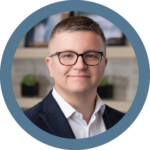
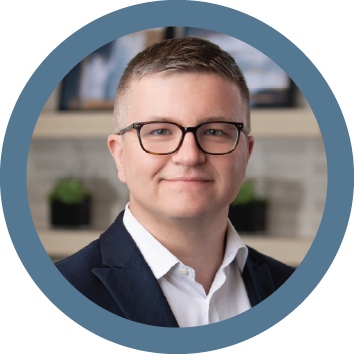
Matt Wolf
Valuation Leader and Healthcare Senior Analyst, Elliott DavisSubscribe for More
Don’t miss future insights—subscribe to our blog and join us on LinkedIn: Stewart Gandolf and Healthcare Success.
Note: The following AI-generated transcript is provided as an additional resource for those who prefer not to listen to the podcast recording. It has been lightly edited and reviewed for readability and accuracy.
Read the Full Transcript
Stewart Gandolf (Healthcare Success): Welcome to the Healthcare Success Podcast, McGuireWoods Live, in conjunction with our friends over at Levin Associates. In this episode, we’re speaking with Matt Wolf from Elliott Davis Advisory. Welcome—great to have you here.
Matt Wolf (Elliott Davis): Great to be here.
Stewart Gandolf (Healthcare Success): Give our audience a quick overview of what you do and who you do it for so they know what we’re going to talk about.
Matt Wolf (Elliott Davis): Happy to. Elliott Davis is a large CPA and advisory firm. I’m on the advisory side, specifically in our healthcare advisory practice. We work with sponsors and founders to support the full transaction cycle—diligence, optimizing the company, preparing for exit, executing the exit, and then starting again—across a variety of services.
Stewart Gandolf (Healthcare Success): Very good. We’re here today talking about organic growth, which is a big deal in private equity right now. From your perspective, what has changed over the past few years to drive this increased focus on organic growth?
Matt Wolf (Elliott Davis): It’s a great question. Organic growth used to mean hiring new physicians, expanding into new specialties, opening new locations, or entering new markets. That definition has changed.
Now, you can achieve growth through operations—improving margins, for example—without seeing one additional patient per year. The value creation opportunities have broadened significantly.
The increased focus on organic growth is really tied to the macroeconomic environment. With the higher cost of capital, investing in organic growth has become more attractive compared to simply buying growth. When capital was cheap, it was often easier to just acquire growth. That dynamic has shifted.
Stewart Gandolf (Healthcare Success): That makes sense. When you’re working with clients on this topic, what are some of the low-hanging fruit areas you typically explore?
Matt Wolf (Elliott Davis): The low-hanging fruit is usually on the expense management side. That includes improvements in scheduling and efficiencies in the front and middle parts of the revenue cycle, and sometimes the back end as well.
If you can sustainably remove a dollar from your cost structure, that can deliver significant ROI—and it’s often easier than generating an additional dollar of revenue. Given clinician shortages, it’s often more feasible to drive organic growth initially through operational leverage and cost management.
Stewart Gandolf (Healthcare Success): What differences do you see across specialties?
Matt Wolf (Elliott Davis): The framework is similar, but the inputs vary. Specialties that require more capital investment—like imaging equipment—will approach the build-versus-buy decision differently than those that can expand more easily by adding providers.
Healthcare services are also highly localized. Labor markets, patient populations, and specialty dynamics vary significantly by geography, so it’s difficult to make broad generalizations.
Stewart Gandolf (Healthcare Success): What challenges tend to come up repeatedly when pursuing organic growth?
Matt Wolf (Elliott Davis): A big one is change management. Getting physicians and providers aligned around an organic growth strategy can be difficult, especially when it requires upfront investment that may temporarily impact cash flow.
You need strong communication, clear data, and a compelling long-term vision. Physicians respond well to data, so it’s important to show the expected ROI and explain the short-term trade-offs versus long-term gains. Transparency and collaboration are key.
Stewart Gandolf (Healthcare Success): Are growth levers changing, or are they mostly the same over time?
Matt Wolf (Elliott Davis): Technology is the biggest evolving factor. We’ve gone this long without mentioning AI, so let’s do that now. Everyone is talking about AI, but meaningful implementation is still limited.
That said, we’re very close to seeing high-value, targeted use cases—particularly with agentic AI—to improve efficiency across the healthcare ecosystem. We’re not at full automation, but we’re nearing practical applications that can drive real value.
Stewart Gandolf (Healthcare Success): How do you balance cost savings with investments like marketing, which can drive growth?
Matt Wolf (Elliott Davis): It comes down to ROI. Any investment—whether it’s advisory services, marketing, or technology—needs a clear return. Some organizations may question marketing spend during downturns, but the answer isn’t always to cut—it might be to invest more.
The key is having reliable data and a clear understanding of the return on that investment.
Stewart Gandolf (Healthcare Success): Looking ahead, what opportunities do you see for organic growth over the next few years?
Matt Wolf (Elliott Davis): Technology is the biggest area of opportunity, particularly in driving efficiency. Labor constraints and regulatory pressures aren’t going away, so organizations need to focus on what they can control.
That includes reducing friction in the revenue cycle, improving scheduling, managing payer-provider interactions, and automating non-clinical processes like accounts payable.
One important point: organizations can only absorb so much change at once. You might have 15 different value creation ideas, but you need to prioritize the two or three that will have the biggest impact and execute on those effectively.
Stewart Gandolf (Healthcare Success): That’s a great point. Matt, how can people find you?
Matt Wolf (Elliott Davis): LinkedIn is the easiest way—feel free to connect with me there.
Stewart Gandolf (Healthcare Success): Perfect. Thank you so much.
Matt Wolf (Elliott Davis): Thank you.