
How Physician Group Integrations Fail—and What Healthcare Leaders Should Do Instead








Consolidation continues to reshape healthcare, yet many physician practice acquisitions never achieve the operational, financial, or strategic benefits leaders envisioned. According to Alex Fernandez, CEO of Synergy Orthopedic Specialists and founder of Gastro Health, the problem usually isn't the transaction itself—it's what happens after the ink dries.
In this episode, Stewart Gandolf welcomes Fernandez to discuss one of the most overlooked challenges in healthcare growth: integrating physician groups into a unified organization. Drawing on more than 30 years of experience building both physician-owned and private equity-backed platforms, Fernandez explains why organizations often postpone the difficult conversations surrounding branding, governance, culture, and operational alignment in an effort to make acquisitions easier. Unfortunately, those delayed conversations frequently become far more difficult—and far more expensive—later.
The discussion explores the difference between simply aggregating practices and building a truly integrated healthcare platform, why physicians often overestimate the strength of their individual brands, and how organizations can preserve goodwill while still creating a unified identity. Fernandez also explains why alignment must begin long before due diligence, why physician leaders need genuine participation in governance, and how clearly defining clinical versus business decision-making helps eliminate fear during mergers and acquisitions.
Stewart and Alex also examine the changing private equity landscape, lessons learned from earlier consolidation waves, practical approaches to transitioning established brands without losing patients, and why culture—not technology or organizational charts—ultimately determines whether integrations succeed.
Whether you're leading a physician-owned practice, evaluating a private equity partnership, or building a growing multi-location healthcare organization, this conversation offers practical guidance for creating integrations that strengthen organizations instead of simply combining them.
Why Listen?
- Learn why delaying operational and cultural integration often causes physician group acquisitions to underperform.
- Understand the difference between creating a cooperative of practices and building a truly integrated healthcare platform.
- Discover practical strategies for aligning physicians before a transaction closes.
- Explore branding, governance, and organizational structures that support long-term growth.
- Gain practical advice for managing physician concerns while preserving culture, trust, and patient relationships during integration.
Key Insights and Takeaways
- Integration begins before the deal closes. Successful organizations discuss branding, governance, operational changes, and expectations during courtship—not after contracts are signed.
- Avoiding conflict creates bigger problems later. Leaving acquired practices unchanged may preserve goodwill initially but often delays the difficult alignment work until organizations become far more complex.
- Culture determines whether platforms succeed. Operational integration only works when physicians understand and support a shared vision, mission, and long-term strategy.
4. Individual physician brands rarely scale. While physicians often believe their personal reputation drives patient demand, unified regional brands typically create far greater long-term value.
5. Governance builds trust. Clearly separating clinical decision-making from business operations—and giving physicians meaningful participation in both—helps reduce resistance and strengthen engagement.
6. Brand transitions should be intentional. Organizations can preserve patient trust while building stronger enterprise brands through structured transition periods instead of indefinite dual-brand strategies.

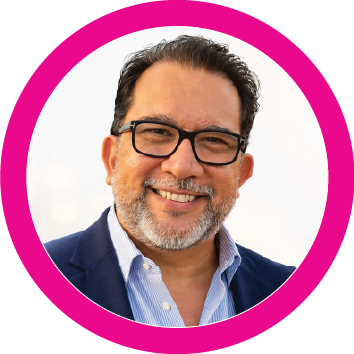
Alex Fernandez
CEO, Synergy Orthopedic SpecialistsSubscribe for More
Don’t miss future insights—subscribe to our blog and join us on LinkedIn: Stewart Gandolf and Healthcare Success.
Note: The following AI-generated transcript is provided as an additional resource for those who prefer not to listen to the podcast recording. It has been lightly edited and reviewed for readability and accuracy.
Read the Full Transcript
Stewart Gandolf (Healthcare Success): Hello everyone, and welcome to the Healthcare Success Podcast. Today I'm introducing my guest, Alex Fernandez. He's CEO of Synergy Orthopedic Specialists. Welcome to the podcast, Alex.
Alex Fernandez (Synergy Orthopedic Specialists): Thank you, Stewart. Thank you for inviting me, and I look forward to participating.
Stewart Gandolf (Healthcare Success): So we're going to talk about, for our listeners today, a topic that I'm really excited to cover because I've seen this for decades. The whole idea of how do you actually integrate a multi-location provider, whether that's a medical practice, a DSO, an addiction group, or whatever. The integration part—discussing it—is one thing. Doing it is another. Doing it successfully is another thing still. So, Alex, I'm really excited to talk about this topic.
So let's just start off at the beginning. Tell me, what is the mistake that quietly wrecks physician group or other kinds of integrations? Is it financial, operational, or something else?
Alex Fernandez (Synergy Orthopedic Specialists): Me personally, I think that over the last 30 years I've been doing this, particularly in GI, I spent a lot of time. I was CEO and founder of Gastro Health, which is now an over 500-physician group in 10 states. Then later on I went to New York City to do a dermatology roll-up. More recently, those two were private-equity backed, but this one is a physician-led, independent orthopedic group in San Diego. Synergy Orthopedic Specialists is a great example of all the things you should be doing right, particularly around physician leadership.
When you think about the question around operational issues, I think the biggest mistake we make when we're trying to bring doctors together—whether it's independent physicians merging into one organization or it's a private equity firm that acquires a group and is trying to do some tuck-ins—is leaving the acquired group as is. Same name, same systems, same identity, because it feels respectful and it avoids the fight on day one. What they've actually done is permanently keep the culture the way that it is, not really bridging the gap and bringing the practice into the new organization and adopting the flag, the brand.
They never align the goals. They never row in the same direction. I've seen it both ways. At Gastro Health we were extremely successful. We built a platform. In other groups it's been, "Just leave it the way that it is. The doctors want their brand. They want their name. But let's centralize some of the operations, some of the finance. Let's centralize billing or accounting or HR, some of the things that make a group a group, but let's leave everything else the way that it is."
So two years later, whether it's the group that originally came together as an MSO or the private equity firm that acquired the business, nothing's changed. The numbers are not being hit, and they're trying to figure out why. They're deferring the conflict into the future. They're trying to avoid the hard conversation, which, two years later, is much harder to have because now you're trying to bring everybody back together after they've become even more entrenched.
Stewart Gandolf (Healthcare Success): Yeah, for sure. There's so much to unpack here. First of all, let's talk about strategy. We've worked with clients—as we've talked about Pacific Dental back in the old days when we worked with them. They had four locations. They've chosen to have a house of brands—in this case, on the extreme, 1,000 different brands—but there's still continuity. There are still systems and operations. It's not left to democracy. They're very planned in how they do that.
Other companies, of course, bring everybody under the same brand name. Others have a hybrid approach where they might have three or four large regional brands and keep them that way. There are arguments, pro and con, for all these different approaches. One of the advantages of having multiple brands is if somebody dies or some kind of reputational problem happens, you're not bringing the whole business down. On the other hand, it's a lot harder to market when you have lots of different brands.
I'm curious, Alex, before I go further. I think what you're talking about is something even deeper than that. In your opinion, do you really believe that it should always be a branded house versus a house of brands, or do you feel it's really the operational integration that's the key factor?
Alex Fernandez (Synergy Orthopedic Specialists): I think it depends on the strategic idea. Sometimes MSOs or large groups come together and say, "We're going to build an MSO or DSO to develop something bigger—economies of scale around purchasing, maybe we can get better benefits, maybe we can bring in ancillary revenue streams." Basically, you're developing a co-op. That's really the definition of a co-op or consortium of groups.
But that's not truly an integrated delivery system, which is where healthcare is moving. Healthcare, particularly if you think about gastroenterology or orthopedics or some of the other specialties that move the needle in terms of healthcare spending, is trying to move business away from the higher-cost sites of service. If we can move a colonoscopy across the street and do it for $700 less, that's really the game. That's what payers want. That's what employers want.
So if you're building something that's intended to benefit physicians from a financial perspective, that's a positive thing too. But if we're really trying to move healthcare forward and develop something that's bigger—a true platform—then I do believe that a platform needs to be fully integrated.
That doesn't mean that if you acquire a business—let's say Smith Orthopedics—they can't move to a co-branding strategy with a sunset date where Smith Orthopedics becomes part of Synergy, and there's a defined transition period so the brand doesn't just evaporate overnight. But, like you mentioned, if Smith Orthopedics is really built around Dr. Smith and he retires, then the business can evaporate too. It can walk right out the door with the doctor, and that's probably the bigger problem.
Stewart Gandolf (Healthcare Success): It's funny. As you know, we've worked with lots of private equity and doctor-owned multi-location businesses. There are businesses where they really embrace the half measure, but they don't really integrate at all. I think of it as a continuum, sort of the primate becoming a running person over time. There's a different evolution that we see.
The beginning is what you said. It's really more of a consortium or a group agreement, whatever the actual structure is. There's no brand economy there. There's no strategy there. I can see why it's popular, and I loved your comment that you're just kicking the can down the road. You're going to have to solve this eventually.
We've met organizations that tell us, "No, no, no. Don't even bring up the name change. It's in the doctor's contract. We can't change it." So you've basically built the strategy in for perpetuity, or at least as long as you're involved. I can see why it's easier to sell doctors on joining that way, but when you're trying to build a business, it's tough. That's a real challenge.
I'll talk later about a dermatology client—we have some business there as well—but I can think of a dermatology practice we worked with, not in the New York area but in a different part of the country, where they had a CEO. They were great doctors and they had a great CEO, but they never really embraced the organization. They had a name, but if you asked a patient where they went, they'd still say, "I go to Dr. Smith," or "I go to Dr. Jones." From a marketing standpoint, when we're working with a client, we usually recommend going further and really building a brand identity.
Any comments on that? It's so easy just to say, "Well, at least we have a name," but nobody was really embracing it. It was still all about the individual doctor.
Alex Fernandez (Synergy Orthopedic Specialists): I think it starts with what happened when the doctor first became interested in partnering with a larger institution or selling to a private equity-backed medical group or DMO. It starts there. The question is, what were the physician owners who built this practice actually thinking?
Sometimes they strongly believe, "I've built a great business. I've built a great organization. What I'm looking for is a partner to help me grow." The problem is that institution might only be doing a couple million dollars in revenue and maybe around a million dollars in EBITDA or less. They're really not big enough to do a transaction on their own, but they're easy to tuck into a larger platform.
The assumption becomes, "Let's get them in first, and then we'll sell them on the rebranding, the new strategy, getting everybody on the same page, making sure everybody's using the ancillary services." Whether that's a pathology lab in dermatology or getting everyone to use group purchasing and bundle all of their Botox or Juvederm purchasing instead of everybody buying under their own personal accounts because they want their own name on a website.
There are a lot of arrangements the cosmetic companies offer, whether it's on lasers or fillers. It all starts there. If you've sold them on the idea that nothing is going to change, and they truly believe that's why they did the deal, then everything that comes afterward feels like a lie. "You didn't tell me what you were really going to do. You were just hiding it from me because you wanted to acquire me."
I think that's created a lot of ill will toward private equity firms, people doing deals, and bankers, because the doctors were never truly aligned with the real vision of the organization. The real vision was to build a platform that was going to expand and grow within a particular market, whether that's the Southeast or somewhere else. The idea was, "If we grow this thing, it's going to become more valuable. Two plus two equals seven, and everybody is going to do really well five or seven years from now."
The reality, as you know, is that there are a lot of deals that are just stuck. They're doing what they were supposed to do, but they never achieved the three-, four-, or five-times growth that private equity firms typically need in order to exit the investment.
Stewart Gandolf (Healthcare Success): Yeah, I totally agree. We've identified the mistake, and by the way, from the doctor's point of view, I don't blame them. I'd feel bait-and-switched too. If that's how the deal was sold to me, and then suddenly you're telling me we're changing the brand, that conversation should have happened before they signed on the dotted line.
I also wonder—and I'm curious about your experience with this. I definitely know a lot of private equity people and a lot of bankers. I don't see quite as much acquisition of individual businesses today as I do organizations trying to figure out how to grow organically and get to the point where they can sell. Maybe the acquisition frenzy has slowed down a little.
I think you're right. Being aligned up front isn't just the right business strategy. It's also the ethical thing to do. You really want to be clear about what it is you're buying.
Let's talk a little bit more about what else happens. I have some of my own input here, but when you leave the acquired group as is, and it feels respectful, what are some of the problems that come downstream that might surprise people? Whether it's a doctor-owned group that merged that way or a private equity-backed group, what are the common explosions on the back end?
Alex Fernandez (Synergy Orthopedic Specialists): I agree. It feels respectful. The problem is that the integration never happens. Basically, the physicians and the management company or the MSO end up on opposite sides, so they're never able to make the integration happen.
You can honor the physicians completely and still bring them into one company. There's no tension when you leave everything as it is. It feels respectful, but what you're really doing is avoiding the inevitable. You're postponing the alignment conversation and keeping the peace, but the bill comes due later, and it's much bigger because the business has grown. Maybe you've added more doctors. Maybe you've made ancillary investments. Maybe you've opened new locations, and things just aren't working together because the alignment isn't there.
The mechanism works like this. When you tell an acquired group, "We'll leave you alone," they don't hear respect. They hear, "You don't really have to change." The culture becomes set because you tolerate it—not because of what you announce at the kickoff meeting, but because of how the practice is actually run every quarter. They continue running their practice on their own terms, and the gap just hardens.
Integration escapes you, and then it becomes a renegotiation 700 days later because now you're trying to exit, and the people buying the business believe they're buying a platform instead of a cooperative of independent groups.
In some cases, particularly with all the changes around non-compete laws, the physicians just dig deeper into their old identity, and the trust really erodes. People start wondering, "We own part of the MSO. We're supposed to be happy that we're going to do an exit. Why are we changing things now? Why are people being asked to sign new agreements?" Now you're trying to renegotiate a deal that originally involved 20 doctors, but today it involves 100 doctors. That makes it much harder—almost impossible—to execute a successful exit.
You get stuck trying to take the group to the next level. Whether you're bringing in a new CEO or a new leader, people become entrenched in what they know, and they simply don't want to change.
Stewart Gandolf (Healthcare Success): I have a follow-up question, but first I want to offer an observation—maybe a hypothesis.
In my experience, practices wildly overestimate their brand strength. I'll give you a real-life example. If you come back to the premise that, "I've already built a big brand"—which, by the way, is often built around a single individual—we worked with a very respected cancer center in Texas. They were doing Phase I, II, III, and IV clinical trials internationally. They had a huge physician group and multiple locations.
They assumed everyone in their hometown knew who they were. Everybody—from bank tellers to people walking down the street. They didn't want to pay for a formal research study, but they hired us to work with them. I flew out there, and since we didn't have a research budget, I simply sampled seven people on my way to the airport.
I asked each one, "Who's the leading provider for cancer care in town?" Guess how many out of the seven named this organization?
Zero.
A lot of them said MD Anderson, and MD Anderson wasn't even in that city.
Alex Fernandez (Synergy Orthopedic Specialists): Correct, because their brand is stronger at a national level.
I agree with you 100%. Physicians underestimate the value that all of them together bring to a brand. As a group grows, they don't always understand that collectively they create far more value than they do individually.
All of a sudden, when you have 50, 60, or 100 doctors, they may represent twenty or thirty percent of the market share in a particular region. People may immediately think of the hospitals and health systems because that's where the money is. They may think of one particular independent physician. Then they think about some of the larger physician groups.
We see that ourselves when we're working on our SEO strategy and trying to improve our visibility now in LLM searches. It's no longer just about traditional search engine optimization. The AI has to know who you are. I strongly agree with you that physicians often don't appreciate the value of the brand they've built together. The value simply isn't as present as they think it is.
Stewart Gandolf (Healthcare Success): Yeah. By the way, the last person I asked was standing in their parking lot, with the practice's sign right behind them, and she still answered, "MD Anderson."
There you go.
I thought you made another really interesting point. It's hard enough to build a brand with 100 doctors. It's almost impossible to build a meaningful brand around a single doctor or just a couple of doctors. It's possible, but it's really, really difficult. That's where the economies of scale start to build.
So we've talked about the downside of not integrating. What does a really good integration look like? When it's done right, what does it actually look like beyond simply combining the back-office tasks?
Alex Fernandez (Synergy Orthopedic Specialists): I think the key is that you don't build a business with one person or one executive or one CEO. The business is built by multiple layers of people who all bring something to the table.
It goes back to what I said earlier. The discussion needs to happen when you're dating. When everybody is going out to dinners or lunches and talking about how exciting this idea is going to be—that we're all going to come together, whether private equity is involved or not. I've done it both ways. I helped roll up about 30 groups representing almost 70 physicians before we ultimately built the private equity platform.
Everybody has to understand the vision. More importantly, the physician leaders—the doctors on the board and the leaders within the organization—have to know who we are, what we stand for, what the vision is, where we're going, and what we're trying to accomplish beyond simply making more money because Medicare just cut reimbursement by 3% while our overhead keeps going up another 10%.
Those pressures are real, so I understand why physicians want to hold on to the things they believe made them successful. But if they can see beyond that, our experience at Synergy is a good example.
When I first came on board six years ago, everybody was still operating under different brands. The Synergy name was just this little thing at the bottom that said "Affiliated with Synergy Orthopedics." It was almost like a murmur. When patients called the office, everyone answered the phone using the doctor's office name or the old orthopedic group name. That's simply how the practice operated.
When you align around a common vision and mission, and everyone understands what you're trying to accomplish over the next three, four, five, or even 10 years, and all the physician leaders and executives are rowing in the same direction, then you can truly say, "We all fly the same flag."
A lot of it comes down to making sure everybody knows where you're going. The doctors you bring in later, whether through a tuck-in acquisition or a merger, have to believe in that vision as well. When people are allowed to keep doing whatever they want independently, it erodes confidence—not just among the new physicians, but even among the people who originally bought into the idea.
There's a difference between flexibility and making sure everybody is truly in the same boat.
At Synergy, that's really been our success. We cover the local hockey team, the San Diego Gulls, along with several other sports teams. Obviously, you can't have 25 doctors covering one sports team—you only need three to five—but when the organization can say, "We're the official orthopedic team for the hockey team," or "We're the official orthopedic team for the soccer team," everybody feels like they're part of that success.
That builds a much bigger and stronger brand than any one physician could create on their own. The contribution of everybody together doesn't just build a better brand—it builds a stronger, more successful, and ultimately more profitable business.
Stewart Gandolf (Healthcare Success): That's great.
Another topic we discussed before is what we used to call, back in the ‘90s, a practice transition strategy—or a practice transition strategy. How do you get patients to accept a new name? I've seen these transitions bungled many times.
You just mentioned sports partnerships. I remember a practice that served as the team doctors for the local NFL team. When they changed brands, they dropped that association during the transition, and it was lost. Everybody became confused and started going somewhere else. It was handled so poorly.
Especially when you already have a larger brand and some equity to protect, there's a lot at stake. I'd love to hear your thoughts on that. What's your playbook for making sure you successfully transition the local brand equity without losing patients or physician goodwill along the way?
Alex Fernandez (Synergy Orthopedic Specialists): A lot of it starts with how the physicians feel from the very beginning.
Typically, these transactions take a year, sometimes even longer. But once you've decided that you're moving forward, you need to be extremely clear with the group that's joining you. They need to understand that they're not just adopting a new brand. They're adopting everything that comes with that brand. They're merging into the platform.
If the brand they're bringing in truly is very strong, or if it's genuinely a deal breaker, but everybody still believes the transaction makes sense, then maybe you establish a transition period. You make it clear that the old brand won't exist forever, and you agree on a defined timeline.
From day one, however, the new brand has to be introduced. Then, over a relatively short period—maybe as long as a year—you complete the transition.
That's really no different from how you handle payer contracts. A practice may have a payer contract that the platform doesn't have, so you work through a transition period while you're trying to negotiate a comparable agreement for the larger organization. During that time, you may continue billing under the old agreement until everything is in place.
There's always some flexibility that can be managed as long as it's strategic and temporary.
If, at some point, the payer says, "We're not going to give you that contract," or they insist on paying below-market rates, then you should already have had that conversation with the physicians. They should understand that if you can't negotiate a fair agreement, you may need to walk away.
If you're not willing to walk away, then from a negotiating standpoint you're simply begging for a rate increase.
I think it's critical that those conversations happen long before the documents are signed. Like I said earlier, those discussions happen while you're having dinner together, while you're dating, before the deal has even been inked.
Once the deal is signed, all of those issues should already be resolved. If they aren't, you're just pushing the can down the road for another year or two, and eventually it becomes much harder to make any meaningful change.
Stewart Gandolf (Healthcare Success): That totally makes sense. On that note, how do you bring physicians along through that process without making them feel like they're losing control? That can kill the deal before it even gets started.
Obviously, we want to be transparent, and I'm glad you feel that way because I think it's the right thing to do. But how do you manage those expectations? Do you have a process for that?
Alex Fernandez (Synergy Orthopedic Specialists): I don't know that I'd call it a formal process, but it definitely starts before due diligence. Even before that, when you first meet with a group, visit their location, hear their story, and understand why they're thinking about merging or selling, those conversations need to begin.
Maybe you don't have them during the first meeting, or even the second meeting, but certainly shortly thereafter.
Sometimes the physicians bring up the questions themselves. They'll ask, "Do we have to change our name? Do we have to adopt your electronic medical record system? Who's going to run payroll? How are the bills going to get paid?"
Those conversations are critical—not just for the physician founders who are considering a merger or sale, but also for their staff, their administrator, and everyone else in the practice. They're wondering what's going to happen to their jobs.
The office manager may be thinking, "I'm the office manager, the bookkeeper, finance, marketing, scheduling—I do everything." Then you explain that, over time, they'll be able to focus on managing their team because HR will be handled by the head of HR, IT will be managed by the head of IT, and so on.
I think it all comes down to having those conversations early. I don't necessarily have a formal framework, but in my mind those discussions usually happen by the second or third meeting, when you're really talking about what life is going to look like after the transaction.
And if they don't ask those questions, you have to introduce them yourself.
Stewart Gandolf (Healthcare Success): Yeah, I think that totally makes sense. Usually this is the first time they've gone through something like this, so they don't even know the right questions to ask. Bringing those issues up proactively is really helpful.
We talked about this offline a little bit—the difference between private equity-owned integrations and physician-owned integrations. I'd love to hear your perspective. What are the common advantages or disadvantages? What issues tend to come up more often with one versus the other?
Alex Fernandez (Synergy Orthopedic Specialists): Whether you're talking about a sale or a merger, whether you want to stay independent or partner with private equity, it really starts with the pain points.
What's happening in your market? What's happening in your specialty that's creating enough pressure for you to even consider looking at alternatives?
You've spent years building this business. You've added partners over time. Maybe now you're an eight- or 10-doctor practice. So what's changed?
Did the founding physician retire, leaving a leadership vacuum? Did the remaining partners realize they don't really know how to take the practice to the next level? Did the competing group sell to private equity and suddenly they're eating your lunch because they have better marketing strategies? Did the hospital buy the primary care doctors and now they're feeding referrals into the specialists they acquired a few years earlier?
It really starts with understanding the source of the pain.
Personally, I don't think it matters whether it's private equity or not.
Maybe five or 10 years ago everyone thought, "Private equity is going to pay me $10 million, so I'll sell now. I'm planning to retire in a few years anyway. Let them figure out what happens next."
Other founding physicians think, "I probably should do this because I'm the only one running the practice. My partners depend on me for everything, and eventually I won't want to keep doing this."
Today, though, a lot of private equity deals haven't worked out the way people expected.
The founding groups—the platform practices—often did very well. But some of the tuck-in groups feel like they gave things up. They never experienced the income repair they expected. Maybe they received an eight-times EBITDA multiple, but they spent the proceeds on a house, their kids' college, or other expenses. Now they're actually making less money than they were before.
Private equity firms have learned lessons too. They're much more selective today because they've been burned.
Everybody has to establish the right expectations from the beginning.
When you're acquiring a business, you don't acquire it just for the sake of making an acquisition. There has to be a clear investment thesis. Everything has to align. It has to be the business you actually want to buy.
If somewhere along the line you start telling yourself one story while telling the physicians another story, eventually things are going to fall apart.
It's similar to buying a bad stock. Somebody tells you to buy it, so you invest, and then a few days later it's down 20%. You wonder what happened.
Well, maybe you should have done more due diligence instead of listening to your buddy or your barber tell you to buy gold or Bitcoin when it was already at its peak.
It's similar with physician practices. Doctors know they own a business because they built it, but many of them aren't businesspeople by training. Sometimes it's difficult for them to understand the transactional value of what they've created.
I know a lot of very smart physician executives who have done extremely well while remaining independent, and I know others who have done extremely well in private equity-backed organizations.
Both models can absolutely work.
Stewart Gandolf (Healthcare Success): I've noticed something after working with so many multi-location organizations over the years. Up to a certain point, especially in physician-owned groups, there's almost a sense of democracy where everybody gets a vote. That works well when the organization is smaller, but as it grows, it becomes much more difficult. I'm sure you've seen that before as well. It's understandable why that happens, but as an effective leader, you have to herd the cats.
Every time I talk to someone in this space I say, "Let me guess. You have fifty doctors. About twenty percent are excited about change, most everybody else is somewhere in the middle, and there are a few who don't want to do anything." They always say, "Yes. How did you know?" So as a leader, how do you get physicians aligned through this process? I'm assuming that's pretty important to your ultimate success.
Alex Fernandez (Synergy Orthopedic Specialists): For sure. If you want to get a deal done, you have to make a deal that even the people who don't want to do a deal are willing to accept, or they're willing to walk away from the practice. Maybe it's simply not the right fit for them, and they're willing to leave and let the practice move forward. They don't want to hold everyone else back by saying, "This just isn't for us. We're going to leave and let you guys do your thing."
That works when you're talking about a group with 50 or 60 doctors. But if you're talking about a 20-doctor practice and five physicians decide to leave, the deal probably isn't going to happen. So you have to make sure the deal also works for the people who don't want to do the deal. A lot of that comes from the fear of losing control. I think that fear, more than anything else, is the real deal killer.
You don't overcome it simply by reassuring people. You overcome it by building the right structure. There are really two sides to this: clinical control and business control. Clinical control is how physicians practice medicine. Regardless of corporate practice of medicine rules—or, in California, some of the new laws that require additional government oversight around transactions—clinical decision-making has to stay with the physicians. That's a full stop. They have to know that they will continue making decisions about patient care, and you have to genuinely mean it.
I've seen it work in independent physician groups by making sure everybody has a voice. Hold meetings that are open to everyone on a regular basis. If somebody wants to sit in on a board meeting, it shouldn't feel like everything is happening behind closed doors. They should be able to hear what's going on and understand how decisions are being made.
With private equity, sometimes the structure is different. Legally, you may have to use a friendly physician model. But even then, there needs to be some type of clinical governance board that gives physicians more than just a voice. They need real authority over clinical decisions, especially if you're trying to standardize care, improve patient-reported outcomes, or develop quality metrics across the organization.
Business control is the harder part. That's where everybody has to buy in. Systems, branding, strategy—all of those things belong on the business side, and you have to be honest about how they're going to work. You have to eliminate the fear. You can't leave blurry lines by saying, "We're partners," when what you really mean is, "We're going to run your practice."
You have to clearly define the structure and make sure everyone understands exactly how it's going to work. This isn't something you fake with a town hall meeting after the fact. It has to be engineered into the deal before the letter of intent is signed, not while you're finishing the definitive agreements. The physicians have to feel that they have meaningful equity, a real vote, and that they're genuinely helping build the organization, whatever that organization becomes.
Again, I'm looking at this from the perspective of building a true platform. The hard part comes when you're being tucked in, acquired, or merged into another organization after being told you're going to be part of all of this. If there isn't a real structure that gives those physicians a meaningful voice and a meaningful vote, at some point they're going to quietly walk out the door.
Today, with the way non-compete laws have changed, that's much easier than it used to be. In New York City, when I was doing deals, non-competes were measured in city blocks, not miles like they are in Florida. In California, there really are no non-competes anymore. So you have to keep people engaged. They have to believe that what they're building together is genuinely better than what they had before.
Stewart Gandolf (Healthcare Success): Got it. So we're wrapping up here, and I've got a couple more questions.
We're often brought in as the marketing agency to work on the branding, the SEO, paid search, and everything else. That's what we do. We're integrated into these organizations, and that's our niche. There are a lot of things we can do well, but there are also some things that are much harder for us as an agency. One of those is the patient experience.
It becomes really difficult if everyone inside the organization still thinks they work for Dr. Joe instead of feeling like they're part of a larger organization with standardized expectations. What have you found works to help standardize the patient experience? What areas tend to become problematic?
Alex Fernandez (Synergy Orthopedic Specialists): I think, first of all, it starts with company culture, and that culture is driven by the physicians. Everybody has to be aligned around the vision of the organization. What are we doing? How are we doing it? Then it goes back to what we've been talking about all along.
If we say we're going to use this software, we're going to do billing this way, and we're going to standardize operations, then it can't be that Dr. So-and-So is still going to do his own billing, or Susie is going to buy medical supplies from the sales rep she likes because he brings lunch every week.
Of course, he can still bring lunch. But 30% percent, and that puts a significant amount of profit back into the physicians' pockets—not from buying from the rep who's the nicest person.
It starts with physician leadership. The physicians have to be 100% committed to the vision and strategy. Once they're aligned, it gives a marketing company like yours the structure and the creative brief around where we're going. Everybody has to be aligned, and the branding and the strategy have to be aligned—not just operationally, but that alignment has to carry through into the marketing as well.
Stewart Gandolf (Healthcare Success): Yeah, for sure. Just to offer a few practical tips for people who may not be as familiar with this from the marketing side, one of the things we've consistently seen work is having someone inside the multi-location practice who actually has a marketing background. We can certainly help, but somebody has to be able to throw the ball back to us.
That person can exist at different levels depending on the organization. If it's a consumer-direct business, they may have a Chief Marketing Officer. If it's a smaller practice that's primarily referral-based, they may have a Director of Marketing. But somebody needs to own that function internally.
The other thing we always tell people is that physician liaisons and marketing are two completely different disciplines. They're different skill sets. Don't try to combine those jobs into one position. We've seen organizations do that over and over again. That's probably a whole separate podcast for another day.
I guess my last question is this. What advice would you give to a leader who's about to acquire another physician group—or, from the other side, to the physician leader who's about to be acquired? What are the most important things they should keep in mind?
Alex Fernandez (Synergy Orthopedic Specialists): I think the leaders on both sides need to sit down, break bread together, and ask all the hard questions. They have to figure out whether there's real alignment. If there isn't, then there shouldn't be a deal. You shouldn't do a deal just for the sake of doing one.
There has to be alignment because, if there isn't, all of the cracks will eventually show up later. I think that's the biggest takeaway. Spend the time together. Figure out what one group's strengths are and where its weaknesses are. Then the acquiring organization should be able to fill those weaknesses with its own strengths.
Or maybe both organizations have similar strengths, and together they become even stronger. That's really what you're trying to accomplish. One plus one should equal three.
Stewart Gandolf (Healthcare Success): Great. Alex, I appreciate your time today. This was fun. I told you it would be fun. I love this topic because we see it at every stage of the evolution—from the very beginning through maturity—and that middle stage can be especially tricky.
Alignment is such a critical concept. It's important not only within the organization, but also from our standpoint as an agency. We have to be aligned with our clients' goals. If that alignment isn't there, it's really difficult to succeed. So I really appreciate your time today, Alex.
Alex Fernandez (Synergy Orthopedic Specialists): Likewise. Thank you for inviting me, and I look forward to doing it again.
Stewart Gandolf (Healthcare Success): Great. Thank you.