How One Health System CEO Built a Medical School to Tackle Rural Doctor Shortages








Why do so many healthcare initiatives—no matter how well-funded or data-driven—fail to change patient behavior?
Healthcare organizations across the country are facing a growing workforce crisis—but nowhere is it more acute than in rural America.
In this episode of the Healthcare Success Podcast, I’m joined by Dr. Kenneth Holmen, President and Chief Development Officer of CentraCare, to explore one of the most urgent challenges in healthcare today: the physician and workforce shortage—and what it will take to fix it.
From an aging population and declining birth rates to decades of underinvestment in medical education, we unpack the structural issues driving the shortage—and why rural communities are being hit the hardest.
A central theme of our conversation is this: healthcare systems can’t rely on traditional pipelines anymore. To survive and thrive, they must take ownership of their future workforce. For CentraCare, that meant partnering with the University of Minnesota to help launch a new medical school designed specifically to train physicians for rural communities.
We also explore what makes this model different—from recruiting students with rural roots to creating a “hub and spoke” training system that integrates education directly into community-based care.
Finally, we discuss what it really takes to make something like this happen: breaking down silos, aligning stakeholders across healthcare, education, and government, and embracing a new way of thinking about leadership, collaboration, and long-term investment.
Why Listen?
If you’re a healthcare executive, marketer, or leader concerned about workforce shortages, rural access, or the future of healthcare delivery, this episode offers a compelling, real-world case study.
You’ll hear:
• Why the physician shortage is accelerating—especially in rural areas
• How workforce challenges extend far beyond physicians
• Why traditional recruitment strategies aren’t enough
• How one system built its own pipeline through medical education
• What it takes to align healthcare, academia, and government
• Why leadership and mindset—not just resources—are the real barriers
Key Insights and Takeaways
- The physician shortage is a long-term structural problem. Population growth, aging demographics, and stagnant medical school capacity have created a widening gap between supply and demand—especially in rural communities.
- Rural healthcare faces a disproportionate burden. Because most training programs are located in urban areas, physicians are far more likely to practice in cities, leaving rural regions underserved.
- “Grow your own” is the most sustainable solution. Training students from rural backgrounds—and training them in rural environments—increases the likelihood they will stay and practice in those communities.
- Healthcare systems must take ownership of workforce development. Relying solely on academic institutions to produce talent is no longer sufficient. Health systems must actively participate in education and training.
- Siloed thinking is the biggest barrier to change. Progress requires collaboration across healthcare providers, academic institutions, government, and communities—something that traditional models often resist.
6. Culture and purpose are powerful recruitment tools.
Physicians who are motivated by service, community, and purpose are more likely to thrive—and stay—in rural healthcare environments.
7. Scale alone won’t solve the problem.
Bigger systems aren’t necessarily better. What matters is “systemness”—alignment, best practices, and shared goals across the organization.
8. Leadership requires clarity, confidence, and resilience.
Solving complex challenges like workforce shortages requires leaders who can create clarity in uncertainty, take criticism, and persist over time.
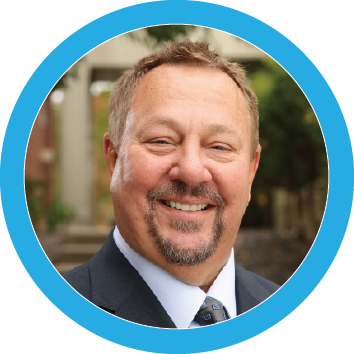
Dr. Kenneth Holmen
President & CEO, CentraCareSubscribe for More
Don’t miss future insights—subscribe to our blog and join us on LinkedIn: Stewart Gandolf and Healthcare Success.
Note: The following AI-generated transcript is provided as an additional resource for those who prefer not to listen to the podcast recording. It has been lightly edited and reviewed for readability and accuracy.
Read the Full Transcript
Stewart Gandolf (Healthcare Success): By the way, here there's no stress. It's really easy. If we say something we don't want to, we just record it and we can edit. So that's the magic. And the one thing I will ask you before I forget is at the end, make sure you don't close out your browser. Let it stay until I you know or I close out on my side. Because what can happen is it can clip off at the end. It won't render all the way. So, okay. And your name is, just to make sure I'm pronouncing it right, is Holman, Dr. Kenneth Holman.
Kenneth Holmen (CentraCare Health): Sure, you betcha.
Stewart Gandolf (Healthcare Success): All right, CDO and president of CentraCare Health. Perfect. All right. So here we go. Welcome to the Health Care Success podcast. And today I have another intriguing guest, as you may know, if you're a loyal listener of our podcast. I like to cover things beyond just marketing and talk about the future of healthcare, where we're going, what's next. And I'm excited to talk to Dr. Kenneth Holman, as I mentioned a moment ago, and about starting the first medical school in Minnesota in 43 years. It's been a lot. Yeah, so that's a long time. So first of all, welcome Kenneth. Good to meet you.
Kenneth Holmen (CentraCare Health): Thank you much Stewart and it's great to be with your listeners today and have a conversation about a really important topic in American healthcare and that is where's the next generation of our workforce coming from?
Stewart Gandolf (Healthcare Success): For sure, we do have this little thing called a doctor shortage, especially in rural healthcare. By the way, Ken, when I was looking through your bio, it's like, it looks like we grew up kind of in the same time. I have pictures of me with kind of the same haircut. So back, my sports pictures. So that's kind of fun. Anyway, so jumping straight into this, you know, you've done this and for half a century with a specific focus on healthcare. Why was now the moment to do this and let's talk about the problems you're trying to solve. I'd love to know and you can also throw a little bit about your background first, I guess, and we'll just jump straight into it.
Kenneth Holmen (CentraCare Health): Yeah, thanks Stewart. I'm from a small town in Iowa. So I want you to, we're not going to say how old we are Stewart, but let's go back to 1970 when I am a senior in high school in a small town in Iowa. My mother is a nurse in our small town in Iowa. And over a couple of years, the hospital in our town closed. Inability to recruit physicians.
Kenneth Holmen (CentraCare Health): A lot of changes, know, big box stores, Home Depot, Amazon, internet, all things have conspired to change the way American commerce works. So Ken goes to college and then goes to medical school. And so I think we're best when we understand data. So I'm going to use data to get us going Stewart. So Ken goes to medical school at the University of Minnesota in 1974. In 1974, the University of Minnesota has two campuses, one in Minneapolis, one in Duluth, and the Mayo School of Medicine in Rochester. Probably about 260 total students for the state of Minnesota. Population of Minnesota, 1974, is about 3.1 million. Fast forward to last year, 2025, population of Minnesota is about 5.3 million, 5.4 million. Same number of medical students.
In other words, the population has nearly doubled and the number of physicians being trained is exactly the same. So that's one very important fact. Second is there's an increasing dislocation or misallocation of physicians. Most medical schools and training programs are in large metropolitan areas. And the rule of thumb is yet generally speaking, you stay in practice and have a career and a life in a metropolitan area many times where you train. You might meet a partner, get a job there, whatever. And so there is a disproportionate access issue in rural America compared to metropolitan areas. So that would be a second fact.
So the third fact is that as we take a look at the workforce shortage beyond physicians, I talked about physicians, we have the same issue related to advanced practice providers, nurse anesthetists, med tech and lab tech, x-ray techs. In other words, the whole healthcare workforce is creaking because of misallocation, lack of training, and there's probably a couple other facts that are really important, and that is America is aging. We have now more people in America that are over 65 than under 18, and that has several ramifications for healthcare. One is an aging population needs more services. Number two, because of progress in technology and drugs and therapies, we can do more. And thirdly, because of this mismatch in population, there are fewer people to take care of us old folks. I'm not calling you old Stewart, you kind of get the idea.
Stewart Gandolf (Healthcare Success): Well for the record I found out that you are a little older than me but that's still in the same ballpark I guess.
Kenneth Holmen (CentraCare Health): And likewise, the birth rate in America continues to fall. The birth rate in America last year was one of the lowest in history. And so you take the fact of no new medical schools, shortage of workforce, macro demographic pictures that are making a challenge. It means that rural America has suffered more than the metropolitan area. And so as a centric here, as a fairly good sized health system focused on rural America. How do we ensure our success?
And I'd like to mention one other thing Stewart. So our organization is not just about healthcare. We're the economic engine about state Minnesota and our communities. How we do is how Main Street does. It's how our churches do. It's how our stores do. It's how our farms do. It's how this whole shared ecosystem in our community does. So was this about doctors? Of course. Was it about nurses and APPs and other healthcare professionals? Of course. Was it about Main Street and socioeconomic development? Of course. And it was about a sense of community pride. Instead of rural America being the little engine that didn't, we're the little engine that absolutely did it. So that's the context of what we were doing.
Stewart Gandolf (Healthcare Success): That's terrific. And it's funny, you know, I spent years back in the 90s on the road. I was teaching seminars about growing businesses and health care. And it was the rural areas, even then it was beginning to show. I remember they were talking about how you mentioned Walmart was coming in and just sort of changing the entire economic structure of these rural towns because it used to be 30 or 40 little shops all doing their little thing. Art came in and just rolled right through. And it had a big impact.
And the second comment you mentioned, I've often thought about that. I think you're the only person I've heard say it out loud, or at least recently, of the idea that in so many of these rural areas, the hospital is the main employer. It's the main thing. Everybody has experience with the hospital. It goes back decades. Their family was born there. They may have died there. So it's a big part of the community fabric, for sure.
And then the other thing is, you know, the physician shortage, and it's great that you mentioned about the advanced other caregivers. That has been around a long time. But again, you could see these things a long time ago. You could see them. It's been a slow motion train wreck, right? At the same time.
And so I think that that's you're right. You talked about some of the trends I noticed even back then when I was early in my career in healthcare and how things were changing.
So how would you describe the physician shortage now in rural Minnesota now? Meaning like, is that impacting, maybe the way you could say this is how is that impacting your hospital? How is that impacting the broader health system? I'd love to hear more about that part. Just to sort of bring this from the stats down to the reality that you're facing.
Kenneth Holmen (CentraCare Health): Yeah. So, the average age of a physician in outstate Minnesota is over 55. and about one third of the physicians in outstate Minnesota will retire in the next five years. So that's a, that's not a theoretical crisis. That's a real crisis. And so the challenge for us is how do we create educational opportunities, which by the way, take time, energy, and money to backfill, right? This is not a light switch solution.
So as we take a look at how we provide services, and it could be anything from how do we deliver babies, right? You need people to deliver babies and have kids to providing pediatric care, to total knee replacements, to providing care to our immigrant communities. The whole spectrum of healthcare is highly dependent on an educated workforce of many different types of professions that want to practice and work in their town.
And of course, the challenge we have is that we are not a degree-granting institution. We are a 501c3 not-for-profit healthcare company. We do not have the capacity, nor will we ever grant MDs or APPs or RNs or MBAs or whatever. And so the challenge we've faced is that historically in American commerce, everybody's siloed.
The educational dudes do education, right? The marketing guys do marketing. Farming does farming, healthcare does healthcare. Whereas our ecosystem is so shared in outstate Minnesota, we had to be willing to partner with people differently.
And so we reached out to the University of Minnesota, which is a major academic institution with a highly ranked medical school, and said, we want to joint venture with you. We want to partner with you. We'll help with the economic cost.
As you know, economic financial challenges are very real, correct? There's not a magic solution to economic issues related to education in America. So we said, we're going to partner with you in a very different way. And we did. So we absorbed much of the cost of the medical school. We worked with them. We formed this remarkable campus. We had a couple thousand applicants for our first class of 24 last year. It's been just remarkable to see our second class was just accepted a couple of weeks ago, several thousand applicants.
And it has demonstrated the value proposition. People actually want to go to a unique model of healthcare where the institution, the academic part, is tightly linked to a rural, not-for-profit healthcare institution that's committed to the community in that full richness that I talked about.
And so we have retired businesspeople come and talk to our class. We have clergy come and talk to our class. We have all sort of, play pickleball together. It is a remarkable culture in which they are committed to, first of all, getting a first-class education and being outstanding physicians, but also committed to a sense of community.
And we know that by doing that, we have other residency programs, by the way. That's the program where people go after medical school to get trained in family medicine or surgery or whatever. We know that if we train them, they want to hang out with us afterwards. We know it works. And so this notion of how we create an environment for kids to apply.
A couple more factoids. All the medical students in our first class were from towns of less than 20,000. 80% of the kids were from towns of less than 5,000. Whereas in American medical schools, only 4% of students in American medical schools are from a rural environment, very small percent. And over 20% of the population lives in a rural environment.
So there's a lot of things that happen along the way that disadvantage this notion of how we create the workforce, the 21st century for rural America. And so CenraCare with the support of the University of Minnesota, our academic partners, the state legislature, the federal government, many donors who have contributed millions of dollars. We have created a model that precisely does what we want to do, train our workforce of tomorrow, create a culture of success for our communities, and indeed invest in this whole shared ecosystem that values what we hold precious in rural America.
Stewart Gandolf (Healthcare Success): That's again, that's pretty amazing. I can see why your communications had asked me to speak to you. I love this story. The having going back to just my experience of this, the flip side of this, the one of the things I used to hear about a lot back in the day when I was doing this so much out and because we would do these seminars around the country all over the place. I always thought that the rural…
Well, I always ask people for, give me a little anecdote about the town that you grew up in, just to get this conversation started. My rural ones were the favorite questions, because they were so different than everywhere else. But I think it's interesting too, because I remember them talking about, my audience is talking oftentimes in the rural areas about like the spouse didn't want to be there. And so like, you know, it's really easy. They just want to be in a big city where there's more things to do. But I think the genius of this to me is that you have people that are from a small town. Right? They want to be there. They're used to that. That's a really important part.
You don't educate them and have them take off to New York City, right? That was the whole point of this program. And I'm assuming that's part of your screening process to make sure that they really do want to stay because that was the whole idea.
How that that's a pretty amazing vision. And I guess getting it started, did the idea spring from one? Was it a single moment or did it swing over time? And that the other thing is ideas are cheap. You had to go out and do a lot to convince a lot of people. I want to move on in a moment, but tell me about that journey of like how you actually got.
Kenneth Holmen (CentraCare Health): Well, there are, you know, we always have phrases we remember. I don't know where I heard this, but one of my favorite phrases, a vision without execution is just a bad hallucination. And so when I first came to CentraCare, remember that even though I'm from a small town in Iowa, the vast bulk of my professional career was in a large metropolitan area, the Twin Cities, in large healthcare systems.
I did not move to CentraCare until I was 64. So I've been here for the last 10 years. And so the context of when I came here was to evaluate the opportunity. And through a series of conversations with a number of people, it was pretty evident that to solve the key issues, how do you make healthcare better? These are facts, academic institutions perform better than non-academic.
I'm a big believer, not because of the ivory tower aspect of academics, but because you create a learning environment where people are curious, you have kids around, how do we get better? So we know that academic institutions perform better than non-academic institutions. We know that academic institutions create an environment for teaching and learning that creates the workforce of tomorrow. That's a fact. There's no question about that.
Third is when you have an environment with kids and young learners, it creates a vibrancy, a culture. I'm a big culture believer. A culture of excitement. There's a lot of tough challenges in our world today. And if some small towns in America are just dying on the leaf, you got to change the story, right? We haven't had a sense of positivity and can do this. And as I said, be that little engine that did. So the academic mission to me was pretty self-evident.
You're getting at the real questions, how do you get it done? And that required aligning a lot of major levers. One is working with the University of Minnesota to have them partner with me. Number two is to make sure that our organization, all of our physicians and all of our staff, were on board with creating a medical school. Third is making sure that we had community support to raise the funds necessary.
Fourth is that Minnesota is a purple area. We have Democrats and Republicans. How do we get both political parties engaged so that we're not fighting about politics? Getting the federal government to recognize there is a shortage of physicians and healthcare workers in rural America. And so it took about four years with many different work groups to kind of pull all those large levers. And it has been the surprise of my life to see what has happened.
We had our recognition for distinguished faculty two nights ago. And I must tell you it's one of the highlights of my life, Stewart. Just to see the excitement the students were there, faculty were there, and to see the excitement of what we can do and how it's played out in so many different ways. I'm always reminded of that parable of, you know, sowing seeds on fertile ground. We have to be willing to plant seeds, Stewart. Nowadays everybody wants to not plant seeds. Are they worried about where the seeds are not going to fall? Heck, go plant the seeds. Water them. Find the fertilizer. Get it done.
Stewart Gandolf (Healthcare Success): I love it. I love it. that's, wow, that must be it's starting at that at 64 to have the vision and the energy to keep doing that is unique. That's a whole different podcast we could talk about. That's pretty amazing.
So I'd like to know more about, I want to talk about scalability and outcomes and things like that in a little while. But for now, I would like to talk just a little bit about the, anything else you want to talk about in terms of growing your workforce, in terms of how you recruit, know, factors you're looking for. You know like any any additional comments on that was doing a recruiting.
Kenneth Holmen (CentraCare Health): So it's fine and dandy to have this really cool aspirational goal to create a healthy community and this ecosystem. Once again, you have to have those waypoints along the way.
So we compete with major metropolitan areas. So how do we understand the modern social media technologies we need to do? Frank's helping with that. Despite being a rural organization, we compete with the big folks, with the name brands.
We cannot sleep on our laurels. We have to adapt modalities, methodologies, and technologies to make sure that we are attractive. One of the things that we work hard on, you mentioned family. So we have outstanding school systems, private and public school systems. You don't have to worry about crime so much. You don't have to worry about traffic so much. You can buy a more affordable house. You can live on a lake 10 minutes from the hospital. You can have 15 acres and grow chickens.
Stewart Gandolf (Healthcare Success): I love it.
Kenneth Holmen (CentraCare Health): In other words, we have all sorts of things that might get lost, but once you have a conversation with someone and open their eyes.
The other thing that I would mention is that medicine has changed from what I would call a Marcus Welby MD model, if you remember that TV show, highly individualized physician-centric healthcare to one that is really team-based.
So we have all sorts of support people. We have PhD researchers. We have data analysts, we have APPs, RNs, we have all sorts of folks. And we must pay fair market wages and benefits. So we must compete in the marketplace for folks who are talented, well-trained. And that includes the whole kit caboodle, if I use an old Iowa phrase, of what it takes to recruit someone successfully. Money, benefits, their family, their schools, their social environment, sports, entertainment.
All of that, we have to be effective.
Stewart Gandolf (Healthcare Success): Yep, that makes sense. talk is about walk us through your campus, your environment, versus the traditional medical school in terms of the curriculum, rotations, day-to-day experiences. How does that vary? Or is it the same?
Kenneth Holmen (CentraCare Health): So we would be known as what's called a rural academic health organization. And if you were to envision a hub in a spoke, we provide care to about roughly 700,000 Minnesotans in 43 counties. Pick a circle that's 200 miles in diameter. So it's a fairly large geography. And we use our resources, including our electronic health record, which is plugged into some 25 institutions, including two Native American tribes and different hospitals and clinics to create a network that creates successful hand-offs for patient care. That is kind of the spoke around this hub. The hub is in St. Cloud, Minnesota, which is about an hour and 10 minutes northwest of the cities.
The St. Cloud Hospital is a tertiary, quaternary care center with 425 beds where we do a lot of advanced procedures. And so we have created this system where a lot of people around our geography use this to coordinate specialty care, primary care, pharmacy, all that other stuff. And the hub of our educational apparatus includes collaborations with state college systems that might be in Alexandria or Wilmer or St. Cloud State.
And the medical school partnership is on a campus in our ambulatory. We have a very large ambulatory campus in St. Cloud that we committed to developing with the University of Minnesota. And that's in a very large plant. And so the hub and spoke model for us works very nicely. Our high-end education related to medical students and residents is primarily located in St. Cloud. But our students and residents do go out to our rural sites. They love it.
One of our medical students is gonna spend two weeks of summer in Park Rapids, Minnesota, which is right smack dab in the middle of the Lake District in Northern Minnesota. And that's cool for him. And so it's a very collaborative aspect where we recognize we... So one of the real challenges in healthcare is that we have this independent streak, right? Everybody wants to do their own thing. I fundamentally believe.
Stewart Gandolf (Healthcare Success): No, I haven't seen that before, Ken, no.
Kenneth Holmen (CentraCare Health): Yeah, I fundamentally believe that we need we must value independence, but we have to equally value interdependence. And also that's one of my messages. We are we are together. Your win is not my loss. Our shared win together is a win for both of us. And so that is the context in which we partner with our regional facilities, as well as grow our tertiary referral business.
Along the way, our quality scores have gotten better. We do very well in national rankings. We continue to grow and add people. And I think if you say that you're concerned about somebody and you act like it, it'll work.
Stewart Gandolf (Healthcare Success): Yeah, that's amazing. Yeah, it is funny you brought up the independence thing. That is definitely the model of healthcare has changed, right? You mentioned Marcus Welby.
And I think there's a certain selflessness for when you are asking, you mentioned economically, money goes a lot further. So there's that. That's a nice benefit. But there's still, I'm sure the kinds of people you're recruiting here, it's not just all about them. They really do want to serve a community. And I'm guessing that's what you're looking for.
Kenneth Holmen (CentraCare Health): Yeah.
Stewart Gandolf (Healthcare Success): You know, you can't enroll thousands. So it looks like you want to say something about that.
Kenneth Holmen (CentraCare Health): Yeah, so healthcare has a, I'm not saying that other professions don't have a sense of purpose or North Star, but I think that in healthcare it is still pretty self-evident for most of the people that I interact with. And if we can harness that sense of North Star, a sense of shared purpose, then you're not just competing against somebody that wants to make, pick a dollar amount or have a certain lifestyle, you're saying, are you really interested in your neighbor and having a great career that is devoted to serving others? And we piggyback on that. We are unabashedly pro people. We are unabashedly pro culture. We are unabashedly out to serve others.
That's not for everybody. We are not a venture capital firm, Stewart. If you want to go work for a venture capital startup firm, go right ahead. That's okay. That's not who we are. And I think that once we are unabashedly say that, and it appeals to some people, and it doesn't appeal to other people, and that's okay.
Stewart Gandolf (Healthcare Success): But I think that culture has got to be one of your best assets. I mean, again, speaking to Frank, your communications head, you know, left the job in the city to come and work with you and wanted to grab your mission. So yeah, even at that level, I can see that's a magnetic thing.
So let's talk about the part that I think is really important, which I've been saving for closer to the end here is scaling. you know, let's talk about, so far all your data looks very promising already. Have you grabbed national attention already?
Because this feels like the kind of thing that could be scalable. Like you could do this again and again and again to help solve some problems. Or maybe everybody's interested but nobody's doing anything and that's driving you crazy. So tell me I guess about early progress and tell me about what you think the potential is to scale. Because that's really at end of the day. We need to scale and figure that out pretty quickly. Relatively speaking.
Kenneth Holmen (CentraCare Health): Well, I think your point about scale is important. I'm not a fan of scale for scale’s sake. I'm a fan of understanding the advantages and disadvantages of scale to address a problem.
The root causes in American healthcare should not be a surprise to a Republican or a Democrat. The fundamentals are very straightforward. In an aging America where more and more healthcare is paid for by the government which is dependent on tax revenues, we have a cost and a revenue problem. There is not a silver bullet to this solution, which means that we have to work hard to figure this out together.
The issue of scale relates to technology. Now, some people might think we're country bumpkins. Actually, we're not. We use technology, we use artificial intelligence, we use kiosks, we do all of that stuff that other metropolitan areas. Scale and technology is really important. As you know, Stewart, scale and technology go hand in hand.
Scale and infrastructure cost go hand in hand. We have our own medical malpractice firm. We self-insure our own employees and their dependents. We belong to a group purchasing organization at scale with other large systems, whether it's Mayo or whatever.
And so this notion of scale and how we partner is extremely important to make sure that we address our infrastructure costs. In terms of exporting our model, I would use the word model rather than scale. There have been other states that have called this. It's not that this model wouldn't work elsewhere, but I think it's highly dependent on finding the right leadership.
You talked about culture. And the driving motive for us is to actually make things better. It's not to make things bigger. Sometimes getting bigger is better. Sometimes getting bigger is just more. I mean, there are a number of large health systems in America that you would know well Stewart that are struggling. Scale is not the only solution. I prefer a different terminology than scale.
How effectively can you operate as a system to improve outcomes? Quality, safety, financial, and just as importantly, improving the health of the community. Our community health spend’s about $160 million a year. We are committed to that, which means that we have to generate a margin within our operating plants to fund the work that we do, whether it's outreach to immigrant communities, to Native American tribes, to mental health, to addiction services, to child abuse, you name it.
So as we look at scale, scale allows us to provide key fundamental services, IT, finance, HR, insurance at a lower cost. But we also have to create an enterprise in which there is a systemness that people agree we are going to adopt best practice. This notion of independence, remember, is very alive. If you're a physician, you want to practice medicine the way you were taught.
Well, we got 300 medical institutions, right? If we have 300 different ways of taking care of whatever. That's not very scalable. So we have to be committed to finding the best solution, whether it's best practice in our clinical programs, to best practice in our purchasing, to contracting, to whatever.
I know I went sideways there for a minute, Stewart. So to me, it's not about scale. Scale is important. It's about systemness and achieving the desired result.
Stewart Gandolf (Healthcare Success): But I guess the way I meant scale in this case was, at the end of the day, we all still have the physician shortage, a big one. how many students are you serving now in the short term? Like it's in the dozens or a hundred?
Kenneth Holmen (CentraCare Health): Yes, we have in our medical school with the university, we have 24 students per year that will graduate. We can increase that. We also have medical students from other institutions that train with us. This year, CentraCare will have roughly 2,600 students of different ilk throughout our organization. That's quadrupled in the last six years. And so is it enough to fill the pipeline completely? No, but it's heck of a good start.
Stewart Gandolf (Healthcare Success): Where I was going with this though is there's a whole lot of other communities. So like I'm not worried about you. You've got this figured out. I was talking more about, you know, we have this nationwide problem. I'm assuming you're getting some interest from other systems, other states, other governments or whomever.
And because this feels like, know, we, talk a lot with guests about, okay, can we do telehealth? Can we do remote patient monitoring? And, you know, there's various models out there for rural America to bring you know, home caregivers, like there's a lot.
And you've got people in rural health care also oftentimes, you know, may not have the same comparable health that somebody else would be in the city. So there's a lot to talk about here.
So, you know, where the scaling part I was talking about is what if we did this at, you know, 100 hospitals or 200 hospitals and tell me about any, any hint that's going that direction, because it's pretty inspiring to me. And it's, know, you've got such an inertia with all the challenges of building a new medical school. You know, it feels like you found a secret way in to help solve this bigger problem.
Kenneth Holmen (CentraCare Health): So the barrier to, I think. You know, people love the word transformation. mean, how many times you ever, you need to transform healthcare. mean, that's just like everybody uses it all. It's like AI, AI and transformation are two of the most overused words in the English language.
The barrier is not transformation or AI, Stewart. It's the way people think. Fundamentally, things don't change unless you think differently. And the challenge we face in America that we have worked hard to overcome is a siloed, I mentioned this at the outset, a siloed mentality. If you think educating healthcare professionals is the sole provision of an academic institution, you have missed the boat. If you think that a healthcare company should not be involved in education and supporting it directly, you have missed the boat. If you don't think that the community needs to support both the academic institutions and the healthcare institution, because you're worried about your own profit margins, you have missed the boat.
What I'm getting at is that this is scalable, but it requires leaders to think differently. It requires city planners to think differently about how you zone stuff, right? It requires state legislatures to come together to say, we're gonna help fund this. It requires federal legislatures to say, we need to open another general survey residency for rural tracks. It requires an academic Ivy League or Big Ten or land-grant university say, I guess we can partner with somebody else. To me, that's the barrier. The barrier is a willingness to think differently and frankly, take little risk. Stick your neck out.
Stewart Gandolf (Healthcare Success): Yeah. And I think that the, I always, uh, my whole career, I've thought a lot about leadership and how it takes leaders. And so I, I appreciate you to have that leadership and vision and then actually do stuff. Everybody has ideas over dinner. Most people don't even start opening a book to figure out how to do it.
So I'm going to end with a different, um, question. Um, so talking to, if you were, um, talking to a college student from a small town who's, you know, heard about you or listening to this podcast even and I said what if I could be a doctor in eight to ten years? What would you tell them somebody who's aspiring at this stage?
Kenneth Holmen (CentraCare Health): How can I help?
Stewart Gandolf (Healthcare Success): That is the perfect Dr. Kenneth Holman Answer to you that question. I love it. Hey, I've enjoyed having you on our meet our podcast today. I can't say it any better way I love it. So thank you for joining me.
Kenneth Holmen (CentraCare Health): Stewart, I'm gonna throw in something you can edit it out. So that question I asked is I gave a talk at the leadership class at St. Cloud State, which is a good size regional institution about leadership this morning. I just came from them.
We were talking about leadership in the 21st century and it is a passion of mine. And we talked about what I consider the three elements of successful leadership in the 21st century. I think we are in a remarkable time, a remarkable time. Number one is the ability, in the face of enormous ambiguity and dissension, to create clarity. Where are you going?
Can you create clarity in the midst of enormous ambiguity and communicate that?
Number two, how can you exude the ability to lead confidently and yet be self-effacing and accept criticism? Because in order to bypass silos, you have to be willing to listen to other people. So criteria two is confidence and be willing to take a few hits.
And number three, and most importantly, is you’ve got to be extraordinarily resilient. It is difficult to change reality. Every day you gotta say it, wake up and say, I'm doing it, I'm doing it, I'm doing it.
So that's exactly the conversation I had this morning with a bunch of high school college kids, graduate students. How can you provide clarity in the midst of extraordinary ambiguity in America and the world? How can you create a sense of confidence and moving forward to do good? And yet, take criticism.
And thirdly, how do you wake up every day and go to bed every night and say, you know what, tomorrow I'm gonna show up. Show up.
Stewart Gandolf (Healthcare Success): I love it and no we're not gonna edit that part out and what I think is great is that wisdom applies to everything it applies to healthcare it applies to hospitals and clouds it applies to my health care marketing agency every day we have challenges and I think that the world is moving so fast. I'll leave you with one last comment then since you were brainstorming here.
The world is moving so fast and there are so many problems and then you mentioned the over, you know, discussion of AI, but I'm still fascinated with how powerful AI is. And I feel like the idea of, you know, leveraging, you know, curiosity and intelligence to find new solutions just so much faster. And, but it still requires that attitude to do that rather it's not, it's different. It's having the laziness to like allow it to solve the problem for you or to use it to refine ideas faster and better.
But it still requires at the end of the day, the vision to, that's just one little anecdote, but to have the vision, the fortitude, the courage to get something done. So I appreciate this. I think it's been a very inspiring interview. I love it. So thank you for joining me.
Kenneth Holmen (CentraCare Health): Thank you. Thank you and have a good day and thanks to your listeners for listening.