
Can AI Help Healthcare Move Beyond Episodic Care?
Read the Full Transcript
Stewart Gandolf (Healthcare Success): Hello again and welcome to the Healthcare Success Podcast. Today I am going to be interviewing Dr. Nasim Afsar. First of all, welcome, Nasim.
Nasim Afsar (Author, Intelligent Health): Wonderful to be here, Stewart. Really looking forward to our conversation today.
Stewart Gandolf (Healthcare Success): Me too. I met Nasim recently, and she just wrote a book called Intelligent Health: The Movement to Unify Data, Harness AI, and Empower People to Thrive, which our loyal listeners will probably recognize is the kind of theme that we enjoy here on our podcast.
Nasim, we're gonna talk a lot about the book and your findings in a moment. But first, anybody can write a book. Let's talk about your background just to give a sense of your perspective because you've done some pretty exciting things in healthcare prior to writing the book. So if you could give us a quick overview of that.
Nasim Afsar (Author, Intelligent Health): Yeah, absolutely.
I started off as an internal medicine hospitalist, taking care of acutely ill patients in the hospital, Stewart, and realized in the very early days of practicing medicine that we were caring for people in a somewhat variable way. If the census in the hospital was too high, things got missed on patients. If we had a new set of residents, some things could get missed.
I kind of fell into the field of high reliability, quality improvement, and patient safety. I built a program from the ground up where we focused on delivering quality outcomes and making sure that we had the highest standards for safety. Then I was asked to take on a larger role in population health management, caring for people from birth through the transitions at the end of life, really looking at prevention and making sure that we were delivering high-quality care at a cost that was reasonable.
That got me interested in the finance and economics of healthcare. I got my MBA and then transitioned into chief operating officer roles, where for about five years I was responsible for ensuring we were in communities delivering the services that people need, whether on the ambulatory side or the acute care side.
I also oversaw our emergency services. It was during COVID, so we built a mobile field hospital. We built large centers for testing and vaccinations. We redid our police services, as campus security reported up to me. We did 10-year financial planning.
I got to see a lot of different sides of healthcare, but I was also involved in healthcare contracting and working closely with payers and bringing new products to market that were much more affordable for individuals.
I was then recruited by my very first CEO over to Cerner, which is an electronic health record company, the largest one globally and the second largest in the U.S. I was their inaugural Chief Health Officer, really looking at how we leverage technology to advance health outcomes and do that in a way that's financially sustainable.
We were acquired by Oracle, and they retained me as their inaugural Chief Health Officer. There I got to work not just with delivery systems across the globe, but also payers, pharma, food and beverage companies, grocery stores, big tech, healthcare innovators, and basically anyone who was looking at how to deliver health outcomes in a way that's operationally and financially sustainable.
I transitioned out of Oracle in December of 2024 to take a year to write Intelligent Health. This was a book that I'd been wanting to write for 17 years at that point. As you mentioned, the book came out in March of this year through Wiley, and that brings us to today.
Stewart Gandolf (Healthcare Success): Very good.
My point for our listeners is that this is a meaty book written by somebody with a lot of great perspectives. So I appreciate that. It's exciting.
Everybody—it's become a joke when I go to conferences right now—is asking, “Which session are we gonna talk about AI this time?” Everything is about AI. Everybody's talking about AI.
I'd love to know what the inspiration was for writing the book and why you felt the need to write it. And what do you think leaders are getting wrong about the role of AI in healthcare specifically?
Nasim Afsar (Author, Intelligent Health): It's—so let me start off with why I wanted to write the book, which, shockingly, did not have to do with AI.
It had to do with looking at the state of healthcare for the patients that I got to take care of, for myself, for my loved ones, and realizing that the fragmented system that we had, despite our best efforts and despite all the investments that we had made, both from an intellectual capital standpoint and financially, weren't really getting us to that future that we wanted.
Despite all the significant investment and cost, our nation has continued to get sicker and sicker. The cost of care has continued to climb at a point where it's threatening our ability to invest in other things like innovation and growth, infrastructure, all the things that we need for a healthy society in the future.
I came upon that through a series of encounters with patients. I write about one in the book, the story of Elena, who was a young woman in her thirties. She had been recently hospitalized with uncontrolled blood sugars because of diabetes—dangerously high levels, Stewart. She was in the ICU for one night and could have died from her uncontrolled diabetes.
The team had gotten her under control. She'd been discharged from the hospital. As the hospitalist, I was seeing her in what was called our post-discharge clinic—a touchpoint to make sure the patient was clear on all of their instructions, taking their medications, and planning to do their follow-up.
When I was looking at her chart—which at the point when I was practicing actually was a literal chart because it was before the time of EHRs—I was flipping through it and it read the way it usually reads about patients like her. She was labeled as a non-compliant patient. She'd been in the hospital multiple times. We'd tried to save her life multiple times. Yet here she was again.
She had received all the information about what she needed to do to take care of herself and was just not doing it.
So I go into the room. I have the script of what I'm going to tell her. I know what she needs to do from a medication standpoint, diet, exercise. The whole time, Stewart, she's kind of looking down at her feet and she's just not making any eye contact.
I go through what I'm supposed to say and I'm about to leave. Then I pause for just a moment. I still don't know, to this day, what made me pause. But I turn to her and I say, "I'm just curious—how do you feel about this plan?"
While continuing to look down, in a hushed voice, she shared with me, almost embarrassed and ashamed, that she had lost her job a number of months prior. The medication that we wanted her to take required refrigeration, which wasn't going to work because she had also lost her home as a result of losing her job and was living in her car.
She wasn't going to be able to buy the fish and the chicken that we had told her were good for her diabetes. She wasn't going to be able to exercise and walk because her car was often parked in neighborhoods that weren't safe.
I remember as she was telling me all of this, Stewart, I was thinking to myself, how did such a highly capable system fail her? Because we couldn't connect her clinical care—her traditional clinical care—with the rest of her life.
There's something wrong here if someone's going to lose their life not because we don't have the knowledge or the technology, but because we just don't know what's going on with them.
So the premise of Intelligent Health is that we need three critical pillars to get us from where we are to where we need to go.
The first is that we've got to unify the 20% of what determines our health—which is what happens in traditional healthcare settings—with the 80% of what determines our health, which is the air we breathe, the food we eat, our genetics, our habits. We've got to bring those together.
It wasn't possible 20 years ago when I met Elena, but today that 80% is mostly digitized and available for us to pull together.
We then apply AI to the entirety of that data to be able to have insights about today and foresights about the future.
And then this entire capability has to be consumer-owned and consumer-driven so that we can actually set the health goals that we want and have the intelligence help support us as we go on that journey.
Stewart Gandolf (Healthcare Success): It's really intriguing.
I remember speaking with the head of marketing at Nationwide Children's years ago, and I just met her again at a conference. We were talking even then about asthma and allergy patients—children living in a pile of dust with cats. That's a very real reality.
All the drugs in the world—it's hard to educate, especially lower-income, less sophisticated patients, to understand the world they're really in.
Things like population health and value-based care begin to nibble around the edges of that, but it always comes back to cost and scaling and how do you do it.
So I'm intrigued. Do you feel that's the promise of AI—to be able to start bringing that in and actually address your 20/80 problem?
Let's discuss that a little bit. Help me understand whether you think AI is a big part of that solution to scale those expensive, hard-to-define challenges.
And there's another piece here—the clinician's idea that, "That's not my problem. I'm here for the 20%."
Bring that all together for me.
Nasim Afsar (Author, Intelligent Health): But you can't be, right?
You're absolutely right. That's how we've looked at it traditionally. But the reality is that you would not do any other major decision-making in life using only 20% of the data.
I was thinking about this a while ago when I was on a flight. I was thinking, how would I feel if the pilot came on and said, "Ladies and gentlemen, thank you so much for flying with us. I just want to let you know I only have 20% of the data to get you to our destination safely. But don't worry, I'm highly trained and really well-intentioned."
You'd be running off the plane, right? That's not acceptable.
And yet we've normalized in healthcare that we're going to be okay with only the 20% of the data, even though the 80% is what's actually driving our health.So it absolutely is our problem. We absolutely have to bring that together.
Back to your earlier point about what we're getting wrong and how AI can help—I think what we're getting wrong about AI right now is that we're implementing a lot of point solutions. We're seeing an opportunity here, another opportunity over there. There's something else somewhere else. We're putting AI in a couple of different places to optimize performance and get some incremental improvement.
What the potential of AI is, if we bring the 20 and the 80 together, is that we could actually create proactive, personalized care. On the delivery side, we don't implement point solutions. We fundamentally look at the system and say, "What does care need to look like for us to get the health outcomes that we want?" And now, how do we embed AI to help support that?
I'm happy to throw an example in there about what that could look like.
Stewart Gandolf (Healthcare Success): Sure.
One thing before we get there—it's interesting. There's a lot happening here in this conversation already.
In defense of the way we've always done things, clinicians were trained a certain way. There are economic realities. You have to spend a certain amount of time with a patient. A lot of this is just incomprehensible to a human mind. How do I keep track of a thousand patients? Or somebody new at the hospital with all these complexities?
The systems are better. You may not know this, Nasim, but I got really into this topic around 15 years ago and spoke at Cleveland Clinic a couple of times about patient experience and safety and all these things where the reframing was already happening then. People were asking, how do we do this? How do we holistically help patients?
But this feels like a whole new era. To me, AI is opening doors that we didn't even think about before because it wasn't possible. How do we even take advantage of this opportunity?
Nasim Afsar (Author, Intelligent Health): Well, I think that's the great question. And that's the debate that we should be having, Stewart, as opposed to, "Hey, let's look at automating prior authorizations," which is absolutely critical and should be done, but that's not reducing maternal mortality or the rates of diabetes or making sure that people don't have chronic disease.
I talk in the book about how, if we think about healthcare today, you get your instructions for what you're supposed to do once a year when you see your doctor. Let's say you see your doctor more than that. Let's say you see them monthly. But basically, the directions for what you're supposed to do to have better health happen during those few minutes that you're with your physician. But life happens between those moments. We have to do a fundamental reimagining of what health and supporting health look like. It's continuous. It is not this episodic way that we've been doing it.
So the way that it could look is, again, if you have all of your health in one place and you can permission your provider to have access to that, and they are receiving data streams of what is going on with you along with intelligence to interpret it, they can have a triage system.
If there is a diabetic patient like Elena and she goes out and has some food that really shoots up her blood sugar, almost instantly there is a triage that says, "Hey, let's jump in and do an intervention." Before she gets to a point where she has had high blood sugars for days and now she's unconscious and needs to be in the ICU.
If someone has asthma and the pollen count is going up, and based on big data and that person's history we know they're going to have an asthma exacerbation, the triage kicks that up and says, "Hey, let's put them on steroids right now. Let's reorder their inhaler. Let's have insurance approve the HEPA filter that's going to be in their room."
And all the patient gets is, "Hey, you're going to have some medications delivered to you. You're going to take those for the next three days. There's a HEPA filter coming. Put that in your room when you're sleeping tonight and limit the amount of time you're spending outdoors because that's going to exacerbate your asthma."
The way the system works right now is we wait until there's a problem. We wait until Elena has a high blood sugar and needs to be in the ER. We wait until someone can't breathe because of an asthma exacerbation and they're in the ER. Then we intervene. Instead, we could continuously monitor and make interventions. The consumer ultimately has choice, Stewart. I'm a strong believer in that. The person can say, "I know I usually get asthma exacerbations. I'm not going to take the medication." You can do that. That is your choice. But you're going to struggle with your breathing.
The majority of people that I've met in healthcare settings, if they were told what to do so that they don't have to come to the ER, they would have done that. I think the majority of people are going to decide to do what's going to keep them healthy.
Stewart Gandolf (Healthcare Success): Again, there's a lot to unpack there.
The idea, first of all, with pharmaceuticals—for example—the industry spends many millions or billions of dollars trying to get patients to stay on their medications.
It's funny how they frame it. In pharma it's "adherence." On the provider side it's "compliance." But it's the same idea: get them to do what you're asking them to do. They're still chasing that holy grail of how do we get patients to stay on their meds, which is obviously meant to help them but also helps the bottom line of the pharmaceutical company.
On the provider side, with value-based care, what it really comes down to is trying to keep people out of the emergency room. The idea of being able to keep patients informed about what's going on in their own health in a way that scales just makes so much sense.
Another thing, Nasim, that you reminded me of is that all of this presumes the patient is fully there. They may be older. They may not be as cognitively aware. They may be under a lot of stress because they're in the hospital. Even the ones who want to be compliant—it's really hard to remember all that stuff. I've found myself before thinking, "Wow, that is a lot. I can see how people get lost." I feel like there's an amazing opportunity here.
Let's stick with this part of it. The idea of reinforcing the message over time—is that a big part of this? Where are some of the big gains? You've already raised this issue. Do you see patient education and compliance—or adherence—as one of the biggest gains? Or what are some of the other big topics we should be thinking about?
Nasim Afsar (Author, Intelligent Health): Yeah, I think there's tremendous opportunity there, Stewart. Education, compliance—none of those sound really fun on a day-to-day basis. No one really has the time or bandwidth to think in those terms. However, by leveraging big data, you can personalize the message to the person.
I'm going to be motivated by one set of things. You're going to be motivated by a completely different set of things. If ultimately I say my goal is that I want to live a longer, healthier life, the system can adjust to motivate me in the way that I need.
For example, I may be motivated by knowing that I can keep playing basketball well into my sixties. Every message around my chronic disease becomes about keeping me healthy enough to do that. You may be motivated because you want to be around to raise your kids and vacation with them and travel. Messaging to you is going to be around that.
There was a project that we worked on with a healthcare delivery system where they were focused on shared decision-making with patients who had diabetes. This was taking a high-risk population and asking, "Can we turn things around?" The algorithm and the patient were sitting together with a physician. The algorithm would show, "You are at risk for getting diabetes in five years." Then there were several options that the patient could toggle through and see the impact. If you lost 10 pounds, now maybe you wouldn't get diabetes for seven years. If you lost 10 pounds and took metformin—a common medication for diabetes—you might not get diabetes for 12 years. If you increased your step count...
There were all these different options built in, and the patient could play around with them alongside the physician. Some people would say, "I've tried to lose weight. I know I'm not going to lose weight, but I will take the medication." Someone else would say, "I hate taking pills. I'm going to increase my activity and change my diet." You were able to tailor it, Stewart—not as a one-size-fits-all approach, but as a conversation around what resonates with you today.
If a year later the person wanted to do something different, they could. If tomorrow they wanted to do something different, they could. They could see the impact of those choices on diabetes risk.
I think you can do that with a whole host of conditions. It becomes tailored specifically to what resonates with you, what drives you, what your motivations are. The system can continue to evolve with you and support you. You can't be compliant with things in the same way in your twenties as you are in your thirties. Your priorities change. Your stress levels change. Life gets more complicated. But the system can adjust to who you are and continue to evolve with you. I do think that is one of the significant potentials of what AI can do for personalized care.
Stewart Gandolf (Healthcare Success): I love it. It's funny—it reminds me of a surgeon or physician I met years ago. I can't remember whether he was an oncologist or a surgeon. He practiced in a rural area where a lot of people smoked. With one woman he said, "You know that causes wrinkles around your lips, right?" And she stopped smoking. You could talk about death all day long and that didn't motivate her. But worrying about wrinkles around her lips—that mattered. It's funny how human beings work.
Nasim Afsar (Author, Intelligent Health): That's incredible. It is really amazing to me. Again, different things are going to resonate with different people, and it's our responsibility to figure out what those levers are. A number of years ago when I was in charge of our population health program, when people were not compliant with their colorectal cancer screening on an annual basis, we would send them what's called a FIT kit, which is a home kit where you could put a sample of your stool in and send it to the laboratory for analysis to see if you were at high risk for colorectal cancer. It was for people who weren't doing colonoscopies, so they would do this test on an annual basis. As you can imagine, not many people wanted to handle their stool at home and send back the sample.
We had a letter very thoughtfully written by an incredibly experienced physician, written the way physicians love to write, which is that you give us a blank page and we will fill every single white space with all the great information that you need to know. I remember looking at this and thinking, "I don't even want to read this letter." So I'm not surprised people aren't reading it and returning the FIT kit. It was at a time when I was working with a number of behavioral economics professors at UCLA Anderson, and I ended up rewriting the letter, simplifying it significantly and putting language in like, "You have been selected to receive this FIT kit." Well, they were selected because they didn't do their normal screening, but people love to be selected for things. I added, "Return it in two weeks." There was no particular reason for that except that if you give an adult a deadline, they're more likely to do something. We added some additional language in the body of the letter.
That led to statistically significant results in the number of people who handled their stool at home and sent it back to be analyzed for cancer. My point is that there are different types of messaging that impact different people, and it's our responsibility as leaders to say, "What's the best way to communicate with people so they're actually doing the things that are going to help support them?" Again, the consumer always has the right to say, "I don't want to do this." But I find that a lot of times it's not that they don't want to do it. It's that we're not communicating in the right way with them. I think AI gives us the ability to personalize at scale in a way that we never could before.
Stewart Gandolf (Healthcare Success): I think it's really fun when you were talking about your letter because that's marketing fundamentals for direct-response marketing, right? A call to action, a deadline, getting people emotionally involved. In your earlier example, appealing to vanity. There's a whole sales and marketing component there, but it absolutely applies. AI makes this possible to do at scale. It would be really hard to write those letters individually in the first place.
When we talk about marketing, marketing isn't always external. It's not always about attracting new patients. Marketing can be keeping patients out of the hospital by getting them to do what's good for them. It could be coming in for your annual skin cancer screening. It could be exactly what you're talking about here. I loved your example. That was perfect.
Let's modify the conversation a little bit because you alluded to something that I talked about on a recent podcast as well. Healthcare is really built around the organization as opposed to the individual. It's very easy from a patient's perspective to feel like you're part of a larger machine. From your perspective, what does that mean? How do we get there, and what do we do about it?
Nasim Afsar (Author, Intelligent Health): This is something I feel really passionate about, Stewart. I was fortunate early in my career to have a couple of experiences that made me realize the system was fundamentally built the wrong way. It was built for institutions, not for individuals.
One example was that I started one of our first patient and family advisory councils. I took to that council the one-page discharge instructions that we used to give every patient in the hospital. This advisory council consisted of patients who had previously been hospitalized and family members who were highly involved in patient care. I gave them all a red pen and said, "Go through and cross out anything you don't understand."
Our hospital was positioned in a part of the city where we actually had a highly educated, high socioeconomic-status group of patients. I was shocked to see those discharge instructions come back with 50% to 70% crossed out because people simply didn't know what we meant by many of those generic instructions. It occurred to me that something so ubiquitous that we were handing out across the board was not digestible for the majority of patients, and yet we were continuing to give it out. Thankfully, because of that exercise, we completely changed the process. But it was a great reminder that the system wasn't built around people.
That's why the core thesis of Intelligent Health is that while we have a complicated ecosystem with providers, payers, pharma, food and beverage companies, tech companies, and others all working in their silos, the only constant they all share is the consumer of health and care. Through a system of intelligent health, we can realign that entire ecosystem around that consumer and make sure all stakeholders are delivering on both their mission and their margin while supporting the health of the individual rather than contributing to illness or simply paying for illness after it occurs. That shift absolutely has to happen. We have to move from an institutional focus to an individual focus. We're not going to move forward without it.
Stewart Gandolf (Healthcare Success): Okay, so I have another question for you, but first a statement from my wife. My wife told me this thing she saw online: your dog—assuming you're a dog lover—is your best friend for a period of time, but from the dog's point of view, you're his best friend for his entire life. That reminded me of something that came up as a central idea in your book, that the consumer is the only stakeholder with a lifelong stake in the outcome. I love that. It's kind of a similar thought.
Nasim Afsar (Author, Intelligent Health): That's actually a very meaningful statement. I do think it's part of why it's so important to go back to the consumer because ultimately, for me, all parts of my life are connected. While I may see a pediatrician when I'm young, an internist as I get older, or a geriatrician later in life, and I may see specialists for different pieces of my health, get virtual care here, or go to an urgent care there, I am the connecting piece across all of those experiences. The fact that we are not owners of the most precious and important asset—which is health data—and able to use it to gain insights and make decisions for things that matter to us is difficult for me to imagine anyone advocating for. I know that's how the system is today, but I can't imagine that's how any of us actually want to receive care.
Stewart Gandolf (Healthcare Success): For sure. I think that word "advocate" is another hot topic. A lot of people don't know that they can advocate for themselves. The ability to share data is one thing, but even understanding that they can and should advocate for themselves is another challenge entirely because too many people blindly accept what the doctor says—or in some cases what AI says—or whatever authority is in front of them.
Let's talk about that. If we can unify a patient's health and care data across providers, payers, pharmacies, wearables, and daily life—which, by the way, is kind of the holy grail. People have been trying to do that with EHRs for decades. What becomes possible that we can't do today? They're taking bites out of this problem, but it's still not really together. How do you do that, and what's possible?
Nasim Afsar (Author, Intelligent Health): I think the great thing about this moment in time, Stewart, and part of why I took the time to write this book now, is because I had this idea 17 years ago and it simply wasn't technologically possible. Today, the technology actually exists to bring all these different pieces together, normalize them, and apply intelligence to them.
What becomes possible is that you, as the consumer of health and care, get to set human goals. Not goals like, "I want to get my blood pressure under control" or "I want to lower my cholesterol," but goals like, "I want to wake up in the morning energized. I want to move through the day with a clear head. I want to be physically active."
Once you set those human goals, the intelligence in the background can say, "Between your health conditions and the 80% of what determines your health, what are the things you need to do to achieve those goals?" Your job shouldn't be running around trying to hold together preventive care, specialist appointments, medications, screenings, and all the other fragmented pieces of healthcare. All of that can be managed in the background. What you receive are the instructions for what you need to do to achieve the goals that you set.
That may include doing your colorectal cancer screening. It may include taking your blood pressure medication because you have hypertension and can't live the life you want with uncontrolled blood pressure. It may also include getting more active, sleeping more, or eating foods that reduce inflammation because all of those things contribute to the outcomes you want. I think it fundamentally shifts the conversation about what it means to have better health and better care because everything becomes aligned around the outcomes that matter to the individual.
Stewart Gandolf (Healthcare Success): It's really exciting. We talked about this in the pre-call. I have years of data from my Apple Watch. It's not a clinical device, but it's pretty good, and there's a lot of information there. I can understand why a provider doesn't necessarily want to look at all that because nobody's paying them to review it and it's an overwhelming amount of data. But if AI can take that data and make it useful, then it becomes one more facet of understanding a real person, not just the clinical specimen sitting in front of you. There's tremendous opportunity there.
On that note, in your book you talk about providers, payers, pharma, health tech companies, retailers, employers, and even food companies aligning around individuals. How could that even work? Is AI the solution to that? Help me understand it more.
Nasim Afsar (Author, Intelligent Health): Absolutely. From my perspective, AI is a tool. It's not a panacea, but it's a very powerful tool that can enable us to achieve the health outcomes we want. The way this works is that at the center you have the individual who owns both the 20% of what determines health—the traditional clinical data—and the 80% of what determines health, including social determinants, air, food, activity, sleep, genetics, environment, and everything else. The individual sits at the center of that ecosystem.
Imagine a food and beverage company that historically made money by producing highly processed foods that contribute to poor health. If consumers can now directly see that one product contributes to a shorter, less healthy life while another contributes to better outcomes, companies begin to have different incentives. I feel fortunate that I've had opportunities to speak with global food companies that are actively asking questions like, "How do we get more protein into mass-produced snacks? How do we increase fiber? How do we reduce the ultra-processed ingredients that are harming people?"
You can also imagine a payer partnering with a grocery store. Let's say someone has heart failure. They enroll in a program where, when they go to buy fresh vegetables, fish, chicken, and other foods that support heart health, those items are automatically discounted at checkout. The payer covers the cost because it's significantly less expensive to pay for healthy food than it is to pay for repeated hospitalizations and complications from heart failure.
The consumer can choose whether or not to participate. But for those who do, the payer is now paying for health instead of paying for disease. We know where payers lose money, and it's often in these expensive hospital stays. If those can be prevented, payers improve their margins while consumers improve their health.
When you align around the individual and understand what works for that specific person, you can create systems where everyone benefits. Stakeholders are rewarded for contributing to health rather than contributing to disease or simply paying for disease after the fact.
Stewart Gandolf (Healthcare Success): On that note, you talk about healthcare spending being unsustainable at this point and that incremental improvements are no longer enough. What are the consequences if we stay on this path? And is there anything new we should be talking about when it comes to fixing it?
Nasim Afsar (Author, Intelligent Health): I think the consequences are quite dire. At the end of the day, there is a finite amount of resources that we have in this country. We have been spending more and more of those resources on healthcare costs, as you know. That takes away from our ability to invest in innovation and growth. It takes away from our ability to invest in things like infrastructure. It also gives us a workforce that is sicker and sicker in a highly competitive global market.
Again, this realignment around the individual and the realignment of stakeholders around individual health helps ensure that we not only get a productive and healthy workforce, but that we're also able to take healthcare dollars and invest them in our future rather than continuing to spend them on sickness and illness.
Stewart Gandolf (Healthcare Success): I have a comment and another related question. I think about this a lot. With AI today, and you alluded to it at the beginning, we're solving pieces of the problem. Whether it's claim denials, physician notes, prior authorizations, or administrative processes, we're addressing specific challenges. It's not really systems thinking. It's solving individual problems.
Cumulatively, that still matters. They're all helpful. But when it comes to the economic incentive to solve things system-wide and really think about healthcare as a system, rather than as a collection of individual projects, how does that come together? Is there an economic incentive to do that? We have value-based care, of course, but who ultimately leads the effort to bring all of these good individual improvements together?
Nasim Afsar (Author, Intelligent Health): I think that's why it was really important for me in the book to talk about how each stakeholder economically benefits. Unless they economically benefit from ensuring health, they're not going to change their business practices.
You asked how we economically make that happen. Again, I talked about the example of insurance companies. If they are paying for health, we know they have much better margins than if they are paying for illness. There is definitely an incentive for them to look at new models of care. I strongly believe we have to evolve our current models of care. This model of seeing a patient every 15 minutes and ultimately addressing acute issues while not addressing the longer-term contributors to disease is not a great way to move forward.
I was shocked when I was working in population health management to find people with uncontrolled diabetes who I assumed had never seen a physician. Then I discovered they'd seen a physician six to 10 times that year. The physician was simply occupied with acute concerns during each visit and never got around to addressing the diabetes, or the colorectal cancer screening, or the other preventive issues.
We have to move beyond saying, "This is how we take care of people," and instead ask what care should look like in a future state enabled by AI. That's why I write about moving from episodic care to continuous care.
The model where physicians get paid because they see patients has to evolve into a model where physicians get paid for keeping people healthy. That's the core concept behind value-based care. We do that through continuous data, triage, and interventions that keep people healthy. For the majority of situations, we don't actually need to see patients in person to accomplish that. Then there is a smaller group of patients who truly do need an in-person visit.
I recently did a mental exercise with another physician. We looked at our most recent healthcare visits. Between the two of us, there had been an orthopedic visit, a cardiology visit, an endocrinology visit, and several primary care visits. We asked ourselves, "How many of these actually required us to physically see a physician?" The answer was none of them.
The physician needed data, which we could provide. The physician needed laboratory results, which we could obtain and provide. In one orthopedic case, the physician needed an MRI. But you could get an MRI without first seeing a physician.
Imagine an algorithm that says, "Based on the injury you had three years ago, the three rounds of physical therapy you've completed, and the fact that you're still experiencing pain, you're approved for an MRI. Go get the MRI."
Why do you need to wait six weeks to see a physician who tells you to get an MRI, then wait another six weeks to get the MRI, and then wait another six weeks to return to the surgeon who tells you what to do with the results?
I think we have to fundamentally rethink the clinic visit and ask what truly requires an in-person encounter versus what can be done much more efficiently. It is financially beneficial for insurance companies to pay for outcomes rather than continuing to pay for visits. I think the economic incentives are actually there.
Stewart Gandolf (Healthcare Success): Yeah, I think the interesting thing is orchestrating all of this. Individual incentives have been built into the system for a very long time. Finding a way to orchestrate everything so it comes together around a common purpose is the challenge.
Nasim Afsar (Author, Intelligent Health): But I would argue that's the role of leadership. Unless we sit down together—and that's part of why the book focuses on all of the stakeholders, because you need all of them—and ask, "How are we going to do this differently?" we're simply going to continue perpetuating a system that we all agree is broken. At some point, we have to decide that we're going to do this differently. I genuinely believe there are executives across all of these stakeholder groups who are willing to have those conversations, run those pilots, and explore how we can evolve the system.
Stewart Gandolf (Healthcare Success): I do have hope on that. But it's funny—you said that and it made me laugh because I've spoken at hundreds of events to many thousands of physicians and healthcare professionals. I've asked countless times, "If you were starting from scratch, how many of you would design the healthcare system exactly the way it exists today?" I've never seen a single hand go up. Not one time. So we all agree it's broken.
Nasim Afsar (Author, Intelligent Health): What does that tell you? Here we have this massive system with so many people involved, and yet not even one person would say, "Yes, this is how I would design it."
Stewart Gandolf (Healthcare Success): I'm still waiting for that one difficult guy who's finally going to raise his hand. Everybody else is just going to turn around and laugh at him. Nobody would design it this way. There's just no way.
So let's fast-forward to the hopeful side. Ten years from now, if we get this right, what does the future of intelligent health look like for an ordinary person, their family, and their community?
Nasim Afsar (Author, Intelligent Health): I think if we get this right, 10 years from now you're moving through your life without having to manage all of these fragmented pieces of your health and care. You simply get a notification that a medication is going to be delivered based on your chronic illnesses and your health goals. Here's what it is. If you want to click and learn more, you can. You can watch videos. You can read about it. But things just happen in a way that supports your health in a way that’s seamless.
If you normally eat two eggs for breakfast every morning, you might get a message that says you're going to have three eggs this morning. You don't necessarily need to know that it's because you did weight training yesterday and need additional protein to support muscle growth. Or perhaps you're going to add more fiber to your morning shake because, based on the fiber content of your stool that morning, you're low on fiber and need additional supplementation.
Things simply happen in a way that supports you in achieving the goals that you want. Ultimately, you're living a healthier, longer life as a result. That's how we know we got it right. We are no longer suffering from disease and illness in the way that we are today. We have finally bent the curve on chronic disease, and we're doing it in a much more seamless way than what it takes to accomplish all of this today.
Stewart Gandolf (Healthcare Success): I am hopeful. A lot of what you said reminds me of something I've heard physicians say for years and something I've heard patients say as well: "I just want to be able to play with my grandkids." That's real.
You can go through a long list of instructions and things people need to do, or you can frame it differently. If you want to be able to play with your grandkids, then maybe you have to give up this habit or make this change. Right now, the pain of exercising, watching what you eat, staying active, or whatever the case may be feels very immediate. But the idea that doing those things means you'll be able to play with your grandkids later is powerful.
There are people who spend their entire lives looking forward to retirement, and by the time they get there, they're not physically able to travel or do the things they wanted to do. So maybe we should be planning for that now.
Hopefully we'll get to a system where that's built in because, as somebody who works with a lot of physicians, I know it's difficult to have those conversations today. Doctors are focused on the chronic problem or the acute issue that's right in front of them. That's naturally where the discussion goes. But I hope we get there.
Nasim Afsar (Author, Intelligent Health): This is not what you can deal with today. Our system simply isn't designed for it. I really feel for our providers, who are working well above and beyond what is humanly possible to help care for people. It's just that the system isn't built to support them in doing this important work.
Stewart Gandolf (Healthcare Success): Yeah. One last comment from me. I was talking to my primary care doctor recently about functional medicine. I said, "I know you don't have time, but what functional medicine doctor would you recommend?" We talked about that a little bit. She said, "I'll order the labs. I'll do all the things I can to support you."
But that's not really the solution, right? The solution can't be that only highly engaged patients who know what functional medicine is and are willing to pay out of pocket get access to this kind of care. We have to find something better.
Nasim, this was fun. I told you it'd be fun.
Thank you for joining me.
Nasim Afsar (Author, Intelligent Health): My pleasure. Thank you so much for having me.








Healthcare leaders across the industry agree on one thing: the current system wasn't designed the way anyone would build it today. Despite decades of innovation, rising investment, and significant technological advances, healthcare remains fragmented, reactive, and increasingly expensive.
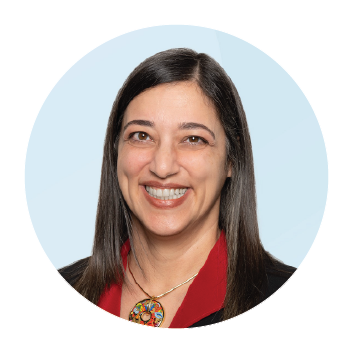
In this episode, Stewart Gandolf sits down with Nasim Afsar, MD, MBA, former Chief Health Officer at Oracle Health and author of Intelligent Health: The Movement to Unify Data, Harness AI, and Empower People to Thrive, to explore a different vision for the future.
Drawing on experience as a physician, healthcare executive, COO, population health leader, and technology innovator, Afsar argues that healthcare continues to focus on only a fraction of the factors that actually influence health. Traditional healthcare settings account for roughly 20% of what determines outcomes, while the remaining 80% is driven by factors such as environment, nutrition, activity, sleep, behavior, and social circumstances. The challenge has always been connecting those worlds in a meaningful and scalable way.
Rather than viewing AI primarily as a collection of point solutions that automate administrative tasks, Afsar believes its greatest potential lies in helping healthcare move from episodic care to continuous care. By combining clinical data with the broader context of an individual's daily life, AI could enable more proactive interventions, personalized recommendations, and earlier identification of health risks before they become costly medical events.
The conversation also explores why healthcare remains organized around institutions instead of individuals, how incentives across providers, payers, employers, technology companies, and consumers could become more aligned, and what a truly consumer-centered health system might look like. Along the way, Afsar shares practical examples from population health, behavioral economics, and patient engagement that illustrate how personalization can improve outcomes at scale.
For healthcare leaders grappling with rising costs, workforce challenges, chronic disease, and growing expectations around AI, this episode offers a strategic framework for thinking beyond incremental improvement and toward a fundamentally different model of health and care.
Why Listen?
In this episode, listeners will learn:
• Why focusing only on clinical data leaves healthcare operating with an incomplete picture of patient health
• How AI could enable a shift from episodic care to continuous, proactive health management
• What healthcare leaders often misunderstand about the true potential of AI beyond administrative automation
• How providers, payers, employers, and technology companies can align incentives around improving health rather than managing disease
• Why consumer ownership of health data may become a critical foundation for future healthcare models
Key Insights and Takeaways
This conversation offers several important lessons for healthcare leaders navigating the intersection of technology, operations, and patient outcomes:
- Healthcare currently focuses on only a small portion of the factors that influence health outcomes. Clinical encounters matter, but environmental, behavioral, and social factors often have an even greater impact on long-term health.
- AI's most transformative opportunity may not be improving existing workflows, but enabling entirely new models of care that are proactive, personalized, and continuous rather than episodic and reactive.
- Personalization extends beyond clinical treatment. Communication, motivation, and engagement strategies can be tailored to individual goals, priorities, and behaviors in ways that improve participation and outcomes.
4. Many healthcare visits exist because of process limitations rather than clinical necessity. Better data sharing, triage, and decision support could reduce friction for both patients and providers.
5. Consumer-centered healthcare requires consumers to become active participants in managing and directing their health data rather than remaining passive recipients of care.
6. Economic incentives for transformation already exist. Providers, payers, employers, and consumers all benefit when chronic disease is prevented or better managed before costly interventions become necessary.
7. Leadership will play a critical role in healthcare transformation. Solving fragmentation requires stakeholders across the ecosystem to collaborate around shared goals rather than optimizing individual silos.

Dr. Nasim Afsar
Author, Intelligent HealthSubscribe for More
Don’t miss future insights—subscribe to our blog and join us on LinkedIn: Stewart Gandolf and Healthcare Success.
Note: The following AI-generated transcript is provided as an additional resource for those who prefer not to listen to the podcast recording. It has been lightly edited and reviewed for readability and accuracy.