How AI and Innovation Are Changing Cancer Care

I’ve worked with oncology practices for many years, so I already understood that cancer care changes quickly. But when Rohit and Rahul Gosain told me oncologists are dealing with roughly 40 to 50 new drug approvals and indications a year, it put the information challenge into perspective.
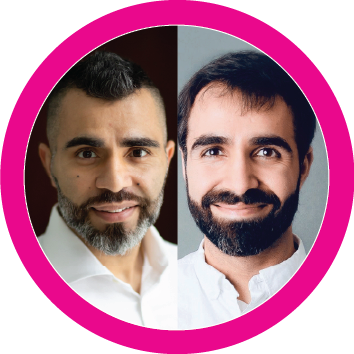
Rohit and Rahul are community medical oncologists and the creators of the podcast Oncology Brothers. Unlike an academic oncologist who may concentrate on one particular type of cancer, they can see everything from breast, lung and prostate cancers to GI cancers and hematologic malignancies. Keeping up isn’t an academic exercise. They may learn something today that changes how they treat a patient tomorrow.
That problem ultimately inspired Oncology Brothers.
The idea grew out of the conversations Rohit and Rahul were already having during long commutes to their oncology facilities: How did you treat this patient? What’s the mechanism of action? What are the side effects? They realized they couldn’t be the only physicians struggling to keep up, so they began turning those conversations into bite-sized educational content for other oncologists.
What I particularly enjoyed about this discussion was how quickly it moved beyond the podcast itself.
We talked about the changing role of community oncology and why getting excellent cancer care shouldn’t automatically require traveling to a major academic medical center. Rohit and Rahul emphasized that this isn’t an “academia versus community” issue. The two need each other. Many treatments and clinical trials are increasingly available in community settings, allowing patients to receive sophisticated care while remaining closer to home.
We also talked about something I found fascinating: patients are becoming part of the information exchange. Through social media, physicians, researchers, advocates and patients can participate in the same conversations. Sometimes patients are even bringing information back to their physicians and asking questions that lead to additional testing or treatment options.
And then, of course, there’s AI. Rohit is enthusiastic about its ability to save time and help physicians navigate information. Rahul is somewhat more cautious, and I liked having both perspectives. In a field where so much isn’t black and white, they believe human discussion and clinical experience will remain essential alongside AI.
We ended somewhere I didn’t necessarily expect: leadership. Nobody asked Rohit and Rahul to create Oncology Brothers. They saw a problem and started.
Their advice applies well beyond oncology: ask questions, don’t wait for everything to be perfect, find people you trust, and get started.
Why Listen?
This episode offers a firsthand look at what rapid innovation actually means for the physicians responsible for putting it into practice. Listeners will learn:
- Why the extraordinary pace of oncology innovation has created a significant information challenge for practicing physicians.
- How community oncology helps patients receive increasingly sophisticated cancer care closer to home.
- Why Rohit and Rahul turned their own struggle to stay current into the Oncology Brothers educational platform.
- How podcasts, social media and AI are changing the way physicians learn and share clinical experience.
- Why patients are becoming increasingly active participants in conversations about cancer research, treatment and clinical trials.
Key Insights and Takeaways
- Innovation creates an information problem as well as a clinical opportunity. New drugs, indications, targeted therapies, immunotherapies and antibody drug conjugates are giving patients more options, but practicing oncologists have to understand where those treatments fit, how to sequence them and how to manage their side effects.
- Community oncology plays a critical role in cancer care. Rohit and Rahul estimate that 70% to 80% of cancer care is delivered in community settings. For patients, receiving appropriate treatment close to home can eliminate hours of travel at an already difficult time.
- Academic and community oncology aren’t competing models. Major centers remain essential for highly specialized treatments, research and certain clinical trials, while community practices provide much of the day-to-day care. Rohit and Rahul see the future as greater collaboration between the two.
- Education has to fit the reality of physicians’ lives. Traditional conferences and CME remain important, but physicians treating dozens of cancer types don’t always have hours to consume information. Oncology Brothers focuses on concise discussions, treatment algorithms, side-effect management and conference highlights that can translate quickly into practice.
5. Social media has created a more open exchange of information. Physicians can discuss new data directly with researchers and other clinicians, while patients and advocates can add perspectives about side effects, endpoints and what actually matters to them.
6. Patients themselves are becoming important participants in the learning process. Rohit described patients discovering information through their content, bringing questions to their physicians and, in some cases, receiving testing that opened the door to newer therapies.
7. AI can help manage information overload, but it doesn’t eliminate the need for human judgment. Rohit is already using AI for documentation and clinical information, while Rahul points out that cancer care often involves situations where the data isn’t definitive. Clinical experience and physician-to-physician discussion still matter.
8. Leadership often begins with noticing a problem and acting on it. Rohit and Rahul didn’t wait until they had a perfect platform. They recognized that other oncologists probably shared their struggle to keep up, started creating content and learned as they went.
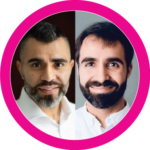
Dr. Rahul Gosain
Co-Creator, Oncology Brothers podcastSubscribe for More
Don’t miss future insights—subscribe to our blog and join us on LinkedIn: Stewart Gandolf and Healthcare Success.
Note: The following AI-generated transcript is provided as an additional resource for those who prefer not to listen to the podcast recording. It has been lightly edited and reviewed for readability and accuracy.
Read the Full Transcript
Stewart Gandolf (Healthcare Success): Welcome to the Healthcare Success Podcast, to another edition of talking about innovation and healthcare and how do we scale healthcare, how do we make it better. And today I'm really excited because I have two unique guests. They happen to be podcasters. we have Rohit Sain and Rahul Gossein.
Welcome, gentlemen, first of all, doctors.
Rohit Gosain (Oncology Brothers): Well thanks so much, Stewart, for having us on your podcast. Looking forward for this conversation.
Rahul Gosain (Oncology Brothers): Thank you, Stewart. Thanks for having us.
Stewart Gandolf (Healthcare Success): Yes, me too. So we talked offline and I am so intrigued by what you do as community oncologist and doctors in the field. And this is an area we've worked with for many years with my company and talking about you know, the whole world of oncology. And I think most would agree you have a very serious and important job, sometimes exciting, sometimes not so much, sometimes really difficult.
It's a lot in oncology. And today, the topic today we're going be talking about is keeping up and how can doctors keep up in today's world. And I can't think of a field more dynamic and changing than oncology over the last 10 years. So I'll just put that out to you guys to start us off. Tell us the audience who may not be quite as familiar with what's going on in oncology, I'd love one of you to share some of the things that have happened over the last 10 years or so.
Rahul Gosain (Oncology Brothers): Yeah. Rohit, I'll take the lead. I'll start off being the senior medical oncologist out of the two. But hey, just for the reminder, I'm the younger one.
Stewart Gandolf (Healthcare Success): Ha ha.
Rahul Gosain (Oncology Brothers): You know, both Rohit and I are community medical oncologists. And for our listeners, what that means is we're usually seeing everything from lung cancer, prostate cancer, GI cancer, breast cancer, and yes, even hematologic malignancy, so our blood cancers. And I think we can all appreciate that the field is moving fast.
Rohit, what was it? Last year we saw 50 new drug approvals and indications? Fifty. And this is good news for our patients, right? Because with these advances, our patients are living longer, they're living better. But at least on our end, as treating physicians, the challenges, how are we keeping up with all this? And that's been the motivation on our end for Oncology Brothers, our platform saying, can we host live discussions? Can we have podcast discussions about the data? So that anyone in our position is staying afloat with all that is happening so that our patients are getting that best care close to home. And that's been the get-go when we started Oncology Brothers. We're active clinicians. And now can we bridge that gap between academic research and day-in-day out community practice?
Stewart Gandolf (Healthcare Success): So I'd love to drill into that, but I guess the first question I have, and Rohit, maybe you can answer this one. and obviously you guys can choose how you want to answer, but a podcast, what inspired you to do that? That is such an interesting thing. And by the way, guys, I have something I say to people all the time. I always talk about “leaders wanted,” right? Within my own company or out there, rather than sitting around waiting for someone else to do something, like just take the initiative. So talk to me about that a little bit, how you guys came to that idea.
Rohit Gosain (Oncology Brothers): Indeed, it's an exciting past. And every time Rahul and our family just get together, we always remember how it all got started. And Stewart, when you started, you use the word dynamic, and that's exactly what oncology is all about or medicine is all about. And when Rahul says 40 to 50 new drug approvals, that was not just last year. We have been seeing this dynamicness in oncology for past five years and more. Each year, only fields in medicine, which gives forty to fifty new drug approvals.
So now how does one stay up to date with everything? There have been different platforms which oncologists have used, whether that's online, by CME events, that is continuous medical education, live or podcasting events, or then they go out to these major conferences to stay up to date, or our primitive world of magazines. But lot of that is changing now.
We are in this world of TikTok, Instagram, where the attention span is rather seconds, not just minutes or hours. So that's where we, Rahul and I, we have been struggling how to stay up to date, these conversations over our drive, where we were commuting back and forth to our oncology facility about 90 minutes one way and 90 minutes the other way. And those three hours, the entire conversation was “how did you treat this patient? How is that mechanism of action? What's the side effect for that drug?”
And Rahul and I were like, we can't be the only ones struggling with this. There has to be a lot of people who are trying to stay up to date so we can all do better for our patients. And that's what brought about the Oncology Brothers. How can we put our conversation in a bite-sized format to the world so they can also stay up to date and offer the best care close to home for our patients?
Stewart Gandolf (Healthcare Success): I'd like to take before I drill down into that a little bit more, because working with various oncology practices and businesses, I remember even a few years ago talking about how immunotherapy is changing and precision medicine. some of our audience may be, you know, more or less familiar, but talk about some of maybe the broader, because obviously there's new drugs, but these are fundamental, different ways of treating patients. So I'd love you to share just a little bit about that.
Rahul Gosain (Oncology Brothers): Yeah, I think the way we are treating patients has changed. Now, because of these advances, I said that, be it new drug approvals, indications for patients are living it longer and better. What does it really mean? And go back 10, 20, 30, 40 years, all we were doing was chemotherapy, a broad bucket of IV medications that we're giving that we still use today, but they're not very smart. We're giving something that's going to attack anything that's growing fast in your body.
Hope ends up being it's attacking more of the cancer cells, but then comes along the side effects because it's also affecting the good cells. I think in the last 10, 15, 20 years, what's gotten better is more different classes of drugs that we're using. We talk about precision medicine. Can I find a particular mutation that's driving the cancer and attack that cancer? Then we have another class of drugs that's too you touched on immunotherapy.
Historically, immunotherapy was used differently. But here the idea is: can I ramp up the immune system? Now it's your own immune system that's putting up the fight against the these bad cells, bad cells being our cancer cells. And more recently, we're starting to see another class of drug, antibody drug conjugate. And the idea there is at the center of all this, we're wrapping around chemotherapy, but can we deliver that chemotherapy a little more specifically towards cancer cells rather than broadly?
So again, I think that the reason why we're seeing so many drug approvals indications, it's not just chemotherapy anymore. We have oral drugs, we have immunotherapy that's given through IV, we have these new classes of antibody drug conjugates. These are exciting times to be on our end because we're seeing this play out. And now, because of this, our patients are getting a chance to spend that more time with their family.
Rohit Gosain (Oncology Brothers): And all this is in the era of personalized medicine, to what just Rahul reiterated with regards to the mutations, these formulations like chemotherapy are not just IV. We are giving them subcutaneously, oral therapies, which makes the formulation a lot more easier, less time spent here, more time spent with family.
Stewart Gandolf (Healthcare Success): That's excellent. so the one thing that we talked about offline a little bit is you guys are practicing doctors. You have lots to do, right? But what is the unique perspective you guys can bring to this that a professional educator or journalist, no matter how talented, cannot bring to the discussion?
Rohit Gosain (Oncology Brothers): Well, I'd say that you know, Rahul has used this as sort of the tagline. That is, what we are bringing on the table are the dreams and the nightmares of our practices. What that truly means is when we are seeing these patients, we are bringing those challenges and our struggles on the table when communicating with the specialists, whether that's from Dana Farber, MD Anderson, Wilmot Cancer Institute, Roswell Park Comprehensive Cancer Center, we are able to dive in the details into something that other community medical oncologists in rural setting is struggling with and are able to not bring up that voice on the table. And they're not able to go out to the major congresses or conferences. So as a result, within that 15- to 20-minute conversation, we are able to bring in that experience which is applicable to their patient tomorrow.
Rahul Gosain (Oncology Brothers): Yeah, Rohit, I would I would I would add to that. I think just to summarize two things, Stewart. One, we're bringing in our own clinical perspective, exactly to what Root is saying. We're seeing these patients in our clinic. Second, we're asking the right questions because we're struggling with that in our own practice. We're seeing that. What about the side effects? It's not just about something getting approved. How can I use this right today? When should I use it? What about sequencing? Should I use immunotherapy first and then that targeted agent? Or we have enough data saying we should use targeted agents and selectively not use immunotherapy at all. So I think that given that we're both practicing, those are the things that we're bringing on the table with these podcast discussions.
Stewart Gandolf (Healthcare Success): So does having the context of a doctor help too? Just the deeper understanding beyond just I'd love to hear some thoughts about that.
Rohit Gosain (Oncology Brothers): Now, when you talked about again, I'll have to jump on that word dynamic. That's how literally the clinic is, where I'm going from room to room where if I've seen a patient where I just had a hospice conversation, I just prayed with them, we cried together, we high-fived. And then on to the next room where it was stage four disease. And now what we are seeing is the disease is nowhere to be found. These are exciting times. So that dynamicness, that's where the physician aspect comes in. We can talk about the pains and the wins at the same time.
Rahul Gosain (Oncology Brothers): And with also being a community medical oncologist is giving us an edge, right? Majority of the cancer care today is delivered in these community settings. Seventy percent, 80% of the cancer care is being delivered in setup like ours. But we're also seeing everything: breast cancer, lung cancer, blood cancer. So on our end, it's not just what are we doing in lung cancer, we're able to connect these dots, carry that on from one disease site to another.
Stewart Gandolf (Healthcare Success): So in our business we've worked with community oncology businesses pretty regularly. And I think that the again, we have healthcare executives and listeners, but they may not be that familiar with specifically community oncology. I would love to just take a segue to give a perspective to those that aren't as close to this, and obviously you guys are much closer than I am even, but you know, what is the community oncology role? And for example, you know, standard of care for like the first phase of a patient.
How does that translate? Because there's the f the feeling that, I have to go to MD Anderson for everything, but that that's not the philosophy behind community oncology at all. So I'd love you guys to share the mission of sort of on community oncology and how that fits in to the broader world.
Rahul Gosain (Oncology Brothers): Yeah. And again, I think that the idea of Oncology Brothers our podcast or platform is that your outcome should not look different if you're going to MD Anderson or if you're getting that standard of care close to home. And the fact is, all these academic institutions cannot keep up with the demand of cancer. We have to partner up with each other. It's not them versus us, it is us together as a team in oncology. And that is the best way moving forward.
I think the idea of community oncology has also changed. 10, 15, 20 years ago, we had private practice, we had community practice, and then you had academia. The idea there was all the clinical trials and researches happening in academic centers, that is thankfully starting to evolve. Community practice truly is more clinical driven. Yes, I don't have bench research, but we do have a lot of clinical trials here where our patients can jump on if standard of care is not the right treatment for them. So I think that over the last few years, community oncology is also starting to look different. Not everyone has to be a generalist like Rohit and I. You can try to subspecialize depending on how big that practice is. A community practice in Louisville, Kentucky, could have a lung cancer specialist, a breast cancer specialist, whereas when you're going in rural Kentucky. In that settings, if it's just one or two people practicing, then you're seeing everything.
Rohit Gosain (Oncology Brothers): And just to break it down further a bit and sort of simplify things from where we started out from the education standpoint. After finishing up our med school, we start with the internal medicine route. And then after that, we are doing fellowship or training, which is specializing into hematology oncology. And now from there on, there are people who will take the academic route where they're focused on one particular type of cancer, lung cancer, breast cancer, and then even further diving into that.
Along with that, they're seeing patients either for two days or three days, while the rest of the days they're planning to do research. For us as community oncologists or hematologists, we are seeing patients iron deficiency, colon cancer, prostate cancer, breast cancer, all of it. And why this idea still exists in this competitive world to stay up to date is because when you go out in rural settings, it is very high attrition rate. So for them to sustain a person who is specialist, it's hard.
As a result, they need to find someone who's a generalist who's seeing patients after patients after patients. So for Rahul and I, we are not doing research. We are seeing patients all five days of the week.
Stewart Gandolf (Healthcare Success): That makes sense. And it's funny, you mentioned the trend of how academic medicine is changing. And it's funny, this podcast hasn't appeared yet, but probably will appear before yours, where I met and spoke with the first doctor from Radiology Partners. And it was the same idea that they're actually because of their scale, able to work with or bring data that the academic medical centers cannot. So It's really changing. Maybe more democratized would be a way of looking at it.
I'd love you to share, you know, you mentioned a little bit ago how, you know, back in rural settings, it's even more important to bridge this gap, right? We need to patients, you know, really want the same kind of care, even if they're in out in the sticks than they are at the big city. And, you know, it's another thing listeners may not be think about a lot is if you're in a rural area, traveling someplace else for chemotherapy two or three, four hours one way is not so good either.
So talk about how that gap is bridging between even rural practices can keep up now.
Rohit Gosain (Oncology Brothers): With the podcasts or different means of traveling to the major congresses, that's one way for them to stay up to date with this ever-changing field. Whether it's an FDA-approved regimen, if immunotherapy, targeted therapy, biospecific antibodies, one can partner up for these major intervention therapies where a patient has to be staying in the hospital, but that's for a short period of time. Then everything can be carried out at the community setting or for a patient close to home itself.
Now for the major centers, they have to travel out for major things like bone marrow transplant or car T therapies. These are a bit highly equipped treatment options that are available at tertiary and quaternary centers. But again, patients can travel out there and then carry all that further to the community setting. With regards to other things that they have to travel out to these major centers are clinical trials. But how are we bridging that gap is we are taking the clinical trials out from the main centers and offering it out to the rural settings with everything available. So a lot of it is being traveled. Now in the world of telemedicine, we can do a lot of these things distant apart as well.
Stewart Gandolf (Healthcare Success): Very, very good. So…
Rahul Gosain (Oncology Brothers): Stewart, sorry, just to add, I think at the at the crux of all this, no matter what, our patients also want to stay home, right? Roy, you and I have talked about this. I was working in Corning and Rochester is about two and a half, three hours. New York City is about four hours or so. I was trying to get my patient here to Rochester for a clinical trial, and we were chit-chatting, and they were like, “Doc, I'm not going to the city.” I was like, “no, no, no, don't worry.”
And I was like, “what's going on?” They're like, “no, they're traffic in the city. I don't want to travel. I don't want to be far away.” I was like, “no, we'll get you to new, we're not talking about New York City, I'm talking about Rochester.” And the patient leaned in and was like, “Doc, that is two and a half hours away. That's the city I'm talking about. I am not going there.” So again, coming back to all this, our patients want to stay home. And we have to do everything to make sure if those are the settings I'm practicing in.
It's on me to stay up to date. And that's the idea. Can it be bite-sized discussions? AI is playing a big role here as well. So I think there are tools, but the access still remains an issue. Rohit, you touched on transplant. Now for lymphoma, myeloma, we're talking about even different therapies like CAR T's. And only 10%, 15%, 20% of the patients actually get to those medications. Why? Because majority of our patients are still in these community rural settings.
So Stewart, I think that we have to continue to have these discussions. Our patients need to be aware of it. Our physicians, both in academic and community need to be aware of it. And we have to come together to make sure that patient's taken care of.
Stewart Gandolf (Healthcare Success): So let's go back to the information overload part. You know, as smart as we are, we're all still humans, right? You guys are very smart. You're doctors, you're oncologists, but there's information overload. Like how do you do this? And how does your podcast or just broadly beyond your podcast, how do the best doctors stay on top of all these things?
Rohit Gosain (Oncology Brothers): Say there are different venues per se or different modes. One, as I was initially talking about going to these conferences and staying up to date. CME event, which is continuous medical education, these are credits that you're supposed to get while you are participating in these programs. These are live events or virtual events. With our podcast, what we have tried to do is keep everything bite-sized. As I was mentioning, that in the world TikTok and Instagram, we cannot continue to go for these three-hour, four-hour long sessions. Because there is no time for that. When we are treating close to about 50 to 60 or 70 cancers, and each year, when 40 drug approvals are happening, where do these drugs fit in? What are the side effects? What's the dosage? So it becomes a bit overwhelming. And that's where at least we are able to stay up to date with these discussions. And our listeners are able to stay up to date because we try to reiterate the same thing in different modes, whether that's treatment algorithms, where we have broken down big, big guidelines to a slide where one can see what's the front line treatment option, what is the second line treatment option. Then we are talking about how can you manage side effects. Then we are also talking about conference highlights in a very, very concise way so one can absorb everything in that 15- to 20-minute time frame.
Rahul Gosain (Oncology Brothers): You know, I think the right answer, Rohit here, is go listen to our podcast Oncology Brothers. No, but in all seriousness, I think two two resources that I want to add here. In my practice, I think social media plays a big role. This is where I show up with some questions and back and forth saying, hey, recently this data was presented. What is everyone making out of it? I'll share my community perspective. Someone who has actually presented the data will come through saying, “Hey, this is what we're doing.” And the best part, a patient will chime in saying, “hey, can we focus on the side effects? Can we focus on the endpoints here? What is important to me?” So personally, I think a lot of us are on social media platforms, be it Twitter, X, LinkedIn, whatever you're using, can play a big role. Second, all these new LLMs with AI models and so forth. Hey, use open evidence, ChatGPT, up to date. I really think use one resource, use it well and get comfortable with it and make sure that you're getting that right information.
Stewart Gandolf (Healthcare Success): So you mentioned earlier and of course the Congresses matter a lot. So how do you guys perceive the roles of COA, ASCO changing and other conferences as we enter into a the brave new world?
Rahul Gosain (Oncology Brothers): You know, that has changed, I think, pre-COVID and now post COVID. When we saw that virtual attendance pre-COVID used to look very different. Now there's still that presence in person, which is very valuable because a lot of times we're networking, we're getting to see our colleagues, but a lot of folks are also attending that virtually. While you're attending virtually or in person, you're actively communicating on social media as well. So I think that these conferences are very important.
But that said, there is almost a good breakthrough conference almost every weekend in oncology. So you select, you pick which one you want to show up at. And I really think, again, make the most out of it, be it in person or virtually. Rohit, I would love to hear your perspective. How are you taking this?
Rohit Gosain (Oncology Brothers): Right, Rahul. Like I feel like even if there were less number of conferences, but each of these conferences so dense, ASCO, which is the the holy grail for all the oncologists, there itself, we see 8,000 abstracts being presented. Eight thousand. That's a complex world just to navigate through one abstract. And that's 8,000 of those changing the science by the minute. Yes, it's exciting, but again, it's just that information overload is so significant. But focusing on what's practice changing, at least for a community oncologist standpoint, that's what we try to do.
Stewart Gandolf (Healthcare Success): Great. By the way, I love your communication style. I noticed you guys are very clear and very precise in your answers, which I think is great. I can imagine you have an amazing podcast. I'd like to ask about what have you learned from that podcast? Like I to me, I love my podcast. I have the best time. People I've been doing my podcast since 2011. And I've learned so much from doing it. And I'm assuming you guys feel the same way. So tell us some of the great takeaways from being the interviewer, not just the passive listener.
Rahul Gosain (Oncology Brothers): You know, I will bring up what you brought up, Stewart, initially, saying, what are you bringing on the table? I think what we're bringing on the table is, “hey, listen, we're practicing physicians.” So to me, the biggest takeaway from these conversations ends up being right away, I'm going and changing my practice or reaffirming saying, “hey, what I'm doing is right.” So once the camera's off, often I'm taking a step back. Roy T and I do this key takeaway saying, what are you walking away with? What does this mean for our patients? So I think at least from these discussions back and forth, that is what it comes down to when we're touching on the data.
Rohit Gosain (Oncology Brothers): You know, in addition to all that, I must say who we have had on our podcast, like the leaders of the leaders, we're talking about just not physicians, but patient advocates, nurse practitioners, physician assistants, nurses, and each of them are so motivated with one central theme that is patient at the center of everything. So I feel like that to see that world of just focusing on one thing and trying to stay up to date is so powerful. And everyone is out for that one motive. So it is exciting, and that's what gives us the energy to do this again and again and again.
Stewart Gandolf (Healthcare Success): So you said something earlier that I really noticed and I hadn't had a chance to comment on on your social media. You're participating in a forum where patients can participate as well, as opposed to behind the walled garden. I think that's really intriguing. Tell me about that. Like what is it like to have patients chime in where they may be following along? I think that's you know, it's you're not trying to hide out. You're actually there in a public forum talking about care.
Rahul Gosain (Oncology Brothers): Yeah. I think that we have to first appreciate that our patient speaking up is coming from a position of either they’re patients or patient advocates, but they're vulnerable. They're sharing their story. So I think one, we have to acknowledge that. Rohit, you and I have talked about this as well, saying tumor board. For our audience listening in right now, tumor board ends up being this conference where medical oncologists, surgical oncologists, radiation oncologists, or pathologists, everyone's coming together to review cases and say, how are we going to move forward with this? What's the best next step? Should we jump on surgery? Should it be chemotherapy first? Even before all this, are we making the right diagnoses? You know who's missing? It's our patients. Now, think of social media, all this playing out with the patient at the center of all this, of this global virtual tumor board, a medical oncologist, surgery onc. We're all breaking the data together and a patient chimes in.
So I really think that social media, yes, it's so good to see your colleagues and learn from each other. But one of the biggest things I walk away with is it all coming together when the patient chimes in saying, “Hey, this is what's important to me. This is what I would like to see.” And those conversations are what we take back from that back and forth between colleagues.
Stewart Gandolf (Healthcare Success): Right, Rohit, do you any additional comments on that?
Rohit Gosain (Oncology Brothers): Yeah, it's interesting. It just like gives me chills because we have been in our patients' room and Rahul and I, we’ve both had the experience where patients would tell us that they came across our podcast and they learned this from the comments that we get, whether from YouTube or wherever, that this is how my physician is treating me. I'm able to stay up to date and I was able to question that how come I'm not getting that testing then? So the testing was done as a result, they were able to get that novel therapy. So again, it's a world where everyone is learning, technology is changing fast. So having patients at the center of it is rather the key.
Stewart Gandolf (Healthcare Success): That's totally great. I love that. I love that. That's a different attitude than perhaps 10, 15 years ago, right? And so the I remember being heavily involved with patient experiences, that became much more of a thing and it's it's a different mindset entirely.
Rohit Gosain (Oncology Brothers): And indeed, because the thing is that at times we are trying to stay up to date, but we can only so much stay up to date. Here patients are even educating us, which is amazing, and especially in the world of artificial intelligence.
Stewart Gandolf (Healthcare Success): Yeah. Right.
Rahul Gosain (Oncology Brothers): And I think that industry partners are also appreciating this, right? Nowadays they're getting these patients involved earlier on in a clinical trial as well. Instead of a physician or industry partner dictating, saying “this is what the end point should be of a clinical trial,” patients are having say even for that. And I think that is how it's supposed to be.
Stewart Gandolf (Healthcare Success): So I another question that I hadn't planned on, it just occurs to me as you know, within the health system and we're thinking about and a broadly again, this is a B2B podcast more than B2C, but we're all at the end of the day patients too, right? So I think it's really hard to make that definition. But thinking about cancer in particular and care more broadly, the idea of being the quarterback of care, and I feel like I can't think of any place more where somebody wants a quarterback, an advocate, somebody who's coordinating. So you mentioned the tumor board earlier and you know, a lot of people aren't even familiar, there are radiation oncologists, right? So it's like t give me an idea about how important you think that is in cancer care and is that even evolving as time changes with so many opinions and so many information sources.
Rohit Gosain (Oncology Brothers): I’d say each member of that, whether that's a surgical oncologist, radiation oncologist, pathologist, the cancer care is so complicated where their importance is there at all times. Yes, it might be more in a particular tumor type or the stage of the cancer. For example, in early stage of colon cancer, medical oncologist or radiation oncologist has no role. However, when you step into the world of lung cancer, that's where everyone has to take a front seat and guide that decision together where patient itself is in the driver's seat while you are piggybacking on the passenger seat to guide everything, give them the knowledge, and now you're all driving together.
Rahul Gosain (Oncology Brothers): And I know this is B2B, Rohit, when you're saying that early stage colon cancer, we usually don't have much role to play. We're specifically talking about stage one, stage two, stage three, we're all getting on board here, but I agree that when we're talking about, be it radiation oncologists, surge onc, us as medical oncologists, each one of us is playing a big role. And we're offering different modalities. Surgery, “hey, this is where it is. Let's take it out. Let's appreciate one, is it diagnostic? Can we appreciate what we're dealing with?
Is it therapeutic? Have we now completely resected the tumor?” Radiation oncologist is complementing that, saying, hey, if surgery is not possible, can we address this locally? Medical oncologists come with a broader perspective, saying, “let's address things systemically. If things have started to progress, what can we do on our end to control that or buy that insurance? Can I give you something to decrease the risk of this coming back in that same area, contralateral side or anywhere in your body.” So Stewart, coming back to all this, I do think that each one of us on that table of tumor board, be our pathologist, radiation oncologists, surge onc or us, is equally important. And this is a team sport.
Stewart Gandolf (Healthcare Success): I love it. you mentioned AI a couple of times. How does AI help you guys now and to help reduce some of the overload factor overload factor?
Rohit Gosain (Oncology Brothers): Well, I'd say at least actively what I use AI for is a tool for dictation itself, where I have a a telephone with an app on it, and it's recording my conversation with the patient, and it's converting automatically that conversation into a medical note. So that's eminently saving quite a bit of time for me to type in or dictate that history and physical exam or progress note per se.
Outside of that, there are tools like Open Evidence where you can actually punch in some of the rare cases or difficult scenarios, and it can tell you what is a side effect or what would one do in this particular setting. Outside of that, AI is guiding the world of radiology, pathology with so much data at hand. If you feed it, it can guide you a bit, “well, this is what you're looking at, or this is what the diagnosis is, this is a progression of the disease, is it not?” So stuff like that is being actively used.
Rahul Gosain (Oncology Brothers): Can I chime in? I think it's important for us to address our biases here, right? Rohit, with his background of computer engineer, I think he's a little more optimistic at the forefront of all this. Usually I'm the one to adapt late on all these things. So I think AI is great, but I'm a little more cautious. Two years ago, a year and a half ago, if you were to ask where do you see podcasts coming up as AI continues to gain more traction, I would have said, “hey, honestly, I don't think these discussions are going to play a big role.” A year and a half after now, I think these discussions are more important because nothing in cancer care is black and white. So a lot of times there is no data. So we're relying on anecdotal experience. And that is where these conversations will continue to help, along with AI, saying, “yes, this is rare tumor. We don't have good data. Maybe you should consider this, maybe you should consider this.” And this will be supplemented with all these ongoing discussions of podcasts, editorials, ongoing reports saying “in my clinical practice, this is what I'm doing.”
Stewart Gandolf (Healthcare Success): It's funny, just in my own experience with my company, we I use it all day now, which surprises me how much I'm using it. But the especially for things like hypothesis testing, I come up with an idea, I want to see that's been super powerful, or you know, what are best practices or what other people say. and it's like I would imagine for oncology too, you know, you can't possibly interview everybody on all these little obscure things, but collectively the intelligence is out there in a way to find that is pretty powerful. Have you guys learned any life lessons from having a podcast? I'm curious. Like what would you what would be your takeaways? We're not done yet, but we're getting closer to the end. I'm just curious, what have you learned about life from this journey that you guys have been on?
Rohit Gosain (Oncology Brothers): You know, the life takeaways is the journeys that we continue to hear, because Rahul and I have our own perspective. We are limited with the knowledge or the patient population that we see. Sometimes hearing these sad or rather encouraging stories from different physicians or different routes, patient advocates, they teach us so much. And with all that, comes as value your time. Stay ahead of your health. That is annual physical screening guidelines and everything. So those are extremely important.
Stewart Gandolf (Healthcare Success): That makes sense.
Rahul Gosain (Oncology Brothers): Can I take this in a little different direction for a second? I think personally, outside just like the data and staying up with health, I personally think that this has helped me just in communication. I think how you bring it down, what's important, focusing on the right topic. I think that also helps me when I'm talking to my patients. So communication skills over a period of time when you do so many of the these conversations. I would like to believe get better. So, Royth, hopefully you and I are headed in the right direction.
Second, behind the scenes, Roet and I are very close. And now we get to do this frequently. So it has helped us just to spend some good quality time. And then Rohit, you brought up the time factor. I think that we both have families, kids. So once the camera's off, you're quickly running back to the family and appreciating that quality time. ‘Cause there's only so many hours that we can be in clinic, keep up with the data, do these podcast discussions. So every little bit that you're doing, you want to make sure it's with some purpose. So whenever all this is done, you're going back to the family. I would like to believe that we're more present there.
Stewart Gandolf (Healthcare Success): Great. A couple of questions as we wrap up here. Looking ahead five years, I we we talked really about the pace of change over the last 10 or so. For the next five years, what excites you the most?
Rohit Gosain (Oncology Brothers): Well, the pace of oncology, when you're talking about 40 to 50 drug approvals with the help of AI, I'm hoping that will only increase. And yes, the complexity will increase as well, but at the end of the day, we'll be focusing on more personalized care, less side effects, catching that tumor much earlier on with the novel technology that we might have. So, all in all, it's very exciting to see where this field is going.
Rahul Gosain (Oncology Brothers): You know, I think that we will start to use the word “cure” more and more in oncology over the next five years. A good example here ends up being a disease called multiple myeloma, where your body's making too many plasma cells or protein and your body is trying to keep up, but with that protein, you're having side effects with your kidneys and anemia and your bones are affected.
Historically, we've always said that you can get in remission or deep remission. Now, with newer class of medications, be it CAR Ts or bi-specific antibodies, we're seeing that once you get that, for a good period of time, you don't need another round of treatment. And that's the true definition of cure, right? Not chronic medical disease, where you have to keep giving something to keep things at bay. True definition of cure is you got one thing and now it's done.
So I think that in the next five years, what really excites me is this: we'll continue to use the word cure more and more in our world.
Stewart Gandolf (Healthcare Success): Super exciting. So, for people that are looking to take leadership like you did, nobody asked you, right? And I by the way, I joke early a lot, it's like, “hey, we can talk about whatever. This is my podcast. I make the rules.” But you know, if anybody else wants and I when I say this, leadership as a podcast is sort of on the nose, but in other areas, like what you know, like if you think, “Well, who am I? I'm a community oncologist.” There's lots of oncologists, you know, but you guys took initiative.
So any life lessons about taking the leadership, whether it, you know, be a podcast or in some other format, trying to get an initiative done at the hospital or, you know, trying to convince your boss they should market or whatever.
Rohit Gosain (Oncology Brothers): I'd say follow your dreams. That's one. And second, ask questions. Because Rahul and I, during those that drive discussion itself, we continue to ask this question all the time. How are people staying up to date? And little did we know, we were like, “if we are struggling, they there has to be someone else out there.” And little did we know that when we started putting our content out, there was traction. So whenever you're questioning a lot of things and there's nothing out there, take that initiative and step on it.
Stewart Gandolf (Healthcare Success): That's a great point. That's a cla that's a pain point you guys identified, basically, which is great. Rahul?
Rahul Gosain (Oncology Brothers): And Rohit, I think you're better at this than me. Don't overthink. Do it. And then we'll learn as we go. I think a lot of times we're waiting for that perfect conversation, perfect product, perfect paper that you want to write. Do it, and then we learn as we go. And I think that's been how our podcast journey has been. We started this, we're learning now, we'll continue to learn and evolve with hope that a lot of our listeners are doing the same with us.
Rohit Gosain (Oncology Brothers): And rely on that well wisher or the relationships that you have. Here, like the term Oncology Brothers, as Rahul was talking about family. And truly, since the day we launched this, Rahul has been my biggest critique, biggest cheerleader. And we continue to go back and forth and improve from where we are today. So please, please, please rely on family, rely on friends. And where you have a well-wisher, make sure you take and part with this.
Stewart Gandolf (Healthcare Success): So there's two metaphors that I've thought about on this topic. I just have to share. One is I stole this from somebody years ago and I was doing a lot of personal development class stuff. And one was “don't wait for every light to turn green before you begin your journey.” And it's like that is so true. And it’s a cliche today, but still true. Don't let per perfection be the enemy of good. Like it's much better to get started and reiterate than it is to do nothing.
So I'm gonna my last question, I'm gonna put it right back on you. I love this. So what's the key takeaway? I'm gonna ask you guys. I'm stealing it from you today. What is the key takeaway our listeners should walk with?
Rahul Gosain (Oncology Brothers): Yeah, you know, Rohit and I will usually wrap up with “in today's discussion, we had XYZ physician touching on XYZ topic.” But I think that just back and forth. I think one thing that you can walk away with is what I'm doing for myself as well. Get started. Don't wait for it to be perfect. Let's come together, learn together, and let's make sure our patients are taken care of close to home.
Rohit Gosain (Oncology Brothers): And I knew, Stewart, this is B2B podcast versus B2C. This applies to everyone. Whether that's you going through the personal journey of cancer or you know someone, please put your health at first. You, your family, there are a lot of screening guidelines available. You should put your health at first, whether that's colonoscopy, breast cancer, don't wait for anything to happen at a later stage. So you can catch it early and ask questions to your physicians. Thank you so much again, Stewart, to get us involved with this podcast.
Stewart Gandolf (Healthcare Success): You guys are great. I really enjoyed this. I knew it'd be fun. It's a special edition today, I would say. but congratulations on the work you're doing out there to help the lives of others, your colleagues and patients. I appreciate that.
Rohit Gosain (Oncology Brothers): Thanks so much again, Stewart.
Rahul Gosain (Oncology Brothers): Sure. Thank you again.