
Healthcare Wasn’t Designed for Human Nature








Foreword From Stewart
When Dan Ariely published Predictably Irrational, it permanently changed the way I think about people—and, by extension, healthcare.
I still find myself thinking about many of the ideas from that book. One that has always stayed with me is the power of defaults. Something as simple as whether becoming an organ donor requires opting in or opting out can dramatically change behavior. Another is our tendency to sacrifice long-term health for immediate comfort. We know we should exercise more, eat better, take our medications, or schedule preventive care. Yet knowing what to do and actually doing it are often two very different things.
That's why I was so excited to reconnect with Dan. Rather than revisiting the ideas that made Predictably Irrational a classic, I wanted to learn what he's been thinking about over the last two decades—and what those insights mean for healthcare leaders today.
What surprised me most wasn't a single study or experiment. It was a broader realization that emerged throughout our conversation.
Healthcare wasn't designed for human nature.
Much of healthcare still assumes that people will make rational decisions once they're given the right information. But as Dan explains, our choices are shaped by environment, emotion, habits, cognitive limitations, and countless contextual cues long before conscious reasoning begins.
As I reflected on our conversation, I realized that nearly every challenge we discussed—from patient adherence and trust to value-based care and end-of-life decisions—comes back to that one idea. If healthcare leaders truly understand human behavior, they can design systems that make better decisions easier instead of simply asking people to try harder.
I hope you enjoy the conversation as much as I did.
— Stewart
Episode Summary
"Our responsibility ends only when somebody's health is improved."
That simple statement from behavioral economist Dan Ariely reframes nearly every challenge facing healthcare today.
In this episode of the Healthcare Success Podcast, Stewart Gandolf welcomes bestselling author and Duke University professor Dan Ariely for a conversation that goes well beyond behavioral economics. Together, they explore why healthcare organizations continue to struggle with patient adherence, engagement, trust, and long-term outcomes—not because patients lack information, but because healthcare systems continue to assume people make rational decisions.
Ariely argues that the opposite is true. Human beings are remarkably predictable in their irrationality. We don't simply choose between good and bad decisions based on facts. Instead, our choices are shaped by environment, emotion, habits, cognitive limitations, and countless contextual cues that influence behavior long before conscious reasoning begins. For healthcare leaders, recognizing this distinction changes how they should think about patient experience, clinical communication, care delivery, and even organizational strategy.
The discussion spans an unusually broad range of healthcare challenges while remaining anchored to a single idea: systems should be designed for the way people actually behave rather than the way we wish they behaved. Ariely shares research on medication adherence among diabetes patients, explaining why knowledge alone rarely changes behavior and why self-control is a limited resource that organizations must account for when designing interventions. Rather than relying on willpower, he advocates designing environments that reduce temptation and help patients succeed through habits, planning, and thoughtful system design.
The conversation also explores how healthcare often defines success too narrowly. Ariely challenges organizations to think beyond treatment and ask when their responsibility truly ends. Instead of measuring success when a patient is discharged or a prescription is written, he argues that healthcare leaders should view improved health—and sustained well-being—as the real endpoint. That perspective naturally leads to discussions about patient loyalty, value-based care, prevention, and the importance of investing in long-term relationships rather than short-term transactions.
Perhaps the most compelling portion of the interview centers on trust. Reflecting on the lasting effects of the COVID-19 pandemic, Ariely argues that rebuilding public confidence requires more than better messaging. It requires greater transparency, a willingness to acknowledge uncertainty, and the humility to admit mistakes when science evolves. For healthcare executives navigating an increasingly skeptical public, his message is clear: trust isn't simply another communication objective. It's the foundation that makes every other healthcare interaction possible.
Rather than offering simple behavioral "hacks," this conversation challenges healthcare leaders to rethink the assumptions that shape modern healthcare. By designing systems around real human behavior instead of idealized rational behavior, organizations can improve patient outcomes, strengthen relationships, and build the trust that increasingly determines long-term success.
Why Listen?
This episode challenges one of healthcare's most deeply held assumptions and offers a more effective framework for improving patient outcomes.
- Learn why healthcare systems consistently struggle when they assume patients make rational decisions based solely on information.
- Discover how behavioral economics can improve medication adherence, patient engagement, and long-term health by designing systems around real human behavior.
- Explore why healthcare organizations should redefine success beyond treatment and consider their responsibility complete only when patients achieve better health.
- Understand why habits, environment, and emotion often influence patient behavior more than education, motivation, or willpower.
- Hear why rebuilding trust through transparency and humility may be healthcare's most important leadership challenge in the years ahead.
Key Insights and Takeaways
- Healthcare often assumes patients will make rational decisions once they have enough information. Dan Ariely argues that this assumption is fundamentally flawed because human behavior is shaped by habits, emotions, cognitive limitations, and environmental cues as much as by facts.
- Better patient outcomes often come from changing environments rather than asking people to exercise greater willpower. Whether it's medication adherence, nutrition, or other healthy behaviors, systems should reduce friction and make good decisions easier to sustain.
- Healthcare organizations should expand their definition of responsibility beyond diagnosis and treatment. Measuring success by improved long-term health rather than completed clinical encounters naturally shifts attention toward prevention, continuity of care, and patient relationships.
4. Long-term loyalty creates better incentives for healthcare organizations to invest in prevention and lifelong health. Ariely argues that patients are more likely to remain engaged when organizations offer a long-term vision for their care instead of treating every interaction as a discrete transaction.
5. The final chapter of life deserves to be viewed as more than a medical problem. Ariely's research suggests that preserving dignity, strengthening relationships, and helping people create meaning may be just as important as managing physical symptoms.
6. Trust has become one of healthcare's most valuable strategic assets. Organizations rebuild trust not by projecting certainty but by communicating honestly about uncertainty, acknowledging mistakes, and demonstrating transparency as science evolves.
Dan Ariely
Behavioral Economist and Bestselling AuthorSubscribe for More
Don’t miss future insights—subscribe to our blog and join us on LinkedIn: Stewart Gandolf and Healthcare Success.
Note: The following AI-generated transcript is provided as an additional resource for those who prefer not to listen to the podcast recording. It has been lightly edited and reviewed for readability and accuracy.
Read the Full Transcript
Stewart Gandolf (Healthcare Success): Welcome to the Healthcare Success Podcast. I am really excited about today's guest, Dan Ariely. Dan is somebody I've been a fan of, actually, and I don't often get the chance to interview people I'm a fan of. But I read Dan's book through an audiobook, actually—we were just talking about the announcer—a few years ago, and it stuck with me. The title of the book was Predictably Irrational. Those of you that listen to my podcast know I'm fascinated by humans and the way we think.
In fact, fun fact, Dan, I stumbled into marketing. I ignored the better wisdom of my counselors, my friends, and my family. Instead of being an engineer or an attorney, I just fell in love with marketing by falling into a class by accident because there was something about it that, to me, was just fascinating. My professor was a leading professor, and even then I thought, "Wow, humans are just so interesting."
So anyway, I'm excited to work with you today. Welcome, Dan.
Dan Ariely: Lovely to be here. And by the way, the topic of health is probably the most important topic for marketing.
Stewart Gandolf (Healthcare Success): I agree.
Dan Ariely: I think marketing is often confused with sales, saying, "Okay, build something and then some people have to market it." I think it's a wrong perspective.
I think marketing is really about the perspective of the consumer or the perspective of the patient. Imagine that we're doing a product. Who is supposed to be responsible to bring the perspective of the person the system is designed for? I think this is really the realm of marketing. What are people really trying to accomplish? What is their motivation? What is missing in their lives?
I think that in healthcare, like nothing else, we have taken a very mechanical view of health and have kind of left the person out of that.
Stewart Gandolf (Healthcare Success): That's absolutely true. On other podcasts and when I speak, I talk about the patient experience a lot, which is sort of a corollary of this. It's fun that a few years ago, I was honored to be invited to speak at the Patient Experience Conference at Cleveland Clinic. This was something people were debating—whether it was an issue or not. This is probably 15 years ago. Now it's kind of, "Well, of course patient experience matters." But back then, not so much.
You're right, and I've talked about that topic a lot. So I want to talk about human behavior because, as I mentioned before, this stuff fascinates me. I'd love to hear the premise of Predictably Irrational, first of all, because I've read the book. Most of our listeners may not have, although I will encourage them to after we're done. Let's talk about the premise of the book, and then we'll talk about what healthcare leaders are getting wrong based upon that.
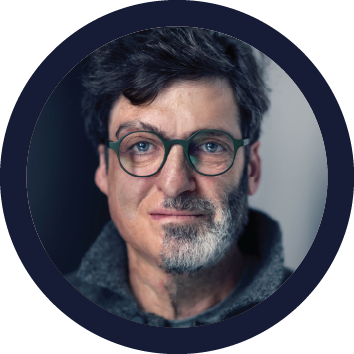
Dan Ariely: So maybe I'll say what's the premise of the book and say why I have this half a beard at the same time.
Stewart Gandolf (Healthcare Success): I would love that. I wasn't going to ask, but since you brought it up.
Dan Ariely: This half a beard has three reasons. The first reason, as you know, is that I was badly burned. Most of my body is burned, covered with scars—my hands, including the right side of my face. All of this is scar tissue, so there's no hair. But still, you can ask, why don't I shave? Why do I opt for this non-symmetrical look?
The truth is that for many years I shaved. I accepted the wisdom that the best thing for me to do was to try and blend in—to make the scars as least visible as possible. I wore long-sleeve shirts, shaved, and tried to look as symmetrical as possible. In fact, doctors recommended all kinds of surgeries to make me more symmetrical. Somebody even wanted to tattoo the right side of my face to match the stubble on the left side. So anyway, symmetry—I was told symmetry was very important, and I accepted it.
Then a few years ago, I went on a month-long hike, and during that month I didn't shave. I ended up looking like this—slightly more hair, slightly less white—but sort of like this. I remember the first time I looked in the mirror after that month-long hike, and it was a very strange look. I'm sure it was strange for the people who were seeing me. Imagine how strange it was for me. Just imagine you're waking up one day with half a beard. Very, very strange.
I thought to myself, "I will certainly shave this beard off. Who wants to walk around the world with half a beard?" But I said, "I'll never grow a half a beard again. It was a one-time thing. I'll never do it again. So let me get the most I can from this experience." So I decided to keep it for a few weeks.
Then two strange things happened. The first strange thing that happened was that I started getting notes from people who thanked me for the half a beard. Now why would anybody thank me for the half a beard?
For example, there was a woman who lived across the street from me who wrote me a note that said she was also burned. She has a big scar on her right arm, and she always wore a long-sleeve shirt to try and hide her scar. She said, "Now that I see you, and you're so out there with your lack of symmetry and scars, I'm going to try as well."
I got lots of notes like this from people who told me they were hiding. They were trying not to show their lack of symmetry or injuries and so on. I got it from people with physical injuries. I got it from people with mental challenges. So I decided, "Okay, if my half a beard is helping somebody, let me keep it for a while longer." I didn't make a long-term decision. I just said, "I'll keep it for now."
Then the real strange thing happened about four months into this half a beard. Four months into the half a beard, I felt a higher level of acceptance with my own injury. Every one of us has something. My injury is just very clear. But I think, for me, it was always me and my injury. My injury gives me pain, I don't sleep well, I have limitations, all kinds of things. It felt like a combat between me and my injury.
All of a sudden, I felt a higher level of acceptance. I asked myself, "Why? Why now?" I thought about all the people who told me they were hiding. I thought, "For me, half-shaving is also hiding." I wake up in the morning, smooth on this side, stubble on this side. The act of half-shaving is also an act of reducing my lack of symmetry. I was more non-symmetrical before shaving and less after that.
Letting go of that and just accepting myself was incredibly freeing. Incredibly freeing.
Now, where's the social science angle? I think one of the goals of social science is to separate whether the common wisdom—try and be symmetrical—is better for us than having a half a beard. I was on this junction a long time ago, and the common wisdom was always, "Symmetrical, symmetrical, symmetrical." It turns out—and I stumbled on this by mistake—that the right answer was to accept yourself, accept your lack of symmetry and limitations and so on. It was very healthy.
This, I think, is what social science is about. If we talk about Predictably Irrational, my first book, it's about identifying those things that we don't see but science can help us see in a better way. So that's a long answer to your first question about what I think human irrationality is. It's about being sure of one thing when the reality is that something else is actually better for us.
Stewart Gandolf (Healthcare Success): I would argue, Dan—and you tell me what you think—having been around healthcare for a long time, healthcare in the U.S., especially, is of course based on science. So we're looking at very rational things throughout. We're doing clinical trials. We're doing studies. We're building on science. Each part is a building block.
I feel like it's kind of like fish. Fish don't know they're swimming in water. That's all they know. The assumption that there's something else out there is just not something that ever occurs to fish. I'm assuming—I'm not a fish—but the idea that, "Wait, the human side of this matters. The irrational side matters," is tough because everything is about rational thinking.
One of the things I talk about sometimes on this podcast is how healthcare is set up around—less so than it used to be, but in many cases—the convenience of the hospital or the health system or the provider, as opposed to the consumer. There are a lot of reasons for that, and I'm not putting it down. It's just a fact.
So the idea that humans don't make rational decisions... One of the things that, pre-GLP-1, how many times have healthcare providers, at a system level or an individual level, tried to help people lose weight? It's like, "Well, you know what to do."
Dan Ariely: That's right. That's right. How many times have doctors said, "Eat less, exercise more, stop smoking, sleep better," with basically no impact at all?
Let me elaborate on the medical system. First of all, I'm unbelievably grateful to the medical system and to the science and rigor. Lots of things are just amazing about that system, so I don't want to sound like I don't deeply appreciate everything. Actually, I think part of my optimism in life comes from my three years in the hospital, where every day I realized that people were on my side. Every day people stood up and did heroic things for me. I just saw the ability of people to step up when needed.
This being said, there are specific things in health that are outside of the mechanics of the body, like placebos. Placebos work. We know that placebos work. Expectations matter. The motivation of the patient matters as well. Lots of things like that. You can't think about compliance with any kind of medical regimen without thinking about the motivation of the person, feeling that they're making progress, feeling connected, all kinds of things like that.
But I think there are also bigger things at hand than that. For me, the biggest topic here is the last chapter of people's lives.
I'll tell you about one study I did. I went to palliative care experts. These are physicians who are usually called in during the last week, maybe two weeks, maybe two days, to take care of symptoms. This is when the medical system has given up and said, "We're not trying to cure the person. Let's just try to take care of their symptoms."
By the way, I think it's the wrong approach. I think that most of life is palliative care. We meet friends for beer. We go for a walk. We make love. Everything is about quality of life. I think what happens often is that when people become patients, they stop caring about quality of life.
I ask people this question. I say, imagine a doctor tells you that they just diagnosed you with some form of cancer, and they schedule chemotherapy for Wednesday at four. But you're already meeting friends for beer on Wednesday at four. What are the chances you'll tell the doctor, "Look, Doctor, I'm already meeting friends for beer Wednesday at four. Can we do the chemotherapy on Thursday?" People say, "No, no, no. I'm first a patient and only then a human being."
Anyway, I did this study with the palliative care physicians, and I said, "Look, imagine when people in the U.S. get diagnosed with a terminal illness, they usually have slightly longer than five years. That's kind of the average. Imagine they did not call you in the last two weeks. They called you on the day that somebody got a terminal illness diagnosis, and it was your only patient."
Imagine a perfect case, and you could help them with symptoms and sleep and stress and pain. You could help them with solving social relationships and writing a will and everything. You're at their disposal, and you're helping them in the best possible way to have that chapter be a useful, meaningful chapter. Then, five years later, they pass away.
Half an hour later, you wake them up. I know it's not possible, but for the story, you wake them up and say, "Hey, you were given the opportunity to relive one chapter again. Which chapter do you want to live? Early childhood? Elementary school? Middle school? High school? College? The first years of marriage? Kids? Or do you want to live the last chapter?"
Most of the palliative care physicians said that most people would prefer the last chapter. Now, how can that be? They don't think that now people would prefer that last chapter, but they think that under the right supervision and help and guidance, it could be the right chapter. They don't think anybody would want to experience the last two weeks, but as a five-year chapter, they think that.
Here's what they say. They say that most of life we live an unexamined life. We'll do tomorrow basically what we did yesterday. Sometimes people have a midlife crisis, and sometimes they think about life and say, "How did I get here? Is this really what I wanted to do?" But most of the time, when people think about a midlife crisis, they don't really make any changes. They just think about the changes they want to make, but they don't make them.
They said that in the last chapter of life, with that diagnosis and with the right help, people can make these changes.
By the way, I'll tell you that I also did some studies with end-of-life doulas, and I was so inspired by them that I went and did the training myself. I think that the few people I helped in the last chapter of their life had one of the best chapters of their life.
So I really think—and this is all outside of medicine—we think that the last chapter of life is a medical problem. The reality is it's a much bigger problem. It's a problem of a sense of meaning and reconnecting and making amends and having a sense of legacy. There are lots of things. Yes, you certainly don't want to have pain, and that's on the medical side, but there are lots of other things as well.
For me, the last chapter of life is the clearest example of treating something as just a medical problem when, in fact, it's not a medical problem. There are lots of other elements there as well.
Stewart Gandolf (Healthcare Success): I'd like to drill down on the end-of-life research. Obviously, this is important. What has surprised you as you've learned about this and gotten past your book and moved into this category? What are some of the things that surprise you?
Dan Ariely: The end-of-life doulas...First of all, it surprised me that the last chapter could be so good. That was the finding that made me decide to go into that. When I think about what I want to do research on, I'm looking at human waste. I look at the place where we perform at this level, when we could perform at this level, and it's about social science.
I think the last chapter of life is one of those places where we're performing at this level, when we could perform at this level, and we could solve it. What the palliative care physicians said was that it could be a really good chapter. It's not right now, but it could be a very good chapter. They said there's a big gap, and we could do something about it.
One question I asked the end-of-life doulas was, "What's a good end of life?" They said, "A good end of life is no pain." Anybody who has experienced pain knows that's a must. They also said no loss of dignity in the body, being surrounded by love, and having a sense of legacy.
Once I say it, you say, "Yes, that sounds obvious." I have to say that the "no loss of dignity in the body" surprised me with its intensity.
For example, there was one patient I helped, and she needed a diaper. Her kids were truly, happily willing to help her. They felt it was their responsibility as her kids. They did not look at it as something negative. They communicated that to her. For them, it was a privilege to help her.
It didn't matter. The sense of loss of dignity in the body connected to the diaper was intolerable for her. I know about loss of dignity in the body personally as well, but the intensity of it at the end of life surprised me—how important it is. For some people, being dependent on a diaper is worse than dying. The intensity of that surprised me.
Stewart Gandolf (Healthcare Success): In healthcare, so much—and I follow things pretty well—I would say this is becoming much bigger. Until very recently, people talked about lifespan, like how many years you'll live. The newer discussion is sometimes called well span or health span. Talk about that a little bit because we both admire what happens in healthcare, but if we're thinking chronologically versus the way we live, the system isn't set up for that.
By the way, in the States, nobody gets paid that way. I know you're in Tel Aviv, but here, I'd love to hear your thoughts about that.
Dan Ariely: First of all, I'm going back to basic social science, but the basic view of social science is that we are not designed to live in this world. We are not designed to live next to cookies. We were evolutionarily designed to live in a place where fat, sugar, and salt were rare. Nature made us so that when we found some of that, we should eat as much as we could.
We've changed our environment, and now these things are not rare, but we're not well designed for this environment. Think about the new class of medications that are getting us to eat less. The shocking thing for me is how many things they help. They help with liver disease and heart disease and lung disease and, of course, diabetes and weight loss. That's on the good side.
On the bad side, you say, "How come?" It's because food is doing all of these bad things for us. We've created food that is so unhealthy for us that we cannot control ourselves. I perfectly understand it. We're not designed to control ourselves. This was not the way nature intended us. So we inject the drug that helps us do that. For me, it just shows the intensity of how much society is badly designed for us.
Did you see the movie The Whale?
Stewart Gandolf (Healthcare Success): Yes, I did.
Dan Ariely: I went to see the play. I think it's based on the movie. It was unbelievably sad for me, and it's not just because of weight. When you look at this, you say, "What else is modern society doing to us that maybe, slowly by slowly, is changing us but is not suited to our natural abilities and is actually making us worse?"
Of course, AI fits very well into this. Where are we going? We can see it with food because the moment you have the drugs that get us to eat well, you see all the things that improve. But what about loneliness? How has that impacted us? What else are we not seeing that modern society is creating?
I don't think intentionally. I don't think there's the Illuminati sitting there saying, "Let's destroy those people." I think it's complex forces. With food, I understand why we want processed food. It's stable. It's cheaper. You can move it. I can imagine the engineer or the scientist who improved the longevity of food being so proud of themselves at the time. Did they understand the long-term consequences?
We thought Facebook was going to bring democracy to the world. You remember the Arab Spring? Turns out, not so much. It's what's called unintended consequences.
For me, a big part of behavioral economics and social science is to acknowledge deeply our fragile and imperfect nature and say, "Look, there are some things we're really good at." We're really very good at catching balls. It's kind of amazing. I throw a ball at you. There's very complex physics involved, and you can catch it. We're quite good at producing and comprehending language. Really quite amazing.
Calculating compound interest? Not so much. What's 3.45% interest for seven years? You can say, "It's more than 20%," but we don't have an intuitive grasp for it.
Are we capable of driving without touching our phones? Are we capable of waking up next to a donut and not wanting it? The answer is that we are limited. We're limited in all kinds of ways. If we only understood and accepted our limitations, there are lots of things we could do. But the first thing is to accept our limitations.
Stewart Gandolf (Healthcare Success): I remember, I believe, in your book Predictably Irrational, you talked about procrastination and self-control. It's really easy to blame the patient for these things. Do you have any examples of that? I think that kind of goes to what you just said.
Dan Ariely: That's right. Here's the basic point. If I came to your home every morning with a fresh tray of croissants and donuts, you would fail. Not all the time, but from time to time you would fail. I don't have to show up with a tray of donuts and croissants.
Human freedom and human ability to make good decisions is not about being faced with a tray and saying no. It's about deciding not to see the tray. We are much better at creating an environment that facilitates good decisions than resisting temptation time by time.
If you have cookies, put them in the cupboard. If they're on the countertop or if they're in a bowl, they'll be eaten. Not all the time, but too often.
Our ability to make good decisions is less about looking at the cookie and saying, "I'm not going to have one." It's about saying, "I'm not going to be tempted. I'm going to design my house so I don't buy cookies, or if I buy cookies, I place them somewhere that it's hard to get." Self-control is very tough.
I'll tell you one other thing. We did a study with almost 1,000 diabetes patients. We said, "Look, in every cohort of diabetes patients, there are people who control their A1C better and people who control it worse. What are the things that get some people to control it better and some people to control it worse?"
We tried all the regular candidates. We asked, "What about people who understand diabetes?" No. "What about people who understand the side effects?" No. "What about people who understand how to measure blood sugar?" No. "What about people who have overall higher motivation, the way that we measure it?" No.
The only thing that we found that was significant was something we call breakpoints. What are breakpoints? Breakpoints are the point in life where you just say, "I don't care." You say, "Life is so unpleasant. I'm suffering so much. I don't care about the long term. I just want happiness now."
That's a breakpoint. What's the easiest, simplest way to get happiness at ten o'clock at night? It's in your freezer.
That's, by the way, the cycle of diabetes because you can be good six days of the week and have a tub of ice cream on the seventh and destroy everything you've worked so hard for.
Now, this is a very different view because it says that our self-control is a resource that we need to think about. The way Baumeister describes it is like a weight. He says, if you lift a weight, the weight stays the same, but at some point you can't lift it anymore. Did the weight change? No. Your muscle changed. Your muscle is weaker.
The idea is the same thing is true about our willpower. We can resist temptations much better in the morning. In the morning, we have energy to deal with lots of things. In the evenings, less so. So we fail, and we fail in the evening. Think about all the industries at night that are taking advantage of our failing.
It means we need to learn how to manage our self-control. If you waste your self-control in the morning, great, but you might pay a price in the evening. By the way, we all have complex lives. People who have diabetes have a much more complex life. You have to measure and not eat and exercise and do lots of other things. All of this adds to the demands of life.
One other thing I want to say on self-control is that habits are very good for fighting self-control because habits take things out of our consideration. Imagine you've gotten used to waking up, drinking coffee, and having an apple. If you've gotten used to that, you're not opening the refrigerator and asking yourself, "What do I want to eat now?"
If you open the refrigerator and ask yourself, "What do I want to eat?" there's a chance you'll fail. Habits are a way for us to do the same thing without really questioning ourselves. Every time we question ourselves, we lose some energy, and there's a chance that we'll be tempted.
So make hard decisions in the morning. Don't wait for them. Try to develop good habits. If you think you're the kind of person who gets a lot of breakpoints, like some of the people in our study, our recommendation was to create an alternative, well-rehearsed behavior.
If you feel miserable and you open the freezer, it's too late. There's no, "Yeah, let me..." No, it's too late. If you feel miserable and you have a well-rehearsed behavior of going for a walk for half an hour or putting your headphones on and listening to music for half an hour or some meditation audio or something like that, there's a chance you'll pass this.
But you can't come up with that strategy the moment you have a craving for ice cream. You have to come up with it in advance, and you have to have it ready for you.
So think about how we save this precious level of self-control. Try to realize it's depleting. Try to realize it's not that much to start with. Try to save it, nourish it, try to bypass it, try to create habits, try to create other alternatives. All of those are very, very important ways to live in this very, very tempting society we live in.
Stewart Gandolf (Healthcare Success): I love that, and it's really intriguing because I can think of habits I have on my own that are tough. Again, you mentioned if you really enjoy a croissant or enjoy a glass of wine that you don't want to have, but it's out there on the counter, it's amazing how just that simple visual cue is there. It's obviously better to not have it in the house at all or to have to work really hard to go get it. But even being out of line of sight...
I want to comment on something you said earlier, and then I've got some questions in a different area. It's really interesting. You mentioned how we're set up to fail unintentionally by a lot of systems. One of the things that's happening here in the States is a discussion, yet again, about daylight saving time. When you start peeling that away—I did some research on this over the weekend just out of curiosity and looked at the various arguments, pro and con—but then I got into thinking about what it was like as a teenager.
Everything is set up around kids going to school early, and teenagers are not meant to go to school early. They're not meant to be up that early at all. The biology of most teenagers, in a whole lot of places, is being fought against constantly. Nobody's doing this to screw the kids, but it's not as easy as just saying, "Let them come in later," because a lot of people have to be at their jobs at a certain time. There are all kinds of competing factors.
Dan Ariely: Yeah. There was this beautiful research. Generally, when you do IQ tests, you find that college students are brighter than older people. There was this wonderful researcher, Lynn Hasher, and she said, "Wait, wait, wait. When are we testing those people?"
It's mostly the Ph.D. students who are doing the research, and they're setting the time. They're setting it at the optimal time for themselves, when they feel energized. It was also good for the undergrads because the age gap isn't so large.
She said, "Okay, let's do the same IQ testing, but let's do it in the morning, when the older people are at their peak, and let's do it in the afternoon, when the younger people are at their peak." All of a sudden, it's not about young and old. It's about whether you're doing it during your peak hour or not.
By the way, those things are really interesting because we're kind of locked in our own minds. I have a physical injury, so I can look at my hand and say, "I can't use my fingers much." I can see your hand and say, "Okay, you can do all kinds of things." Even my left hand is better. With a physical injury, you can see other people and say, "These are things I can't do, and you can do."
What do you do with things that are not physical? Imagine you had 10% less IQ. Would you know it? Could you say to yourself, "What is the experience of having 10% more IQ?" I don't even know, right now, what it would be like to have 20 more IQ points. I don't even know how to start thinking about it.
What does it mean to have more happiness or to be more optimistic? It's very hard to imagine.
The same thing is happening with other things. If I say, "How different are you at different hours of the day?" it's a little easier because you have some comparison, but you're still locked in your own mind. It's hard to figure out.
I look at something like PTSD. People go through some trauma, then they try to recover. How could people self-diagnose? You could say, "I remember three years ago I didn't have nightmares," but it's very hard to figure out what it is about the way I'm feeling. I'm feeling anger. I'm feeling attention deficit disorder. Where is it coming from? Why is it attributed to that?
In general, we have a very hard time diagnosing where we are in the non-physical world and what's going on with us. Are you lonely right now? Compared to what? When I was a kid, I had lots of friends, but if you ask me now, "Am I lonely?" I don't even know how to think about this. Can I imagine being less lonely? Yes. Can I imagine being more lonely? Yes. But where am I on that scale?
Loneliness influences medication adherence and all kinds of other things. So when it comes to our mental well-being—stress, loneliness, optimism—we are very bad judges of that because we don't have a reference point.
Stewart Gandolf (Healthcare Success): Dan, I want to ask you some challenging questions here because I know you're not a healthcare executive. You're a social scientist more than somebody in the U.S. healthcare system. A lot of the people on our show are executives or doctors. They work with health systems or pharma or whatever, so they have an opportunity to impact things and make things better.
The people who listen to this podcast are interested in innovative things in healthcare. Why don't we talk a little bit about, based upon all these principles, what are some of the blind spots healthcare leaders should look at? We've already talked about some of them, but what else would be things that we can talk about where someone would say, "I didn't even know this was a problem. It never occurred to me."
Dan Ariely: Let me give you a framing. I once went to a big pharma company, and I asked people a very simple question. I said, "Where do you think your responsibility ends?" Some of the people in the room said, "My responsibility ends when I discover a molecule." Some people said, "My responsibility ends when I take the molecule that was discovered and get it through the FDA."
I tried to challenge them. I said, "I would like you to think that your responsibility ends only when people use it the right way." For me, that's the right question: When does your responsibility end? I would like everybody to adopt the perspective that our responsibility ends when somebody's health is improved.
That's very tough because we're doing lots of things in the healthcare system that don't make this easy. For example, with pharma, they're not allowed to communicate directly with patients, even if they wanted to. I'm not saying it's easy to do, but I think we need to start thinking this way. We need to ask, "Where is my value coming from? Am I willing to live with less value than I think I should?"
I think that's one good framing. Think about hospitals. Where does your responsibility end? Is it when the person is released from the hospital? Is it before they are admitted again? What's the scope of your responsibility? Is your responsibility only connected to their H1C, or is it also connected to their general well-being?
We know, for example, that loneliness and medication adherence are tightly linked. People who have tight social links partially take their medication for the people around them. They have more reason to live. Is this part of medicine? I think it should be.
You could say, "I can give you another pamphlet on medication adherence," but I want to mention one other thing. I think one of the big challenges with the American healthcare system is the quick switching that people can have.
I'm a big fan of marriage because you commit to the long term. Even if it doesn't always work out, you commit to the long term, and the long term allows investments in the short term. If you marry somebody and they get a job in a different city, you're considering it as a couple, and you might move with them. If you're just dating somebody and they get a job in a different city, the odds are that you won't move with them. It's the long-term commitment that gets you to move with them.
The same thing is true about healthcare. Every healthcare system can invest in its patients for the long term. The problem is that the system is not designed for that.
I think there are lots of ways to try to fix that. Of course, people have a right to switch every year. I'm not saying take away the liberty to do that. But imagine that you're a health system and you say to people, "We have a 10-year plan for you. Here's what will happen in year one, year two, and year three. Here's where you are on the plan."
I think if you present people with a 10-year plan, they'll be more likely to stay with you. At the end of the day, without loyalty, very few healthcare systems will have an incentive to invest in people the right way.
Stewart Gandolf (Healthcare Success): It's so funny you said that because I've thought about this issue. With our company, we've got about 40 employees or so. We're large enough that this is a big deal. These people's lives are depending upon what we do, but we're small enough that we don't have any negotiating clout at all in the marketplace.
Every year we get these enormous increases in our costs—10%, , 20%, 50%, 100%. So what do we have to do? We have to go back and renegotiate again. It's an enormous undertaking. That means that, for the inconvenience of our employees, we're switching again and again, which means insurance gets disrupted and we have different insurance. It becomes very short-term.
The idea of insurance is that you're going to care about the individual. At least in theory, you're going to care about the individual being healthy. Things are changing here with value-based care and things like that, which is where we're trying to go, but it's going glacially because every incentive is short-term. Every incentive is to get people better rather than preventing problems in the first place.
If you're going to do it on an annual basis, what incentive is there to keep them healthy 10 years after they've left you? That's a fundamental blind spot.
Dan Ariely: That's right. But you see, everybody is afraid of people switching, and nobody is doing anything to give people a reason to stay. In my research lab, for example, everybody has a five-year career plan. Imagine you worked in my lab. I would say, "Hey, where do you want to be five years from now?"
What courses do you want to take next year? The second year? What kinds of things do you want to practice getting better at? Let's make a plan to get you to where you want to be five years from now. Every year we revise it, we add another year, and we think about where we are. That gives people a very different time horizon.
The switching in the U.S. healthcare system is like a self-fulfilling prophecy. You expect people to switch, so you don't do anything to make them stay loyal. Improving loyalty is easy. Why don't we say, "Here is the healthcare you'll receive in year one, year two, and year three. What's important to you? We'll build it here. Let's build a program that gives people a reason to be loyal."
Everybody wants people to be loyal, and there's no reason to be loyal.
Stewart Gandolf (Healthcare Success): I love that.
Another topic that keeps coming back is recognizing that people are emotional beings, not rational beings. What you said there a moment ago made me giggle, actually. You talked about, "What do you do? Give them a pamphlet?" There again, that's the mistake from the beginning. You're going rationally rather than emotionally.
It's such a blind spot, Dan. Generally, we're all wired to believe humans are wired rationally, which you've written about. It's very frustrating because, like the fish, you don't recognize there's water. If your basic belief system is, "I just tell them, and of course they'll do it. It's rational. It's good for them," inside they're screaming, "Why won't my patients listen?" I'm talking at a system level, not as an individual provider. Giving them a pamphlet is just not going to work.
Dan Ariely: That's right. I usually ask people, "How many of you, in the last month, have eaten more than you think you should? How many of you, in the last month, have not slept as much as you think you should? Haven't exercised?" That's okay. What are you expecting from people?
It's amazing because we see our own failings all the time. We see the failings of our spouses even more often. But then, when it comes to masses of patients, we expect rational behavior. We need to think about it very, very differently. There's lots to say about how you make...
Stewart Gandolf (Healthcare Success): We're going to be out of time here in a couple of minutes. There's a couple of things I'd like to cover as we're wrapping up.
One is the tragedy of healthcare misinformation. I've been around this planet for a little while, and I don't remember this being nearly as prevalent as it is now. Particularly post-COVID, in the States, for example, a lot of hospitals and health systems were doing the best they could during COVID to help people, and they're being vilified. They're losing money, and people think they're making money.
There's a whole bunch of misinformation. Ask anybody in the U.S. healthcare system. It's a real thing. What can be done? The crazy claims on social media are the ones that are interesting, so they get engagement.
Do we have any hope, Dan? Is there anything we can do? Where do we start with helping our patients with this misinformation problem? Clearly, giving them a pamphlet isn't going to be the solution.
Dan Ariely: No. First of all, there are lots of things we messed up during COVID that, in retrospect, we could have done differently. Early on in COVID, I really wanted companies to start filming the heroic journey of the scientists who were working so hard to get the vaccines out.
It's amazing that after COVID we're worse off in terms of public trust in the healthcare system than before. It should have been different. If we had shown the unsung heroes of that period—the scientists and how hard they were working—I think it would have helped.
I think we need to lead with trust first. Trust needs to include admitting where we are weak and where we don't know. To say we're 100% sure is tough.
Then there's a whole other discussion about social media. But I think it's very easy not to trust healthcare. For a very long time, healthcare told us that fat is bad and sugar is good. Then they changed their minds and said sugar is bad and fat is good. You say, "How can that be? How can that be?"
It doesn't look like a big question. I understand molecular biology is difficult, but sugar versus fat? To get it the other way around, how can that be? The reality is that science, particularly population science, is very, very hard. We don't have a lot of control. We don't have a lot of things.
I think we should communicate uncertainty. If we said, "We think fat is bad and sugar is good. We're not sure, but this is how the results look," it would have been very different. If you tell people to eat fat-free yogurt with lots of sugar, and then later say, "Oops, I made a mistake," to somebody who doesn't understand the complexity of how these discoveries happen, it sounds unbelievable.
What about mistakes? I think we need to admit mistakes. Admitting mistakes is very painful in the moment, but it creates trust. If it were me, I would say, let's figure out how we lead with trust. Let's also understand that we're in a trust crisis. The first thing we need to do is build trust before we can do anything else.
Stewart Gandolf (Healthcare Success): Dan, this was terrific. Thank you for your time. This was such a fascinating discussion to me. I love these kinds of conversations. If you haven't read Dan's books, please do. Like I said, this whole podcast came about because I referenced your book to somebody. Again, I'm just fascinated with that idea that rational thinking is the way we make decisions about science, but that's not how people make decisions.
So thank you, Dan. I appreciate it.
Dan Ariely: My pleasure.