
Beyond Burnout: Technology, Leadership and the Future of Scalable Healthcare
How can healthcare leaders address burnout while driving operational efficiency and scalable growth?
In this week’s podcast, Stewart Gandolf sits down with Edisa Shirley, Chief Mental Health Officer at ClinicMind, to explore the intersection of mental health, leadership, and operational efficiency in modern healthcare practices.
Together, they discuss the systemic challenges of provider burnout, strategies to improve EBITDA (earnings before interest, taxes, depreciation, and amortization), and the future of scalable, technology-enabled healthcare.
Why Listen?
- Understand the true impact of burnout on revenue, compliance, and patient care
- Learn how integrated technology solutions can streamline workflows and drive growth
- Discover actionable strategies for improving provider productivity, patient access, and financial performance
If you’re a healthcare leader looking to improve scalability, operational efficiency, and provider support, this is an episode you won’t want to miss.








Key Insights and Takeaways
- Address burnout to protect revenue and compliance
Burnout directly impacts provider turnover, missed revenue, and compliance errors. Edisa explains how reducing friction in workflows and operational systems safeguards both patients and profitability. - Leverage integrated technology to scale efficiently
ClinicMind’s suite combines EHR, revenue cycle management, credentialing, patient engagement, and AI documentation. This unified system streamlines operations, reduces administrative burden, and drives measurable growth. - Optimize workflows to maximize productivity
From scheduling to billing, operational inefficiencies can cost practices 15–20% in revenue. Edisa shares strategies to standardize processes, improve patient access, and enhance provider productivity.
- Focus on leadership alignment for sustainable growth
Operational visibility and leadership engagement are key to adopting new technology and standardizing workflows across multiple locations, ensuring scalability and consistent performance. - Prepare for future trends in healthcare
AI, value-based care models, and multi-specialty consolidations are shaping the future. Edisa outlines how forward-looking practices can adapt to these trends and maintain competitiveness.
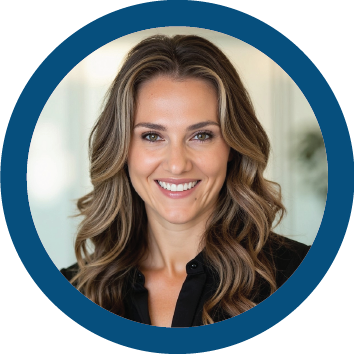
Edisa Shirley
Chief Mental Health Officer, ClinicMindSubscribe for More:
Don’t miss future insights—subscribe to our blog and join us on LinkedIn: Stewart Gandolf and Healthcare Success.
Note: The following AI-generated transcript is provided as an additional resource for those who prefer not to listen to the podcast recording. It has been lightly edited and reviewed for readability and accuracy.
Read the Full Transcript
Stewart Gandolf
Welcome, everyone, to our podcast, the Healthcare Success Podcast, and again, I have
I have got the best speakers. I don't know, Edisa, I'm doing something right, I'm really excited. So, today I'm interviewing Edisa Shirley, right after finishing a webinar, by the way, for MGMA. So that went well, and I'm in a good mood, and Edisa's going to be a lot of fun, I just know it, based on our prep call, and she's got some terrific insights. So, first of all, Edisa, I'd like, to welcome you. Welcome to our podcast.
Edisa Shirley
Thank you so much, Stewart. It's my pleasure being here.
Stewart Gandolf
Great. So, Edisa, the first thing I want to ask you is, because I always find it's good for the guests to share their background just a little bit, so the audience has an idea of, like, what am I going to listen to? Let's set the context. So, give me a little about your background first, and then I'll take you from there.
Edisa Shirley
Awesome. Well, so I started my career as a licensed mental health therapist, working directly with patients, and then over time, I realized that the challenges that providers face go far beyond the therapy room, so it wasn't just about the burnout, it became about work: broken workflows, credentialing delay, billing headaches. So, thinking through how can I impact the most people at once? So, I went on to, into leadership, and then later on, kind of pulled me more into the strategy roles. Went back into getting my doctorate, in industrial and organizational psychology, focusing my research on leadership, healthcare, how it impacts providers' well-being, patient outcomes. And that kind of really shaped my perspective. If you fix leadership, operation, you kind of fix a lot of different things. So, went from being a clinician, being a leader, executive, and now I am more in a strategic role. I serve as a Chief Mental Health officer at ClinicMind. So, I really get to combine both sides of my background, like I said, clinical, operational. With a good mission to make healthcare practices more sustainable, scalable, and people centered. And I also do some consulting work in the PE and investor world as well, so I've been involved in bits of mergers and acquisitions, so that's been a fun space for me as well.
Stewart Gandolf
That's good. It's funny, having done this for so many years, I find some people just naturally gravitate towards the clinical side, the business side, it's all a playground. And I work with so many different private equity businesses, and mental health is a category today that is just exploding with the advent of telehealth, new technologies, stereotypical, Woody Allen model with some guy with patches on his tweed jacket doing Freudian psychotherapy is just not really what things are doing today. And by the way, Edisa, I can tell you that when I first started consulting about healthcare marketing with businesses, the mental health practices were the hardest! They would come and spend thousands of dollars to come and see me speak and argue with me the whole weekend. So, it's come a long way, baby, let me tell you.
Edisa Shirley
Yes, it has.
Stewart Gandolf
Today's topic is Beyond Burnout, Technology, Leadership, and the Future of Scalable Healthcare. Why this topic? Why are you passionate about this, because we could have talked about a lot of things. So, why that topic?
Edisa Shirley
You know, because there's a big misconception of what is burnout in the investment world? And why does it even matter? So, when we talk about going beyond burnout. Moving past the mindset of crisis management. And too often, the organizations treat burnout like some kind of unavoidable side effect of healthcare, but the truth is, it is a systematic challenge. It shows up in a turnover, it shows up in compliance errors, missed revenues. So, for example, like, every time a provider leaves, due to burnout, it costs organizations and investors thousands of dollars in recruiting, onboarding, lost patient relationships. And that's right there is the EBITDA erosion. And we see that in behavioral health the most, because it is a very unique field, and most behavioral health clinicians don't go into this field. We did not go into this field to become millionaires. We care, and it's just different. So, for me, going beyond burnout means designing operational systems that reduce the unnecessary frictions for providers and staff. It's about embedding this workflows, technology, leadership practices that create resilience. So, why should anybody care? Well, because it is really just not a wellness initiative, it's a growth strategy, and if you do not, protect your workforce. You cannot be more profitable, you can't scale, and you are not really attractive to investors.
Stewart Gandolf
Right. And the other thing, too, is that, over time we talk about a lot with our company: Employer Brand. If the brand gets the reputation of someplace where they just burn people and chew them out, that's going to be even harder to recruit people. So, these things do matter, and it's funny, Edisa, this topic didn't come up a lot in the olden days, like, it wasn't really a thing to worry about burnout, but for sure, over the last decade or so, with increasing acceleration, we hear this all the time. And recruiting is now a much bigger deal, too. It's not just about the patients, a lot of times, the bigger problem is getting the doctor, or the PA, or the nurse practitioner. So, ClinicMind calls itself a practice growth suite, what does that mean? How does that differ from a typical EHR or a revenue cycle management vendor and why is that important in today's marketplace?
Edisa Shirley
Yeah, so most vendors, or most of our competitors in this space, call themselves EHR or billing companies, but that's like saying your practice only needs one tool in order to operate. Practices need way more than just record keeping, or just billing, just a technology to help them with some kind of operations. They need growth engines, and that's what we call ClinicMind a practice growth suite, because we combine EHR, revenue cycle management, credentialing, patient engagement, AI documentation, all in one integrated system. And what makes that important today is it's a margin pressure. Practices really can't afford 6 disconnected tools that do not talk to each other. And now you're trying to figure out not just how to pay for everything, which is very expensive, but how to get those tools to communicate with each other and then pull the reports that you need. So, those practices need that one ecosystem that improves efficiency, drives revenue, so we are not just—we are technology, we do have our technology—but we're more than just hosting that technology. We coordinate workflows, training, leadership, just to ensure that practices achieve ROI, and that's where we are different, and we stand out among our competitors.
Stewart Gandolf
Today, there are so many therapists who are developing their own—first of all, with the telehealth move, I don't think, any more especially more pronounced than mental health. It's so easy to do this from your house, “so do I want to go into an office and pay for that, or do this from the comfort of my own house?” Or maybe sometimes people have home offices, or they do both, or whatever. But it's enabling because now you can be an independent contractor on a lot of different platforms, and try things out, and you can also build your own business. So, I'm curious, for this particular platform, are you finding a lot of those independent therapists. Because as an independent therapist, it's overwhelming. Like, you've got billing, and chasing bill, fees, and…How do I set up the technology? So, is your platform…because I could see a platform helping an independent person, for sure, to take care of all the, like, technology stuff with one bundle, and or do you have multi-provider, larger organizations using the platform? How is… does it work for both? I'm just curious.
Edisa Shirley
Yeah, it does work for both, but our ideal customer is someone that wants to scale. So, for example, single provider sees 10 patients, they're happy, they do not want to see more than 10 patients, they self-pay, cash pay. Maybe that's not our ideal customer. Our ideal customer is the single provider that says, I want to be efficient. I don't want to deal with overhead, the administrative burden. I want to be able to write complete, compliant notes. I want to make sure that payers are reimbursing me adequately. And that I will not get rejected, and then I want to find a way, how can I grow my practice? That is ideal. That's a sweet spot for us, because we just come in, say alrighty, see patients, do what you know best. We will take care of the rest, and let's create a plan, 1-year, 2-year, 5-year plan. And show you how you can grow, how we can grow with you, how we can support your growth, and whatever direction that is. But then on the other side, we also do have some larger organizations that we are supported, from a PE, investor side, they love centralized everything.
Stewart Gandolf
Yeah. No. No.
Edisa Shirley
Centralized scheduling, intake, billing, and how if you tell them, how about you have one software that handles everything? That's a dream! Like, we can just get one platform and get everything? So, we're a dream for PE companies.
Stewart Gandolf
Yeah, that's for sure, and the interoperability of that is such a big deal, and in the marketing side with our business, we have so many tech stacks that all have to communicate together, and it's exceedingly complex. And so, I could see why the PE companies would like that. They're always about scale anyway. So, let's talk about some of the most common operational gaps that can hurt a practice's growth, and should people address them?
Edisa Shirley
So, when I sit down with practices, there are usually 3 pain points that always rise to the surface. First one, credentialing. Credentialing delays, and this happens even before the provider even starts. Provider can't start. There's a waiting list, we have a provider, we found a provider, offered them a job, and now they can't start until credentialing goes through. That's usually pain point number one. Second one is front desk and intake workflows that frustrate patients, cause leakage, demand. There's a lot more demand than supply, we know that, especially in behavioral health, so there are long waiting lists, there's a lot of patients that are trying to get care, so trying to navigate who needs to be seen first, how often, for how much time, that's all part of that workflow, how they schedule those appointments. Should they have a link? Should they call the practice? Practice phones are ringing a lot, so there's a lot of workflow adjustments that need to be done there. And then the last one would be billing inefficiency, denials, delays, and those are the ones that hurt the cash flow the most, so, the good news is, none of that is unresolvable, with the right tools, processes, you can, like I mentioned, PE companies love standardizing. Credentialing, automating things, automating intakes, but then also, utilizing dashboards to see where the money is stuck. So, when you fix those fundamentals, practices usually see growth, like, immediately, 15-20% more in revenue, just by addressing those three pain points.
Stewart Gandolf
So, it's funny, we haven't talked about this in the prep. The number one thing that we see that is a disaster for businesses, from the marketing standpoint is that intake. For decades, I've hated this problem. People try to make an appointment, and they can't. And the expectations today are that much higher. And so, today, I just literally got done with a webinar, as I said a moment ago. And I talked about, people feel like, “Wait, I can book an appointment on OpenTable, why can't I just book an appointment with you?” And that's getting better. I mean, it would be a joke a few years ago. People were like, I'm not giving them access to my calendar. It's like, what do patients want? To be able to communicate with their therapist, and to be able to get an appointment? What do the therapists not want to do? Talk to them via email and give them access to an appointment. So that's changing, for sure. But today, too, you have, online scheduling, you have phone calls, you have form fills and requests. You could have SMS, and then also, with the mental health, you have the chemistry part, and how do you scale that? And, do you have an intermediary that qualifies the patient, or do you just go straight to the therapist? Like, there's a lot there. And the difference in results is night and day. It's like, 80-90% swings I've seen between poorly done and well done. Any additional comments on that part of it? Because that is just, it's getting better, but it's gone from terrible to not quite as terrible.
Edisa Shirley
No, I agree. I absolutely agree. And then just to add to that, you're also dealing with very sensitive population. Right. They're not calling just to hang out. They're usually calling because they're struggling with anxiety, depression, or something. So, that makes it even more challenging if they call and they cannot get a hold of a practice. Yeah. What's the next step, right?
Stewart Gandolf
The next step is to call somebody else.
Edisa Shirley
Right, they're going to call someone else, and they might not pick up. So, how do we provide them a, the easiest way to get ahold of us, right? We also know that some don't like to talk on the phone. And to mention, I know you said something about OpenTable. There is a whole new generation that does not know how to use a cell phone.
Stewart Gandolf
Yeah, for sure.
Edisa Shirley
You know how to use it, they don't.
Stewart Gandolf
Yeah.
Edisa Shirley
It can be texted, and if it can't be done online, they don't pick up a phone and call, so they like to have scheduling tools in an app, or online, where they can go on, at least to request an appointment, or go through someone's availability, and pick a date that works best for them. But then also, the modality of a visit. Telehealth or in person balancing those as well, and you have mentioned behavioral health. Telehealth is exploding in behavioral health. It's about 70 80% of our patients are seen via telehealth, which it's not ideal for all of the patients to be seeing telehealth, but the way I see it, telehealth is better than no care.
Stewart Gandolf
Yeah, for sure. And I’ve got to tell you a personal story. We have a therapist-enhancing family here, so my wife and my kids all openly, I'm not hiding anything here, see therapists, and they're like, daddy, you have to do a therapist. And it's always the man who's the last, right? Always. And so, I finally said, okay, okay, I'll try this, because I am under a lot of stress of being a CEO of a company. And so I went through our insurance, and the first person I had had literally the worst profile. Like, this is the kind of thing I would show up at a seminar, like, don't do this. It's like, this person doesn't look warm, relatable, anything. But I'm like, okay, fine, my kids are talking me into this, I'll do it. And then, thank God, she, canceled, because she was overbooked, or something like, yes, I'm out of jail free! And then, what happened is somebody else referring to somebody else, and I really mean to get back to them, but I just haven't done it. So, it's like, if you miss that critical moment, it's over. Like, it goes back to zero. It's like, instead of calling somebody else, I just didn't call anybody. And so, my kids will still argue, Daddy, you really need to handle this stress better. And it's not like I'm against it, it just isn't top of mind, right? And I, like I said, it's not like we don't believe in this. I have a whole therapy budget going on in our family. So, let's talk about the staffing and compliance issues. I think staffing is really intriguing just because there's competition for therapists right now, and then the compliance part, too, so just some quick thoughts on those two things as well.
Edisa Shirley
Yes, absolutely. So, staffing, as I’ve mentioned already, demand is higher than supply.
And we do not have enough people to take care of the population that needs mental health services, so we're having to be very innovative on how to handle that. Efficiency is becoming very important. How do we see the most patients within the time frame? What needs to be removed, right? A lot of clinicians are doing a lot of paperwork throughout the day. I don't think that's a secret. Why not utilize those clinicians to do what they're meant to do, see patients, right? How do we remove that administrative burden off of them so we can get more people in? One way to solve the staffing issue. On the other side, compliance, right? How to run compliant practices, how to make sure—as we know, behavioral health, very regulated.
And we are still going through a of changes from a regulatory perspective, and we are fighting our battles, when it comes to what are they reimbursing, how often they're reimbursing. We still have in, psychotherapy where they're reimbursing based on, how long the session is, the time of the session, versus complexity. Like, if you've seen a therapist, they see you for 53 minutes. Doesn't matter if you need it for 53 minutes or not, because 90837 reimburses 53 minutes. And that is very different than in any other field. You don't pay for a surgery based on how long the surgery was. But based on what the complexity of the surgery was, So, there's still a lot of work to be done on the compliance side, but from an operator or investor side. It's something that we need to constantly keep on top of our priority list.
Stewart Gandolf
Makes sense. I have a question, let me go backwards to something I always talked about earlier. What have you found (the marketer in me just wants to know, I'm curious, so we work with different models) So, what have you found? What is the best solution you guys have seen best practices for the chemistry problem? Because, as I just mentioned, fun fact, obviously, a bad provider photo does not mean this person's a bad provider, but it's not a good start. And, like, beyond the photo part, but the actual, what works better? Is it better to have the therapist do the initial call? Is it good to have a screener? Does it depend on the size of the business? And then also. It's a tricky thing working with therapists, like—we're not giving away free therapy, but you have to develop rapport. Like, any hints for the people that are trying to figure out how to do that? Because it's really important. Like, that human element matters a lot. It matters everywhere, even surgery, but it really, really matters here. You have to feel like you can get along with this person. And some people are better at that than others in the real world, so I'm just curious.
Edisa Shirley
Yeah.
Stewart Gandolf
What your thoughts are.
Edisa Shirley
Yeah, so first on a screener part, ideally, yes, the practices would speak with a potential client, with a patient, for about 15-20 minutes, just do more like a discovery call, right: Who is the patient, what are they looking for, what are they like, what they, what are their interests, and try to match them with a correct provider, right? It's not ideal, it's not 100%. You do your best. Like, if someone shares well, I am of Asian ethnicity, I would prefer someone of a similar, of a same ethnicity, or someone that's possibly an immigrant, or someone that may understand some of the struggles that I'm having, then you do your best to match. So, we have done that before as part of the intake process. But it's not 100%. In a first session, when a patient comes, sees a therapist. I have always said that in my first session, when I used to see patients.
Do not be scared to fire your therapist, it's okay. After the first session it’s okay to say, I don't think this is a fit, this is not a personal. This is not personal towards a therapist, but there has to be a good chemistry, there has to be a good fit, and communicating that in a first session where they understand, you're not locked with me. This is not it. If you don't feel this is a good fit, it is okay to seek another therapist. So, I have always said that in the sessions, as a therapist, I've had some that message me, say, hey, I don't think this is a fit, and the others that are fine, so it happens, but I think chemistry is important, and if you do not have that chemistry with your therapist, you will not open up, and then the therapy will, after all, not really help you.
Stewart Gandolf
So, it's really interesting, I love that, just because if you give permission to say no, it also gives them permission to say yes, because then they're focused on, is this a fit, versus stressing out, wondering what you're going to say.
Edisa Shirley
It's not personal.
Stewart Gandolf
Yeah, yeah, for sure. Let's go back to the scaling part. For the PE-based platforms, where do you see the fastest wins in improving? We're going to switch a little bit and get more business-y here to improving the EBITDA through tech, leadership, alignment, those kinds of things. And not necessarily only PE-based platforms. If you've got a group that's trying to get bigger, these things all matter to everybody. So, what are some of the things you think matter?
Edisa Shirley
Yeah, so for both, no matter if it's PE-backed or not, the fastest wins always come from centralizing revenue cycle credentialing, so if a new provider takes 120 days to get credentialed instead of 60 days, for example, that is a lost revenue. So standardizing credentialing, impaired contracting across locations, creates immediate lift. And on our CM side, we do see about 10-20%
revenue improvement just by reducing denials and tightening days in AR. So, using technology that, of course, accelerates this, like automated eligibility checks. error-proofing claims before submitting them. Given, like, if your EP-backed, given those executive real-time dashboards, that makes cash flow more predictable, and then, investors don't really have to wait forever, for the ROI, and those improvements are shown immediately on the EBITDA. And then another level that's actually really interesting, that I talk to a lot of my investors about is leadership alignment. And it does not come up a lot, because it's something that is viewed as subjective. But, like, technology adoption, centralizing revenue cycle management, doesn't happen unless leadership drives it. And I have seen platforms where EBITDA improved in less than 6 months just by aligning clinical leaders and executives around the standardized workflows. And that's kind of how you can create that integration that can be repeatable across multiple locations, if you are a PE-backed or, if it's part of a portfolio.
Stewart Gandolf
And that's true for really any business. It's funny, right now, our agency's doing that. We have very expensive, very talented people at every position. And so, the great news is we can help people with almost any marketing problem. The terrible news is we can help people with almost any marketing problem, meaning from a scaling standpoint, that's challenging. And so, I think any business needs to do that, but particularly mental health. Where it's really easy for things to get out of hand, because it's all people-based, it's all human-based, and so I think that's really a great insight. So, when you're thinking about metrics, what are the several top ones that you think matters for every healthcare organization to stay scalable and profitable?
Edisa Shirley
Yeah, so when it comes to metrics, three that I would always focus on would be days in accounts receivable and AR, provider productivity, and then patient access or no-show rates, because those are really telling you everything about scalability, cash flow, efficiency.
access. You can layer probably a few other advanced metrics, but these three are the ones that, like, if you lose sight of those, your practice will stall.
Stewart Gandolf
So, as we go forward, and again, it's funny, the questions we talked about in advance, are so parallel to so many businesses. Like, our business right now is completely, aggressively adding AI and new technologies. The tech stack is a strategy for 2025. Like, that's where we're spending a lot of our energy, updating our tech stack. So, what healthcare technologies do you think matter in the practice growth for the next 5 years? For the people that you're serving.
Edisa Shirley
I do see a few trends dominating, I mean, from technology and non-technology perspective. So, first. AI, right? That will become a standard. Every provider, regardless of specialty can expect AI to be part of their workflow, whether that is documentation, billing, or even patient engagement. It's no longer going to be nice to have. It is going to be a baseline for efficiency. Second thing, payer models will continue to push practices into value-based care, which means documentation and analytics won't just be compliance tools, there'll be currency that will drive reimbursements. Like I've mentioned earlier, instead of getting reimbursed based on, like, time spent with a patient, getting reimbursed based on outcomes complexity. So, practices that can improve those outcomes will have stronger payer leverage. And then the last one, I would say consolidation will accelerate. We'll see multi-specialty MSOs, but also stronger connections between outpatient practices, the post-acute world, like skilled nursing facilities, assisted living facilities. Because post-acute populations are higher cost, higher need, and payers are laser-focused on managing those costs as well. So, providers that can find ways to extend their services outside of their practice, like outpatient clinic. Into skilled nursing, assisted living, are not only filling that clinical gap, they're positioning themselves as a center of payer strategy, where that's really where you want to be.
Stewart Gandolf
So good. So, I want to bring us all the way back to our topic. Our topic was about Beyond Burnout, technology, leadership, and future of scalable Healthcare. So, we talked about a lot of stuff. Bring us back to—What does this have to do with burnout? Help our audience understand that.
Edisa Shirley
Yeah, so, coming back to burnout, how do you take care of your providers? How do you take care of people that take care of the demand? And if the population that is there to take care of the demand that is rising, is burned out. They're not able to, work, or they're leaving the field, which I have seen a lot. It's difficult to push through, and it's difficult to scale your practices, it's difficult to scale your businesses, and then also what causes that burnout, right? So, everything we just talked about, we talked about operational efficiencies, we talked about leadership. How does that impact providers? With inadequate leadership, with, broken, fragmented workflows, and fragmented technology, who suffers? It's the provider. And then who suffers after that? Patient.
Stewart Gandolf
That makes sense, and I think, if I were to sort of summarize my point of view on this is, it's a tough job anyway. I mean, you're talking about people's problems, right? And you've got their life in your hands. There's already plenty of stress there, so, it's funny, the duck bites after, I could see, would be the tipping point, right? Like, okay, it's already hard to do the job, but now I'm dealing with all these things that I truly hate, which I didn't go to school for, which are a natural part of our business world today. I could see how that would get people down. And it's funny, you mentioned people that burn out, one of our former employees went to all the trouble to become a therapist, and she's like, don't do this. So I could see how that could be a problem. So, as we wrap up here, like, if we're looking at, alright, so somebody's listening today that's a healthcare executive, they want to start changing, what's the first steps they should take?
Edisa Shirley
So, if you're a healthcare executive, and if you're thinking, what can I do to, I don't know, where should I start? So, my advice would be, start with visibility. If we're talking about operations, pull up your operational and financial metrics. Make sure you know days in AR, productivity, no-shows. So that's the first part, on the operation side. Second part is: listen, be visible leader, and listen to your providers. They will speak to you; they will tell you what they need. And do not ignore their needs, because at the end of the day, they're the ones taking care of our patients, and if they're not taken care of. That patient care will also struggle.
Stewart Gandolf
Yeah, and I think that—this is not my area of expertise, but I'm pretty sure a happy, satisfied therapist is going to be a better therapist to their patient.
Edisa Shirley
I mean, that goes for any field, especially in behavioral health, right? Because it's such a unique field, and I can tell you from the time when I was seeing patients—5 patients per day, just like 5 hours of seeing patients, that is emotionally exhausting. Imagine you're listening about people's issues, concerns, deepest secrets. So, imagine all of that coming your way. And bringing you down, naturally, brings you down. There's no way you can completely shut off your emotions. And then after that, not being treated well at work, or having to spend 3-4 hours in documentation, it becomes a lot. So, that's kind of, like, one of my passions. How do I ensure that patients get access to care, and how can we make sure that providers are taken care of, so those patients do get access to care? Because it is a fragmented field, and there's a lot going on, and it takes all of us to do something about it.
Stewart Gandolf
One last comment from my standpoint, which I'm not nearly as expert as you are, but as I mentioned, I worked with, and early in my career, with LCSWs, MFCCs, psychiatrists, psychologists, you know, the whole thing. And they all had different models that they would treat. It was much more fragmented when I first started doing this than it is now. Like, everybody does cognitive behavioral therapy or some version of that now. Well, not everybody, but a lot. But as time goes on, it's like trying to find best practices and inherent something that's scalable—I'm talking about the therapy part now—and inherently human business where, again, some humans are better than others at every, there's just facts, in every field of endeavor. Some people are better than others at what they do, so it's really interesting to see is all the business side we just talked about, and then also empowering and educating the therapists themselves, and helping support them in that part of it, too, and their own mental health’s sake, right? Just like you said, it's like, it's hard, it's stressful, it's a big deal.
So, plenty of opportunities for the future. Do you a comment on that before I wrap up here?
Edisa Shirley
No, no, you're absolutely right. I mean, it's, the field has come a long way in the last 10 years, which have been great to see, but we still have a lot more work to do. And also, from a recruitment perspective, I know you're in marketing. How to convince others that this is the field that they should go into.
Stewart Gandolf
Oh, it's such a huge issue. We're working right now with a multi-location provider in the Midwest, large, a really respected one, and recruiting is one of their biggest, biggest issues. We've worked with telehealth providers who live and die on patients, because if they can't get patients for their providers, the providers quit. So, it's a vicious cycle. They need money to spend money to get patients, but if they don't get patients, then the providers quit and go to… and it's such an open marketplace right now. We really should have talked about that a little more, but, like, it's such an open marketplace. Retention is hard, right? Getting them is one thing, but keeping them is another, and even happy if you don't have patience for them. So, for us, I didn't even mention this to you at the beginning, but we work with straight mental health, troubled teens, anorexia, autism, ABA, alcohol, drug, or substance abuse, SUD, substance use disorder. We're heavy in mental health, and recruiting, like, especially, like, in things like ABA, is really, really hard. And there's variations. This is much more nuanced than we talked about today, because each of the sort of specialties are different, and there's just a lot there. So, anyway, Edisa, I knew I'd have fun today. Hopefully you had fun today, too, and I'm sure our audience did. Thank you for joining us today.
Edisa Shirley
I did, thank you so much for having me. I'm sure we're going to do this again.
Stewart Gandolf
Yep. Good deal.
Edisa Shirley
Thank you.
Related Articles:
[Podcast] Engage at Warp Speed With New Healthcare Technologies
[Podcast] Healthcare Marketing and the Patient Experience
The Best Strategies in Healthcare Begin with Empathy [Podcast]
Telehealth: Providers Have More Options Than Ever Before [PODCAST]