AI Without Oversight: Why Healthcare Content Can’t Be Left to the Machines








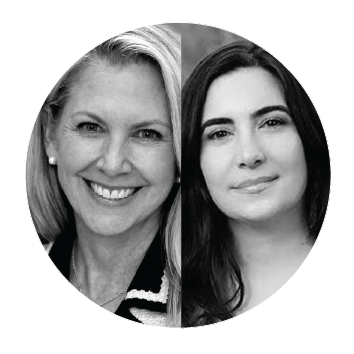
In this episode of the Healthcare Success Podcast, Stewart Gandolf is joined by Melanie Wilson, Director of Brand and Storytelling, and Mary Hayes, Senior Content Strategist at Healthcare Success, to explore one of the most pressing issues in healthcare marketing today: how to use AI responsibly without sacrificing accuracy, trust, or performance.
From hallucinations and misinformation to generic, low-value content that damages SEO, they unpack the real risks of over-relying on AI—especially in a “your money, your life” industry where mistakes carry serious consequences. At the same time, they offer a practical look at how AI can be used the right way: accelerating research, improving workflows, and enhancing content quality when guided by experienced human strategists and writers.
A central theme of the conversation is this: AI is not a replacement for expertise—it’s an accelerant. And in healthcare, where brand voice, clinical accuracy, and patient trust are critical, the human layer isn’t optional—it’s essential.
They also address common misconceptions from clients, including expectations around speed, volume, and cost, and explain why more content isn’t always better—especially if it lacks strategy, differentiation, and credibility.
Why Listen?
If you’re a healthcare marketer, CMO, or executive trying to navigate AI in your content strategy—without putting your brand, rankings, or patient trust at risk—this episode offers a clear, grounded perspective.
You’ll hear:
• Where AI actually adds value in healthcare content workflows
• Why fully AI-generated content can hurt your SEO and credibility
• How to balance efficiency with accuracy and compliance
• What clients often misunderstand about AI, speed, and cost
• Why brand voice and storytelling still require human expertise
• How leading agencies are integrating AI without cutting corners
Key Insights and Takeaways
- AI is powerful—but not a replacement for strategy.
AI can synthesize information, analyze data, and accelerate workflows, but it doesn’t understand business goals, competitive positioning, or patient needs. Without human strategy guiding it, AI-generated content lacks direction and impact. - In healthcare, mistakes carry real consequences.
Unlike other industries, inaccuracies in healthcare content can mislead patients, damage credibility, and even trigger regulatory or legal issues. Hallucinations and outdated information aren’t just inconvenient—they’re dangerous. - More content doesn’t mean better results.
AI makes it easy to produce large volumes of content quickly, but generic, undifferentiated content can harm SEO performance and reduce trust. In a competitive AI-driven search landscape, quality and uniqueness matter more than ever. - AI works best as an accelerant, not autopilot.
Used correctly, AI compresses time spent on research, data analysis, and repetitive tasks—allowing teams to focus on higher-value strategy and creative work. But every piece of content still requires human oversight, review, and refinement.
5, Brand voice and storytelling can’t be automated.
While AI can mimic tone, it doesn’t inherently understand brand strategy, emotional nuance, or compliance boundaries. Strong messaging requires intentional development and experienced human input to maintain consistency and credibility.
6. The “human in the loop” is non-negotiable.
From fact-checking and editing to applying judgment and nuance, human expertise is what ensures content is accurate, aligned, and effective. Especially in healthcare, this layer is essential—not optional.
7. Client expectations around AI are often misaligned.
Some clients assume AI means faster, cheaper, and unlimited content, while others worry it’s replacing human work entirely. In reality, AI improves efficiency—but doesn’t eliminate the need for skilled professionals.
8. The real advantage comes from using AI well.
The gap isn’t between companies that use AI and those that don’t—it’s between those who use it thoughtfully and those who rely on it blindly. The former gain speed and quality; the latter risk producing content that underperforms or damages their brand.

Mary Hayes
Senior Content Strategist, Healthcare SuccessSubscribe for More
Don’t miss future insights—subscribe to our blog and join us on LinkedIn: Stewart Gandolf and Healthcare Success.
Note: The following AI-generated transcript is provided as an additional resource for those who prefer not to listen to the podcast recording. It has been lightly edited and reviewed for readability and accuracy.
Read the Full Transcript
Stewart Gandolf (Healthcare Success): Hello again, and welcome to the Healthcare Success Podcast. Today, I have a very special podcast. We are going to speak about content and AI, featuring two of my favorite people, who happen to work with me as well, Mary Hayes and Melanie Wilson. Welcome, guys.
Melanie Wilson (Healthcare Success): Thank you. Happy to be here.
Stewart Gandolf (Healthcare Success): Yeah, I'm happy to have both you guys. So I had to beg them, threaten them, convince them… You guys aren't used to being in front of the camera, so today, you guys are gonna do great, I just know it. So we'll lead you through.
Melanie and Mary are both key members of our team, and guys, just, I want you to take a moment to introduce yourself and what you do around here at Healthcare Success, and I'll lead you from there.
Mary Hayes (Healthcare Success): Sure, I'll start. Hi, I'm Mary Hayes, I'm the Senior Content Strategist here at Healthcare Success. I've been here for about a year and a half, but I have many, many years of marketing and healthcare experience.
To describe what I do, I would say I spend my days figuring out how to get the right content in front of the right people. And, lately, a lot of that work has been involving or making sure that AI is helping us do that better, and not just faster.
Stewart Gandolf (Healthcare Success): Excellent. And Melanie, what's your title, and what do you do?
Melanie Wilson (Healthcare Success): Director of Brand and Storytelling here. I've been here for about 5 years. I do two main things, mainly managing our team of writers and the production of the content. As well as I help with our brand strategy projects, as it relates to brand messaging toolkits. I help develop those for our clients.
Stewart Gandolf (Healthcare Success): Excellent. So, today, let's, again, we're going to talk about content marketing, and this is in the news. If you've been doing anything related to healthcare marketing, or content of any form, this has certainly been in the news since the very beginning, and there's a lot of fear out there.
And I'll set this up a little bit, guys, and we'll just jump straight into the podcast. But first of all, there's the fear that we're all going to be taken over by robots, which probably has some validity. I understand that, so I don't want to be naive to that.
But more to the point for today, there are fears of writers being displaced entirely. What's going to happen to writers? Should I not be a writer? What are we going to do? What's going to happen to my job?
And again, these are all valid fears. We're going to be talking about some of these things today. There's also the fear of misinformation, or mistakes, or hallucinations in healthcare. And that's a big concern as well. There are fears that if I hire someone to do writing for me, are they really going to write, or are they just going to use AI?
So there's a lot going on these days, and I certainly understand that. So today, we're going to tell you what actually happens at what we like to think of as a state-of-the-art agency that still uses very experienced human writers, but also uses AI appropriately.
So we'll get into all of that. But first, I'm going to throw out something that is newsworthy. There are rumors—and there are actually state laws in various stages—and we'll see where this goes. But anything with healthcare is unique, as you guys know. We'll probably talk about your money or your life and E-E-A-T in a little bit. Healthcare is particularly important, and so there is, for example, I've heard of a law in Texas where anything AI-driven is going to require some sort of disclaimer that it was written by AI.
And that's an interesting dilemma. When this first came to our attention internally, if you're using Grammarly, that's a form of AI, right? So where are those lines going to be drawn? Who's going to be the arbiter of these things? How's this all going to shake out?
But meanwhile, my team reminded me that this little tiny organization some of our listeners may have heard of has a policy on this. That would happen to be Mayo Clinic. So Melanie and Mary, I'd love you to talk—let's start there. We've got lots of questions, but let's just talk about that feature, then we'll dive into the rest.
Melanie Wilson (Healthcare Success): Yeah, I think the idea that we have to be transparent with how we use AI is a good concept. It's something that we should be proactive about instead of reactive.
As you mentioned, the Mayo Clinic is a really good example of how they do that. They have a page on their website called the Health Information Policy page. It's buried in there, but I love the page. It essentially outlines their process for writing and producing copy and health information. They go into detail about the writing process, research, review—everything is there.
In addition to that, they have a boilerplate paragraph about how they use AI. It's very simple, it's clear. From a perspective of LLMs understanding and reading your website, it is gold. It really is what LLMs need to understand what the health information is that you have, and how you are being ethical and responsible with the way that you produce it.
So that would be an example of how to do that right.
Stewart Gandolf (Healthcare Success): Excellent. Mary, any other comments before we pivot?
Mary Hayes (Healthcare Success): I agree with that, and I think it's also important to have that statement somewhere on your website if you are using AI, just as a way of being honest and open about the technology.
The truth is that almost everybody is using AI now, and so I like the way Mayo Clinic lays it out. It highlights that it's human-first, but they do use AI, and they explain the specific ways they do that.
Stewart Gandolf (Healthcare Success): So I would just like to add one sort of color commentary. Mayo Clinic is one of those organizations that just views themselves as a leader, and I love that about them.
And for people newer to our industry, you may or may not remember Lee Aase, who used to be the head of communications at Mayo. I've actually interviewed him on this podcast multiple times. He was kind of the innovator of social media in healthcare. He helped lay down policies and get Mayo involved early.
So the first question I have is: why not use AI for everything?
Mary Hayes (Healthcare Success): I’ll go first. I would say the simple answer is that AI just isn’t there yet. It can’t handle the full cycle of strategy, production, optimization, and iteration.
And to be honest, I’m not mad about that—I’m not ready to retire yet. But actually, I think AI is genuinely excellent at certain things, such as research, synthesizing large volumes of information, analyzing data, and writing code.
It handles those things really well, but really good isn’t the same as done. It still needs a human in the loop, as we like to say, to catch errors and apply judgment. Because AI does make mistakes. It hallucinates, which means it will literally just make stuff up.
So that’s why I don’t use it for everything.
Melanie Wilson (Healthcare Success): Yeah, I agree. Everything Mary said. I think when it comes to just the writing, for that same reason, I wouldn’t be comfortable just letting it go from beginning to end, especially with healthcare or medical information.
Mainly because, as Mary said, it does hallucinate. It also has factual inaccuracies—made-up statistics, made-up quotes. There are a lot of things like that. And it ends up taking more time to review and fix those things than it would be to write a proper first draft.
Mary Hayes (Healthcare Success): Yeah, and I would just add that publishing an inaccurate claim isn’t just embarrassing—it can actually harm your patients. Making mistakes or hallucinating can be annoying in most industries, but in healthcare, it’s a real problem.
Stewart Gandolf (Healthcare Success): Yeah, it can harm them, it can cause lawsuits, it can kill brands, it can cause you to stop showing up. So there’s a lot of downside to this. Obviously, the patient first is the most important thing.
I would say, to take a counterpoint here, the other thing I hear is: why would I use AI at all?
And I’ll answer that. I have kids that are Gen Z, they’re very worried about this, I don’t blame them. They’re both graduating from college soon, and this is definitely impacting entry-level folks. But to say “I’m not going to use AI at all,” I think that’s naive.
The metaphor I use a lot is: if I believe that, maybe I should go back to pad and paper. Or a typewriter. Or just stick with a computer. AI is the next iteration.
If you choose not to use AI, that’s fine—but you’re opting out of the arms race. You’re running on foot while others are on increasingly fast horses. You’re at a huge competitive disadvantage. And I would argue that in many cases, your content won’t be as good, because AI allows you to iterate and improve faster.
It’s like sharpening a sword—each iteration gets stronger if you’re using the tools correctly.
So then let’s talk about how you actually use AI. Mary, do you want to start?
Mary Hayes (Healthcare Success): Sure. I would say I use it for almost everything—but I should say up front that our SEO department, led by Brandon Schakola, has really been the one in the trenches doing AI testing. We’ve been building, breaking, and refining workflows as a team for a while now. So by the time something lands in my day-to-day, it’s been through its paces.
I don’t want to pretend I know everything, but I can speak to how I’ve been applying it and what’s actually working. On any given day, I might be working in Claude or ChatGPT. We also use platforms like Weike and AirOps, which help us produce content at scale and track how we’re performing in LLMs.
A concrete example: when we bring on a new healthcare client, they hand us a mountain of materials—website content, persona decks, messaging guidelines, sales collateral, questionnaires, competitive intel. It used to take days to absorb all of that.
Now I can feed it into Claude, and it synthesizes it into a comprehensive overview that informs the strategy I build. For SEO and AEO strategy, I’ll pull reports from Ahrefs or Google Search Console, upload those to Claude along with technical audits, and ask Claude to cross-reference everything and run a content gap analysis. It helps surface opportunities.
Then I review the findings and apply my SEO and AEO expertise to make final decisions. I map everything to audience, funnel stage, keywords, content type, URLs, publish dates. That’s how I use it—just one example.
Melanie Wilson (Healthcare Success): Amazing. And just to repeat what Mary said, I’m really proud of the SEO team and how they’re bringing this into the agency.
From a writing perspective, I use it in two main ways. First, I don’t start with AI for first drafts when it comes to healthcare information. But I do love using it to polish—improving readability, shortening sentences and paragraphs, simplifying language.
Second, I use it to repurpose content. For example, I’ll take a human-written blog post and turn it into a paid search landing page. That requires a shift from informative to benefit-driven, direct-response copy. It saves time and does a great job because the base content is already accurate.
The other thing I love is creating custom GPT tools. I built one for brand messaging audits. It’s essentially 20 years of my knowledge turned into a tool, and it saves me 8–10 hours. For clients without the budget for full brand messaging development, I can give them a report on what their website is actually communicating.
Stewart Gandolf (Healthcare Success): So I would just add a couple points. One concern people have is: “I’m going to hire an agency, and they’re just going to throw everything into AI and go on vacation.” That’s not what’s happening. AI actually allows us to deliver more value, not less.
There are so many moving parts in creative work—do we want to spend time on busywork, or high-value thinking? AI helps us eliminate the mind-numbing parts—like building schema, which is critical but tedious—and focus on strategy and creativity. So we can deliver more, faster, and better.
Another concern is data security. People worry: “Are you feeding my business data into AI?” You need safeguards in place. We’re not using public tools that train on client data. That’s critical in healthcare.
So Mary, what are you hearing from clients about AI and health content?
Mary Hayes (Healthcare Success): Yeah, I would say there are two main things that I’m hearing, and what’s interesting is that they kind of contradict each other. On one end, we have clients who are convinced that we use AI to write all of their content, like you said, and they’ll flag things like using em dashes as evidence. But I want to be clear—and Melanie can speak to this as well—we have real, excellent, experienced human writers who have spent decades in healthcare marketing, and an em dash is not a smoking gun. People who know how to write use em dashes—that’s just how it is.
On the other end, I have clients who feel like maybe we’re not moving fast enough or not producing enough volume. It’s as if they hear the word AI and assume it means we can crank out twice the work in half the time for free. And the truth is, yes, AI does save time—I’ve seen it cut specific workflows significantly—but that efficiency doesn’t eliminate the human layer, it compresses it. AI is excellent at digesting and synthesizing information, but it doesn’t have judgment, it doesn’t understand tone the way a human does, and it doesn’t catch nuance the way someone with 20+ years of healthcare marketing experience does.
Stewart Gandolf (Healthcare Success): Yeah, for sure. And I can talk about that a bit as well, but Melanie, I’d love to hear from you—you're Director of Content and Storytelling—let’s talk about the creative side of healthcare content.
Melanie Wilson (Healthcare Success): Yeah, so I think it’s helpful to define what we mean by the creative side of healthcare. I consider anything that’s not purely informational to be creative—so anything designed to persuade, differentiate, or emotionally connect. That includes headlines, taglines, ad copy, paid social copy.
And the reason that matters is because in healthcare, we have the hardest job: we have to be creative, but we also have to be medically accurate. We have to be persuasive, but we can’t go against compliance. We have to have a strong brand voice, while maintaining credibility. I do think AI can be good at creative output, but in healthcare, that balance is critical, and that’s where human intervention is essential. If the goal is to convert, we still have to ensure the content is trustworthy and compliant, and that’s where the human layer really comes in.
Stewart Gandolf (Healthcare Success): Yeah, and I would just say that people who know me know I started as a writer earlier in my career. I still write all the time, and I can write pretty well by most standards—but I use AI constantly now. A lot of times it’s using things I’ve taught it. I’ve trained it on my voice, fed it chapters of my book, blog posts I’ve written, so it understands how I think. And for example, if I’m writing a landing page, it will remind me to include things I might otherwise forget—like a proof section. So used correctly, it can actually enhance creativity. There are also practical uses—like preparing interview questions for podcasts. Instead of waiting for guests to provide them, I can generate a strong starting point, refine it, and get better participation. There are all these little ways to use AI that improve outcomes without replacing the human role.
So Mary, when a client says, “Why don’t we just use AI ourselves?” what do you say?
Mary Hayes (Healthcare Success): That definitely comes up, and I understand the logic—AI is accessible, it’s fast, it produces text, so why pay an agency? But the reality is that some of our best clients came to us after working with agencies that relied too heavily on AI, and it showed. The content had a generic tone, inaccurate claims, and it didn’t perform. That’s the real-world version of “we’ll just do it ourselves,” and it’s not a small mistake.
First, there’s strategy—AI doesn’t know your business goals, your competitive landscape, or how to prioritize content. Without that, you’re just producing content without intent, and in healthcare, that’s a waste of budget.
Stewart Gandolf (Healthcare Success): I would add that beyond accuracy, there’s brand voice. You can feed brand guidelines into AI, but that essence gets lost quickly over multiple iterations. You have to keep pulling it back. And the other issue is uniqueness. AI is incredibly powerful for smart, hardworking people—but for lazy people, it’s a race to the bottom. You can generate a full website in a few hours, but it’s generic content that exists everywhere. That hurts your SEO and your credibility. In a world where AI and search engines are looking for expertise, generic content tells them you have nothing unique to offer. That can take years to recover from.
Melanie Wilson (Healthcare Success): And to build on that, I think a big part of the disconnect is that people assume AI can just write, but they may not have the expertise to evaluate the output. A professional writer understands what good looks like and how to guide the tool. Brand voice is strategic—it should be documented, developed, and intentional. Once you have that, AI can be a great tool for checking consistency, but it can’t define it for you. The same goes for storytelling—it’s strategic, not something that happens after the fact. As long as the human effort goes into defining those elements, AI can help support and refine them.
Stewart Gandolf (Healthcare Success): Yeah, and I’ll add that even if you haven’t defined your brand voice, you still have one—you just don’t know what it is. That can lead to inconsistency or weak messaging. Small deviations compound over time. If you’re even slightly off in direction, over a long distance, you end up way off course. So those foundational steps really matter.
So Mary, let’s go back to expectations—how does the gap between speed and quality show up?
Mary Hayes (Healthcare Success): The biggest way is volume. Clients hear we use AI and assume we can produce 10x more content for the same cost. But every piece still needs to be strategically planned, briefed, reviewed, fact-checked, edited, and optimized. AI compresses some steps, but it doesn’t eliminate them. Another issue is turnaround time—clients see competitors publishing quickly and assume it’s just one prompt. What they don’t see is the research, briefing, editing, and SME review behind it. And the most dangerous version is when clients are willing to sacrifice quality for volume. I had a case where leadership changed mid-engagement and the content direction shifted. Because we had strong brand guardrails, we were able to adapt—but without those, we would have published content that contradicted the new direction. Those guardrails aren’t overhead—they protect the client. Ultimately, AI is a powerful accelerant, not autopilot.
Stewart Gandolf (Healthcare Success): So what’s the cost from a storytelling perspective if you rely only on AI?
Melanie Wilson (Healthcare Success): When we think about storytelling, we think about that emotional connection—the piece that gives you goosebumps. That “magic” is actually the result of deliberate craft developed by experienced writers. AI can potentially learn that formula, but the ingredients still come from humans. Without that human input, you lose the depth and meaning that makes storytelling effective.
Stewart Gandolf (Healthcare Success): Mary, anything else you wish clients understood?
Mary Hayes (Healthcare Success): Yes—healthcare is a uniquely high-stakes content environment, and AI doesn’t inherently understand that. In SEO, we talk about YMYL—your money or your life—and healthcare sits at the top of that. A wrong statistic or outdated guideline isn’t just embarrassing—it can damage credibility, trigger regulatory issues, or mislead patients making important decisions. We work on topics like lymphoma, dialysis, infusion therapies—areas where accuracy is critical. Patients rely on this information, and that responsibility can’t be automated.
Stewart Gandolf (Healthcare Success): Melanie, you mentioned this earlier, but let’s clarify—when we talk about healthcare content, what all does that include?
Melanie Wilson (Healthcare Success): Yeah, at our agency, since we’re full-service, content really spans a wide range. But for a typical healthcare website, it’s primarily service pages, condition pages, and treatment pages—that’s the bulk of what most healthcare brands have. That’s also why we’re so protective of it. Yes, we want brand and storytelling and all the creative elements, but at the end of the day, it has to be accurate. It has to be right. Beyond that, it extends into social media, paid media, and even traditional channels like radio and billboards.
Stewart Gandolf (Healthcare Success): Great. So as we wrap up here, I’d love both of you to weigh in. Mary, let’s start with you—what does good human-AI collaboration actually look like in your day-to-day workflow?
Mary Hayes (Healthcare Success): The simplest way I’d describe it is that AI handles the heavy lifting, and humans handle the judgment. In practice, that means I’m not manually reading through hundreds of pages of research or keyword data anymore—I’m using AI to synthesize that information. What used to take days now takes hours, and I’m working with a richer, more comprehensive picture than I could have assembled on my own. From there, I apply strategy. I look at what AI surfaced and ask, does this make sense given the client’s goals, their competitive position, and what we’re seeing in search and AI-driven answers? I make the decisions, I course-correct, I add nuance—that’s something AI can’t do. It doesn’t have clinical judgment.
Stewart Gandolf (Healthcare Success): Yeah, and that’s a great point. If I give you a thousand pages of material, do I want you spending weeks just reading it, or do I want you building something valuable? Most clients would rather see progress. And even beyond that, being able to summarize and validate that information quickly is incredibly valuable to them. Melanie, anything you’d add?
Melanie Wilson (Healthcare Success): Yeah, I agree with that. As writers, we have to read a lot to understand what we’re writing about, so AI helps with that initial synthesis. But I always apply manual checks—doing my own inventory of what we have, double-checking what AI produces, and questioning it if something seems off. It’s really about understanding what you can and can’t rely on it for. For our writers, we still do first drafts in-house, but we use AI for editorial review—things like readability and checking against guidelines. Ultimately, it’s about testing consistently, learning what works, and refining from there.
Stewart Gandolf (Healthcare Success): Mary, any final thoughts?
Mary Hayes (Healthcare Success): No, I think we covered a lot.
Stewart Gandolf (Healthcare Success): Yeah, I’d just add one more thing. I’ve been writing a lot lately—blogs, podcasts, webinars—and what I’ve noticed is that in the hands of a strong writer, AI actually improves quality. It allows for more iteration. You can sharpen and refine more quickly. So while you could argue you might write something faster without it, often the end result is better with it because you’ve had more opportunities to improve it. We’re not talking about producing low-quality content cheaply—we’re talking about delivering better work for the same investment.
So, team, I knew this would be fun. Was this fun for you?
Mary Hayes (Healthcare Success): Yes! That’s one of my favorite topics!
Stewart Gandolf (Healthcare Success): I told you it would be. So thanks for listening. I don’t usually plug the agency on these, but if you’re interested in working with professional writers who use AI the right way—building your brand voice, winning in AI and SEO—that’s what we do. Today was just a peek behind the curtain.
Thanks for being on the podcast, and thanks to everyone for listening.
Mary Hayes (Healthcare Success): Thank you.
Melanie Wilson (Healthcare Success): Thank you so much.