
From the Field: Four Hospital and Healthcare Marketing Stories You May Have Missed
Here’s a roundup of four interesting and informative healthcare and hospital marketing vignettes from the past few weeks. There are insights and observations in each, and we’d like to hear your comments.

Phoenix Children’s Hospital Virtual Tour – The recently completed Phoenix Children’s Hospital expansion is impressive, and they are justifiably proud of the new facility. To help show it off—and to help visitors become familiar with the medical campus—they posted a virtual tour and an interactive map. It includes an interactive, 3D tour with animation, slide presentations, still photos and videos. (It looks like they’ve also allowed some room to add photos and videos.) What’s more, all this public information was published on their website, Facebook page and YouTube Channel.
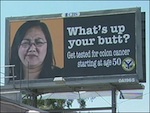
Colorectal Cancer Billboard Rejection Generates Publicity – Advertising for colorectal cancer awareness is a tough sell, but the Tri-Cities health board approved an awareness campaign for the Yakama, WA, area. Then they had second thoughts about the billboard message and disapproved the plan. The result was no outdoor advertising, but the on-again-off-again change of heart by the board created a lot of news coverage and public awareness. GotCancer.org and other groups continue to sell buttons, t-shirts and stickers with “butt” theme.
Elevator Doors Reach Captive Audience – Cedars Sinai in Los Angeles put a super-graphic salute to its staff—and a clean hands reminder—on elevator doors. And over at Duke Raleigh Hospital in Raleigh, NC, the elevator door ads for the medical center appeared in strategic locations at a nearby shopping mall. It’s unconventional placement, but the unexpected location assures that the message will be seen.
Joplin Hospital Credits EHR Role in Disaster Recovery – When the catastrophic tornado ripped through the Joplin, MO, community last month, the electronic health record (EHR) system at St. John’s Regional Medical Center was only a few weeks old. Although the information technology infrastructure was destroyed with the building, the EHR system still played a vital role in reestablishing communications. Within a week St. Johns was able to set up a 60-bed mobile hospital capable of tracking patient’s medical histories. Access to the four-state EHR helped Mercy get the hospital back online quickly, and also helped patients who were transferred to other Mercy hospitals after the storm. This story and tornado photos are on the Mercy website.
If you have an interesting healthcare marketing story worth sharing with your professional colleagues, please drop us a note. Or connect with us here.
Related Articles:
5 Innovative Hospital Marketing Ideas You Might Want to Steal
Four Change Agents That Will Influence Your Future Healthcare Marketing
3 Timely Factoids to Make You a Smarter Marketer