AI Search, Brand Trust, and the Future of Healthcare Marketing: Perspectives from HCIC








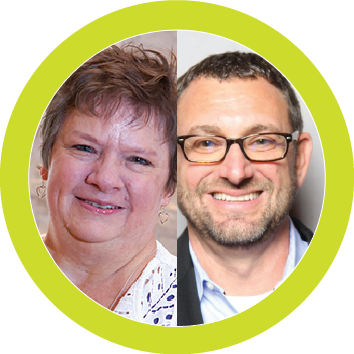
I’ve known Kathy Divis and Mike Schneider for years, and it’s always fun to welcome them back to the podcast. As co-founders of Greystone.Net and the longtime team behind the Healthcare Interactive Conference (HCIC), they have a rare perspective on how healthcare marketing has changed—and which challenges never seem to go away.
This year marks HCIC’s 30th anniversary. When the conference began in 1996, a small group of healthcare leaders gathered at Bally’s in Las Vegas to figure out what to do with a strange new tool called the internet. Plenty of people thought it was a fad. Three decades later, Kathy and Mike are still helping healthcare marketers make sense of the next wave of change, including AI-driven search, zero-click results, evolving digital experiences, and growing questions about trust.
Trust emerged as one of the clearest themes in our conversation. Kathy and Mike reviewed hundreds of proposals while developing this year’s HCIC agenda, and roughly half included some element of trust. Patients need to trust the healthcare information they receive, but search engines and AI platforms also need to trust the organizations supplying it. As Kathy points out, today’s CMO or VP of marketing is as much a conveyor of trust in the brand as anything else.
That creates new pressure on healthcare content strategy. Accurate clinical information is only the starting point. Organizations also need credible authorship, consistent messaging, and a distinctive point of view. When hospitals, physician groups, service lines, and subsites all communicate differently, both patients and AI systems have a harder time identifying the authoritative answer.
We also discuss why AI doesn’t make the healthcare website less important. It changes where people enter the digital experience. AI may help patients understand a problem, evaluate their options, or identify a provider before they ever click. But the website still supplies much of the information that shapes those recommendations and supports the next step.
Some of the most important lessons, however, aren’t new at all. Healthcare marketers still struggle with budget, staffing, access, executive support, and internal politics. As Mike puts it, developing a strategy isn’t necessarily the problem. Following it is. The tools will keep changing, but healthcare organizations still need a clear plan, a consistent brand, and the discipline to stay the course.
Why Listen?
In this episode, listeners will learn:
• Why trust has become a defining issue in healthcare marketing and AI-driven search
• How credible, differentiated content influences whether AI platforms recommend a healthcare brand
• Why fragmented websites, subsites, and service-line messaging weaken both brand clarity and discoverability
• How Epic and other EMR platforms are becoming more relevant to marketing and patient experience
• Why networking with peers and specialized vendors remains one of HCIC’s most valuable learning opportunities
Key Insights and Takeaways
- Trust now operates at several levels. Patients must trust the information they receive, search and AI platforms must trust the healthcare organization supplying it, and the organization must protect the consistency of its own brand.
- Zero-click search changes the patient journey rather than eliminating the need for a strong website. Patients may arrive deeper in the digital experience, after AI has already helped define the problem and narrow the options.
- Healthcare content needs both credibility and differentiation. Accurate clinical information is the baseline, but distinctive expertise and a clear organizational point of view help a brand stand out in AI-generated recommendations.
- Brand fragmentation creates a discoverability problem. Conflicting content across physician sites, service-line pages, and organizational properties makes it harder for both people and machines to identify an authoritative answer.
5. AI visibility depends on an interconnected foundation that includes technical SEO, content, local SEO, reputation, digital PR, and brand. Treating any one of these as an isolated tactic limits the overall result.
6. A written strategy isn’t enough. Healthcare marketers need leadership support and organizational discipline to maintain consistency when physicians, departments, or executives push for exceptions.
7. Traditional concerns such as budget, staffing, access, and ROI haven’t disappeared. AI changes how those issues show up, including how leaders should measure efficiency without reducing every gain to hours saved.

Kathy Divis
President and Co-Founder, Greystone.NetSubscribe for More
Don’t miss future insights—subscribe to our blog and join us on LinkedIn: Stewart Gandolf and Healthcare Success.
Note: The following AI-generated transcript is provided as an additional resource for those who prefer not to listen to the podcast recording. It has been lightly edited and reviewed for readability and accuracy.
Stewart Gandolf (Healthcare Success): Welcome to the Healthcare Success Podcast and welcome again to Kathy Divis and Mike Schneider. Thanks, guys, for joining me again on our podcast.
Mike Schneider (Greystone.Net): Yeah, thanks for having us.
Kathy Divis (Greystone.Net): Yeah, we're excited to be here.
Stewart Gandolf (Healthcare Success): So it's fun catching up with you guys every year talking about things that are old and new and we've got lots to talk about today. And I was teasing a little bit offline about do you think we'll talk about AI at all? But we'll get to all that. I want to take a moment and congratulate you. By the way, you guys have outdone us.
Our agency is 20 years old this year, but HCIC is 30 years old, you guys. That is crazy.
Mike Schneider (Greystone.Net): I know. Started by our grandparents.
Stewart Gandolf (Healthcare Success): That's amazing. So before we dive into the topics too much, I would just love any quick—just to bring people back—that probably, you know, some of our listeners may not have been born 30 years ago. So like how are things changed, the short version? We'll talk about some of the ever present questions later, but just some of the highlights of, you know, how you've seen things evolve over 30 years.
Kathy Divis (Greystone.Net): Well, gosh, everything's changed. I mean, if you think back to 1996, the fall of 1996, that's when HCIC started. At a relatively small conference in Vegas at Bally's. I'm not even sure if Bally's is still a resort in Vegas any longer, to tell you the truth. But anyway, you know, 40 or 50 people all either in academic or community medicine that were trying to figure out what the hell to do with this thing called the internet that seemed to be coming up.
And so that was really kind of our starting point, getting a few people together to talk about how do we address this new tool that's coming. And as Mike often says, a lot of our clients thought it was a fad.
Stewart Gandolf (Healthcare Success): Yeah. It's funny. I remember those days and you know, we were talking about AOL and dial up modems and all those things. And ‘96 is about when I became really aware of the internet. And it was such a I remember one of my colleagues who works with me said, Yeah, I saw it. I'm not impressed. Because it was so slow and so hard to get anything useful. It still felt like a hobby thing, right?
Kathy Divis (Greystone.Net): And most people—yeah, most people were taking their brochures and scanning them in and that was their website and you know, I mean it was to say it was immature is an understatement.
Stewart Gandolf (Healthcare Success): And it's funny, I remember back in the day, like Ed Bennett when when they got a little further down the line and started like tracking the Facebook pages, which hospitals had a Facebook page and Lee Aase was pushing them to do social media at Mayo Clinic, and some of the people that have been on your conference, I'm sure I'm assuming many times were like leading this field. Nobody ever stops to think about the origin story. Like there were people that actually pushed this stuff forward back in the day. So it's crazy.
Kathy Divis (Greystone.Net): Yeah. Well hopefully we had a little bit to do with helping push it forward.
Stewart Gandolf (Healthcare Success): Yeah, for sure. It's funny because yeah, like and I think back we started our agency in 2006 and that was past that really very early stage, but that's when the Google search just started taking off. And that's been our origin story of like how integrated we were with SEO and AI. And again, it was there before, but it wasn't in the same form. It wasn't the dominant user force it is today.
So anyway, it was fun to stroll with memory lane. So we'll talk about that more a little bit later. This year, you know, we talked about some of the themes that are out there. And AI driven search, I think, is probably a key thing. You certainly had a lot of proposals.
Let's just talk about some of it from your perspective, what you'll be covering at HCIC, some of the things that you think will be hot, and we can talk about this. There's actually a few angles on this that we can talk through. But I'd love to hear your input since you put together the agenda. What do you think are the issues there?
Kathy Divis (Greystone.Net): You wanna start, Mike?
Mike Schneider (Greystone.Net): Yeah, I mean, you know, there are a lot of hot topics, I think, when you call when you think about, you know, what's current and what are some of the big topics. And obviously, as you mentioned, Stewart, I mean, AI is a big one, but it's not the only one. You know, Kathy and I have spent a lot of time looking at the proposals that came in, and one of the common threads amongst so many of them is trust. And especially in the digital age, you know, how do consumers trust the information that they're getting online, whether it's through AI or through a search engine. So that's a topic that we're going to cover in a lot of different sessions.
You know, there's a lot of information, I think, about—you mentioned this earlier, but AI search. So folks are kind of struggling with how do you manage the content on your site and how does that then equate to the results that come out when you type something in and you get a Google search answer online. So we're gonna be talking a lot about AI search as well. I think some of the bread and butter things that you hear at HCIC on a pretty regular basis, but we've got a couple sessions on video this year. And so people talking about how to manage video and what you can do with video. And so I think that'll be exciting and interesting and a different take on some things.
Stewart Gandolf (Healthcare Success): Great. Well let's drill down on the trust thing 'cause I think that's really compelling. The trust is such a big deal. And you know, our mutual friend, it's funny, I just confirmed I'll be doing either a podcast or webinar with Rob and Tony Klein. And that's always a big issue when they're doing the marketing research, and trust in particular is a really common topic.
So what you know, from you know, having obviously people can attend HCIC, but based on the kinds of responses you got, what are the issues for trust? So for example, if we break trust down a little bit, there's AI search, which we'll talk about in a second here a little bit more. But what about is it misinformation? Is it the changing role of health systems compared to doctors? Is it the federal government's changing role in healthcare like what are some of the issues that you know, seem to be popping up on the agendas of the talks people are talking about.
Kathy Divis (Greystone.Net): Well when Mike and I were reviewing all the proposals we got in, and we got hundreds of them, probably upwards of 250, 260 proposals, and we weren't very far into them when we realized that about half of the proposals coming in had some trust element in it, whether it was in the title or in the description, but the idea of the importance of really building trust with your audiences. When we started to dig a little deeper into it, I think it's a lot of the things that you outlined. I don't know that it's all any one thing, but I think that, you know, so much of the Google search these days or the general search these days results in zero clicks to a website. You put in a question, AI comes back with an overview and you've got what you need. You don't need to go any further.
Or if you do, you're going deeper into a website because you're not looking at general information, you're going specifically to something. And so I think that's changed. So I think there are consumers out there that want to make sure that the information that they have is accurate and can be trusted. I think that the search engines have to trust the healthcare organizations. So I think the healthcare organizations have to develop content on their website that's authentic, that's potentially unique, which is trustworthy, so that when in fact it gets fed into an AI overview or something, that it shows up.
So I think today's CMO or VP of marketing is as much a conveyor of trust in their brand as they are anything else. Yeah, Of course they've got to continue to be a revenue grower, they've got to bring patients into the organization, but they also have to make sure that their brand is seen as a trusted brand and something that they don't have to, you know, something that's already almost pre-approved, if that makes any sense. If this is content from X Health System, I know it's good. I trust that brand that's an authority. And I think that's coming through more and more these days.
Stewart Gandolf (Healthcare Success): That's great. Mike, do you have any other additional comments to that?
Mike Schneider (Greystone.Net): No, I mean you kind of made a good point. It's trust could be a 50,000-foot issue. And then there could be columns of how that gets divided up. And Kathy, I think, nailed, you know, where the predominance of some of that content comes from. But, you know, obviously one of the things that's pervasive in the world that we live in today is questions about things related to healthcare, recommendations related to health care, you know, in particular things like vaccinations and so forth.
And so local people trust their local provider. And organizations kind of have to think about where they land on some of that and then how that shows up in a search engine. So if I'm in Atlanta and I'm typing what vaccine should I be getting my children before they go to school, who do I trust? Do I trust the local government? Do I trust my school system?
I probably trust my healthcare provider the most. But you've got to make sure that your answers line up and are found in a search engine. And you've got to make sure you've got your ducks in a row on how you're going to say it.
Stewart Gandolf (Healthcare Success): So there's so much to unpack here and I find this fascinating. That's why I wanted to focus on this one topic for today. You know, like right now in the news when we're recording this, there is, you know, in the news about the Trump administration is advocating a different schedule of vaccinations. And that's such a mind blowing thing in the past. Nobody would do that.
And so thinking through exactly what you said, do you trust the school, do you trust your doctor, do you trust your health system? Do you trust the federal government? Like, what is the source of trust? And that's before you even get into the media environment we're in, which is uniquely polarized, like in anything I've seen in my lifetime, right? Like it just seems to be accelerating in the polarization versus not. So when you start asking, like, geez, I've believed this all along. Have I been gaslit? Like, what is real?
That's a sort of disorienting place. And then on top of all that, you've got AI. And, you know, like the data's out there and you know a lot of things we talk about in the podcast a lot is in any human population you're gonna have some people that like innovation and new ideas more than others, right? Like I'm like, “let me jump in, guys, I'm in. Let me try this. Good idea, bad idea, I wanna try it.” But that's not most people. Most people are not that, you know, a lot of people like, whoa, whoa, whoa, whoa, whoa, let's just test this out a little bit more. By the way, I would say I'm a early adopter, not an innovator. I prefer someone else to get the arrows and then I come in.
I come in on the almost the first wave, like the first and a half wave, not quite at the front of the line. But then, you know, you've got the early majority, late majority, and the laggard. So I tend to be pretty innovative on this stuff. But I think the AI understanding AI and where it you know, how to use it is amazing. I have to share with you guys a couple things that are like really timely for me and For our readers, they'll forgive us for talking about a blog that may come out just before just after this.
But I wrote a blog last night while observing my own behavior. And what happened was I was supposed to be at the center of a my cousins who are all older than me and retired asked me to put together a Zoom meeting. And what did that Stewart do, who's on Zoom all day? I forgot. So I missed it.
And so I'm like, last night at 10 o'clock after working 14 hours, I decided to create a Zoom link for the next meeting that even if I space out and miss it, they can attend because they didn't do anything. They just all sort of were disappointed and nobody did anything, so they didn't have the meeting. So I could have gone to the Zoom. I don't know if you guys have ever worked on the Zoom website, but it is really complicated because it's a very powerful tool. And I didn't really feel like, you know, investigating Zoom at 10-something last night. But the the insight here though is that I didn't just use Zoom—I bypassed completely the Zoom instructions and the help desk and all that stuff. But I was sending screenshots to Zoom along the way, like, well, this is what I'm seeing now. So it's more than just search.
I'm getting feedback on the real world experience. And that occurred to me, wow, that is such a powerful moment. I need to write a whole blog about it, right? Because that is a completely next level from just searching stuff. So I don't know if you guys have anything to say about that, but that is a huge difference in the way I'm interacting with my ChatGPT, for example.
Kathy Divis (Greystone.Net): I think as you as you get more adept at using tools like that, you find out how useful it can be. I mean, I have a non-healthcare example, but my mom's car is having a weird problem, but only when it gets extremely hot, when it's been sitting in the heat for six or eight hours, then it gets real jerky and jumpy and doesn't want to move and a variety of things and it's been to the Buick place a couple of times. I can't find anything wrong. So I went into ChatGPT. I put in, you know, kind of the basics of what was happening.
It shot me back a bunch of questions. I answered those questions. It came up with a list of the five most likely problems that we were having with this particular car and the number one problem is this and so they were asking me or more likely to be this and they were asking me more it went back and forth and I mean, I printed that out and took it to the dealership. And the number one thing that ChatGPT told me is what they ultimately found was the issue. You know, which was some kind of fuel pump vapor inside the gas tank that gets too heated and, you know, blah, blah, blah.
Stewart Gandolf (Healthcare Success): So it'll be interesting to see how healthcare providers, the doctors and the other providers will accept this. I remember where they used to just disdain, like doctors roll their eyes. But now, you know, I was talking to a cardiothoracic surgeon and a vascular surgeon about one of their patients had asked they're in Oklahoma for this really obscure disease and this really obscure problem. Who's the best surgeon for this one thing? And this the he said, It was right. They couldn't believe it. They're like, it chose the right guy for this particular really weird thing and
Kathy Divis (Greystone.Net): And so much of it's dependent on what you put into it too. Because the more detailed you can become, the more information you can feed into your questions and your prompts, the better the data is, I think, that comes out. Is it 100 percent no? I mean there are, you know, but it at least gives you an idea of something that you can do.
Stewart Gandolf (Healthcare Success): So on the health—yeah, well, I was gonna say on the healthcare side, on Thursday night I was working out, and so Friday night I found myself in the urgent care because my wife had had this inner ear thing, and it's like it's probably not a big deal, but it could be. So anyway, so I found myself in the urgent care because I said it should be there, and then I'm asking it before the doctor gets there, like in the room working with ChatGPT. So that the the implication of that is enormous, right? That is a completely different way of using the internet and our human behavior is being shaped by that. So the argument by the way in the blog I mentioned there was that that doesn't mean that your website's less important.
So going back to what you guys said a minute ago, the the idea here is that, well, if all this stuff is happening in ChatGPT, why should I care about my website? And that's like saying, Well, I don't want to be to the party anymore. Like you, you know, it's I look at—in this case, you know, I call by the way I have names now. I call it Chatty and Claudette and Alexi instead of Perplexity, Claude, and ChatGPT. Anyway, they're the translator. Think about that. Like they're the translator. They're the ones that are going out, doing all the homework.
They're Googling Google in a way to to give you a short list and then interacting with you, which again is very different than just searching. But if you choose not to be there, you're not you're out of the game entirely, right? You're out of the conversation.
Kathy Divis (Greystone.Net): I was gonna say how many of us haven't taken our my chart results from some test and cut and pasted into AI to find out what it really means? You know, because you get the results, you know, three days before your doctor says yay or nay on something most of the time. But there's so many different ways that it's being used. And it is fundamentally changing how we interact with healthcare organizations. But I don't think, you know, when you said does it impact your website or do you need a website?
I think it impacts where somebody enters your digital footprint. So is it doing the initial search on the on your website? Probably not. But if it comes down you need this kind of doctor at this organization and you know, then you know exactly what you're going to in a health system's website what you're looking for. So I think it's just very simply deeper. Sorry, Mike.
Mike Schneider (Greystone.Net): It also has an impact on No, go ahead. I'll let you finish.
Kathy Divis (Greystone.Net): I was just gonna say I just think it it makes people enter your website a little deeper into the stack.
Mike Schneider (Greystone.Net): And I would say equally important or more important is that it also establishes you as a credible brand within the recommendations that AI makes. So if you follow the guidelines of what AI is analyzing, the LLMs are pulling data from healthcare organizations, from recommended websites of societies. You know, if you have a question, then AI, the Google AI bot is going to give you an answer. And if you, as a healthcare system, have the content and the resources and the credible information that AI, you know, deems you as a credible resource, you're going to be a higher recommendation in the answer that comes back.
But if you don't have that, then you've got a mess. You know, and I'll give you an example. And I was talking with a client the other day about this that you know, some organizations have a brand mess in their own organization. So if you've got your website and your cardiologists have created their own website and then there's a subsite for your orthopedics folks and everybody's kind of got a different answer to the question, then nobody gets the right answer. Everybody's gonna be lowered down a little bit.
So you've got to get your brand act and your brand ducks in a row. And you've also got to make sure that the content on your site is coming from credible sources so that when AI gives an answer, it's pointing people to your website. And that's a content issue. That's back to where, you know, it's OG website building. It's back to, you know, you've got to make sure you have your crap together on your website. You can't have 20 different authors writing 20 different things that don't really line up.
Kathy Divis (Greystone.Net): Yeah, consistency.
Stewart Gandolf (Healthcare Success): So you guys just fed me my topic. So as you may know, I'll be leading a panel session with some of the most respected healthcare marketers and CMOs at your session about this exact topic, which I want to do a little plug for our session, Designing Your Healthcare Brand for AI-Driven Search, how to win in a zero-click world. And that really is something that's really important. And I think there's so much to unpack there, and we will be talking about this topic at HCIC. And by the way, you know, we're jumping into this. Not everybody has been to HCIC.
So it is now the Healthcare Interactive Conference as opposed to the Healthcare Internet Conference. And it's been around a long time. And Kathy and Mike are also the principals of Greystone.Net. So they do consulting as well in this category. But jumping back to this, there's the brand part or the trust part.
I'm trying to think of how to frame this. What you just said right there is so really important, Mike. Like you know, healthcare with providers so often has been democracy, right? Like the providers are always in the middle of everything in a hospital or a health system. And so everybody gets a vote, right?
So then the orthopedic group wants their website and then the cardiology group wants their website and the surgeons want theirs. And so managing this, by the way, I don't know anybody more tired looking than a marketer in a health system, right? It's like they're constantly fighting to manage all these different interests and you know, be at the executive table. These are themes we talk about a lot on the podcast here. But today, yeah, that, you know, before we're worried about being on top of Google, but now we're worried about how do we get be chosen, right? So instead of just being offered up as a recommendation, how do we get chosen?
And I think one of the things that we'll probably be talking about at HCIC is, you know, like the idea of having, you know, for example, doctors within your health system write content is important. And that's something that people talk about a lot. But both of you alluded to something else I think is really important, which is something that's unique. Not just that has credible authorship behind it, but what's a unique point of view because that's what the machines are starved for.
I don't know if you guys have any comments on that, but that's really what we're seeing to be more and more important is a unique point of view. And still and that could be hard because there may be a standard of care, but still bring something unique to the party. Otherwise, you know, 400 health systems, 5,000 hospitals.
Mike Schneider (Greystone.Net): Unique and credible. it's both of those things.
Kathy Divis (Greystone.Net): Yeah, in you know, in the olden days, Greystone used to have clinical content. And we sold it as a product years and years ago we sold that off. But one of our original founders, John Unis, used to say that there are four chambers of the heart. It doesn't matter who writes that content, there are four chambers of the heart. But the real value is explaining what you know, what those four chambers do, why it's important what your organization does different in heart care than someone else.
But the basic content is there. And the basic content, the basic clinical content as an example really doesn't change. No matter who you are, you're gonna have four chambers of your heart. So how do you design a content strategy that explains your organization's way of providing heart care or cancer care or whatever it might be. And that's where you get the differentiation and I think you get the uniqueness and the credibility.
Stewart Gandolf (Healthcare Success): I have another question for you guys. To me this is a moving target, but I'm just curious your perspective. So, in my experience, some hospitals and health systems view leading their communities' health as sort of their mission. Like they feel like “we have to do this. This is part of our DNA. If not us, who?”
Other hospitals, in my experience, don't really feel like that way. Like they they want to be there, but they're really just thinking about maybe the service lines or the hospitals or the revenue, but they're not. Really trying to be a community leader. In this environment, that leadership is so important because that's who's gonna get covered.
Do you guys have any insights on that? And is that a moving target? Because if you know a hospital, you know a hospital. If you know a health system, you know a health system, they're all very different.
Kathy Divis (Greystone.Net): You know, I mean, I think it is a moving target. I don't think there's any doubt about that. But I mean, you know, I think it's it's so varied on what the mission and the goals are for each organization. And there are certainly some very mission-driven health systems for which that is top of mind and then there are others that it's less important. So I agree, I think it's all over the place and I don't know that I have any real insight into it.
Mike Schneider (Greystone.Net): Yeah, there's no, I agree with Kathy. There isn't a definitive answer like “here's how you do it.” But it does get back to it gets back to organizational positioning and branding in many cases. Because if you have, you know, been the local community leader and you lead community health initiatives and that's kind of your angle on this, and that's part and parcel to your brand, it makes a lot of sense. And it also depends on the market, right?
Like I mean, in some markets, there is a healthcare provider or a major healthcare provider, and that is they're often seen as the leader. But if you go to, you know, large metropolitan areas or places where there are a lot of competitors, there's a lot of brand dilution. So then you get back to, you know, competing organizations with they both have classes or they all have classes and they all have opinions and it counts a little bit less. But if you're in a small town and you're the healthcare leader and you're the main hospital in that town and you have all kinds of classes on childbirth and, you know, regular mental health and and a variety of different things, and that's been your shtick for a long time, then maintaining that in the world that we live in today, where a lot of people are looking for answers online, is important. So that's gotta be a high priority.
Stewart Gandolf (Healthcare Success): So it is interesting 'cause like when the hospitals, health systems that really take that mission seriously, they probably already had a head start about being engaged in the community, right? It's really hard to do that later. And so it turns out that the ones that were more engaged, I'm guessing, would be more or I know from our experiences, have a big leg up on AI. And I also want to break something down too, that, 'cause you said something there too, Mike. About the starting with the brand.
And it's it's something that we talk about a lot with our agency that, you know, other it's funny because I look at myself as more of a direct response digital marketer, but other people in my team are more brand oriented. And you really need both, and it all starts with the brand. And I hate to say that being the digital guy that I am, but if you don't have that foundation, everything else is adrift before you even start. And on the AI world, like one of the things that I probably have talked to you guys about: We've come up with a model that we talk about a lot and it's about the stack of what matters to show up with AI search. And so we talk about six different components.
So the first two are the technical foundation and the content of the website. That's always been important, right? From you know, from day one. But the way you do your content today is different. The way you do your technical side is different. So it's fundamentally important, and has been. Then the kind of next layer up on the visibility stack would be a combination of local SEO tactics and the reputation of the business.
And so that's if you think about that again, these are important things, but all of these are different today in the way it compared to where they used to be. And the last, and then we get into PR and digital PR, and these are all laddering up to the final aspect, which is the brand. So when we think about this, in some ways the brand is at the bottom. It's the fundamental place to start. The other way of looking at this from an AI standpoint, the brand is at the top of the pyramid, meaning that everything is laddering up to the brand that you're creating online.
And the aha moment a lot of people have when we talk about this is first of all, thank you. A lot of times when they say, How do you show up on AI? It's like “be everywhere.” Well, that's not really helpful. So if we say, Okay, these are your six categories to think about, you're all laddering up to the brand. That's an important insight.
And then the second part of this is If you have that, you're really thinking about now building your brand, building your content for the machines as much as it is for humans. And that probably feels like the old days with you guys with Google, but I'm just curious, any of the stuff I just talked about resonate with some of the things you're seeing in terms of topics out there or your clients, for example.
Kathy Divis (Greystone.Net): I mean, yeah, I think it absolutely does. I think everything we're talking about today, Stewart, is kind of intermingled. And it's hard to distinguish one from the other without it all kind of sounding similar. But I do think, you know, trust is a big part of the brand. I think obviously having the fundamentals in place of solid content that's consistent across your website and strong, having the technical infrastructure in place, having all of those things, I think they're all interconnected these days. And they all feed off of each other. And I think that's what makes it complex, but also what makes it fun is, you know, you're building one layer, but it's bringing the foundation up on the other side, if that makes any sense. But yeah, I think it's totally the way it's going these days.
Mike Schneider (Greystone.Net): And it's why it feels so overwhelming if you don't have a strategy. Because you've got to address a lot of these different moving parts, and they're always gonna be moving and they're always gonna be evolving, and you're always gonna have other things at play like your budget and your internal issues and your staffing and all of that kind of stuff. But how it all works together is the key. So how you stay on top of all these topics, how you make sure that you're emulating yourself in the AI world and the Google world and then the real world and that it's all in harmony and it's all established, that's a strategy. It requires a plan and then it requires having a solid strategy.
Stewart Gandolf (Healthcare Success): I love that and that's so it sounds so cliche, but it's not. If everybody was doing it wouldn't be a problem, right? That's the thing.
Mike Schneider (Greystone.Net): No. That's right, exactly. Everybody, that's what's funny about it. I mean, you know, I say this and I'm wearing my consulting hat, not my conference hat now. But it's just so funny because people laugh about it.
“Of course you need a plan and a strategy.” But it cracks me up how many people say that, but literally don't have one or can't follow one. That's the other thing. I mean, there are so many places, organizations, people, senior leadership teams. They want a plan and a strategy, but that's not the problem.
Getting one isn't the problem. The problem is following it, like literally, you know, doing it, staffing the correct way, and then getting people to agree on a topic and telling some of the whether it's clinicians or other senior leaders, “no, you can't do your own thing, because we're trying to establish this strategy in our market and have this brand that everybody understands what our brand is, not a bunch of different people writing different things.” It gets back to, you know, I think the topic of what you're gonna be talking about at HCIC too. But it's it's amazing to me how because nobody disagrees on we need a strategy and a plan, but do they have one and are they following it? That's a whole different story.
Stewart Gandolf (Healthcare Success): So it's such a fun thing, like and you know, like we mentioned the panel, Matthew Pinzur's gonna be on it and we talked about this very topic of how do you do this in a hospital environment? Like how do you actually get the executive buy in and what's the strategy, what it is we're going to do, how do you stay true to that? Because you really have to be as a CMO a Sheltie dog biting everybody's heels to get them to stay in line, otherwise the sheep go everywhere and the strategy goes right out the window.
Kathy Divis (Greystone.Net): I don't know that it's so hard to get the buy-in, but I think what Mike said is exactly I mean, I think in the cool of the night everybody understands why you need a strategy and what that strategy should be. And everybody agrees to it and you know, you're going out and you're gonna have you've got your your marching orders. But then where the rubber meets the road is in the morning when, you know, some, you know, star physician comes in and says, “Hey, I want to do this.” And you've got to hold your ground and you have to know that the people above you are going to back you up. And if they're not, then you start to wiggle and you start to wander and you know it starts to fall apart. So I mean I think that's, you know, you've got to have you've got to have the strategy, but you also have to have the spine and the backbone to say “this is what we're following.This is what we're in.” Some people do and some people don't.
Stewart Gandolf (Healthcare Success): So I wanna ask you about something that's like to me one of the timeless truths and we'll come back to that because we talked offline. So I'm gonna pin that, I'll come back to that in just one second. Two things before we wrap up. The last thing I wanna go before we go to the timeless issues is Epic, because Epic has made some changes right now, and that's very topical as well, from a marketing standpoint. So I know you guys are gonna cover this topic too at HCIC. What's new there? I'll set that up for you.
Kathy Divis (Greystone.Net): Yeah, this year we've done a little bit of how Epic is impacting marketing in the past. This year we're gonna have a main stage panel discussion similar to the one you're doing, but this one is gonna be facilitated by Kelly Fayley, who was most recently the CMO at Sharp Healthcare. And we're gonna talk about Epic in particular, but EMRs in general, and whether or not they're really disruptors or enablers and how should marketers interact with these tools? What should they be using? How can they use them? How can they get the best out of them?
They're not going away. It's, you know, so this has got to be something that marketers understand thoroughly and integrate into their marketing plan and their marketing processes. And so that's a discussion that we're going to have at HCIC on the main stage panel discussion and I think it'll be fascinating to hear what there are four or five panelists and they are CMOs it'll be fascinating to hear what they're doing and how they're working with it. You know, some people love Epic, some people hate it. A lot of people are somewhere in between. So how do you get the most out of those kind of EMR relationships and tools?
Mike Schneider (Greystone.Net): Yeah, and I would say one thing that has changed, and if you've been at enough HCICs, you know this is true, is that Epic is way more interested in participating in the game than they used to be. So that's actually one of the things, and I think people who attend these sessions are gonna learn, you know, that the guardrails that used to be up, they're still there, but they've eased up a little bit. So there are ways that you can work together with the EMR and the data that's in there to be able to integrate it properly and have it be a better experience. You know, there was a day and I'm not I don't want to put words in Epic's mouth. I don't want to get in trouble for that, but there was a day when Epic was like, “this is the way it is, and that's just it.” Like, you know, “you're using our system and you're using it this way and that's all there is.” But now what we find is that Epic is working with a lot of the technical and digital teams in a lot of organizations to make it a better patient experience. So and it's yeah, I can see it in my own use of Epic. Like how I use it today in my MyChart app is totally different than what it used to be five years ago. So anyway, I think sitting in on the session is going to be helpful and there are some tips as to ways to kind of make it better.
Stewart Gandolf (Healthcare Success): Good. So the last thing that I think is we're gonna talk about you guys have been doing this for 30 years and, like we have to talk about budget again and staffing, tools and you know, like what are some of the timeless themes and maybe just give us some hints about like some of the things that might come up. 'Cause there's like evergreen topics for sure. It's kinda like I've heard the local reporters just wanna shoot themselves when it's like daylight savings time. We're gonna talk about the same thing again. So what's still important, maybe not frustrating, but still important and universal?
Kathy Divis (Greystone.Net): You know, I mean I was gonna say I think the themes kinda change or maybe it changes somewhat, but you mentioned budget. Budget's always a big deal. Whether it's going up or it's going down or it's staying the same, budget is an issue. Staffing, you know, do we have enough? Do we have too many?
Probably nobody has too many. You know, how's AI gonna impact it? Access is a big one, you know. I was at a small group healthcare meeting back in April at HMPS actually. And I found that this group was talking about access. And I was sitting there and I was thinking, “for heaven's sakes, when I was the director of marketing at the University of Pennsylvania 35 years ago, access was a problem.” It's still a problem, you know, having enough physicians and having easy access. So there are tons of topics that, you know churn through our system and through our conference every year. There's a nuance every year, but they're still there. There's still a lot of the same issues there.
Stewart Gandolf (Healthcare Success): Mike, any comment on that?
Mike Schneider (Greystone.Net): Well, I was just gonna say a lot of it is baked inside too. I don't know that there are as many, you know, this entire session is focused on your budget as much as there are sessions that talk about timely topics and then get to the equation of, well, how does this impact your budget? How do you do it if you have a lot of money? How do you do it if you have no money? And so that's where budget kind of comes into play or as a topic in a lot of the discussions.
Same with staffing. You know, I had this really great conversation with one of our speakers last week and we were talking about AI, and she's gonna have a session on ROI of your AI initiatives. And one of the things that she was talking about is that she won't let people talk about hours saved because that leads your senior leadership to believe now we have more hours available, and so are we gonna cut staff? Or are we going to make people do more work? But the metrics are more around greater satisfaction on your team, being more creative, coming up with more ideas, doing better things with it, being more efficient.
And so, you know, when you start to think about some of those things, it's like the the nuts and bolts of you know, getting into things like staffing and budget and ROI. So it's baked inside some of these presentations.
Stewart Gandolf (Healthcare Success): I think the last part on this that you guys talked about earlier was the you know, what's hot, what are other people doing is always something that people are really interested in as they should be. You know, different health systems have vastly different commitments to marketing and PR and digital and some have very little, some have enormous resources, some are trying to describe why marketing deserves a seat at the table. So it's really varied. I would just encourage people like, HCIC is you know one of the leading conferences out there. I go every year.
I think also just, you know, talking to people and you guys we talked about this, you know, the sessions are great. They're the the foundation, but talking to people in the halls and vendors too. I learned so much from going to vendors, walking the hallways through the exhibit area because everybody has a unique perspective. And I would say, you know, having done this, you know, I've been doing marketing a long time before I found your guys' conference, but understanding what's going on in the broader arena of healthcare marketing I think is really important. Do you guys see that too as one of the leading benefits because there's so many different layers to understand what's really going on but you have to start somewhere.
Kathy Divis (Greystone.Net): A hundred percent, you know, absolutely. We have seven different tracks of education we you know, at HCIC and then we have the keynotes and the main stage panel discussions. But you know, one of the most important tracks we have is the hallway track. And that's the track where you talk to somebody that you meet in the hallway, somebody you're sitting next to in lunch and you learn something. And what you said about vendors is just 100 percent correct.
You know, I know some people are hesitant to go into an exhibit hall or to talk to a vendor for fear that they're going to be pitched or sold to and I mean, you know, maybe that's a legit concern for some. But honestly the expertise that they have, the knowledge that they have, the deep dive that they know into their particular niche of the industry is far more important than, you know, being worried about getting pitched a little bit about something. So, we definitely encourage people to sit down and talk with the vendors and have, you know, take the time to understand their expertise and their perspective because, you know, they're experts in their part of the industry, just like you probably are in the types of things that you do in your agency, the depth of information you could give someone versus just, you know, Joe Friday on the street. It's really worth having those conversations and I think it's a big part of the success of HCIC. We hear people all the time say, “This is my tribe, you know, I'm coming these are my people.” And that's great.
Stewart Gandolf (Healthcare Success): Yeah. I love it. I'd totally agree. Any final comments, Mike or Kathy?
Mike Schneider (Greystone.Net): No, we're excited about HCIC this year. And as always, we've got a really wide variety of topics. And I think it's a valuable educational opportunity. You know, being at HCIC and spending a couple days, being there with your colleagues, networking, like Kathy said, all the things that you can learn. When you're in your organization, you're kind of all you have is the sample size of the things that you're working on.
And when you go to HCIC, You've got the sample size of all the other 800 or 900 people that are there and their examples and their trials and tribulations. So you can't beat it for this, you know, couple of days to be together.
Stewart Gandolf (Healthcare Success): Great. I appreciate you guys. By the way, thanks for inviting me to lead the session. It's an honor. It'll be total fun. I will do a good job, I promise.
Kathy Divis (Greystone.Net): Yeah, it'll be great. It'll be great. And if I can just say one more thing, if people are interested in attending, we'd love to have them come. They can learn more at www.hcic.net. Everything's on there,.
Mike Schneider (Greystone.Net): Yeah. We have group discounts too, so bring your team.
Kathy Divis (Greystone.Net): Yeah, bring your team. We'll look forward to seeing everybody in October this year.
Stewart Gandolf (Healthcare Success): Thanks guys.
Kathy Divis (Greystone.Net): Take care. Thank you, Stewart.
Mike Schneider (Greystone.Net): Thanks, Stewart.