How Declining IVF Success Rates Led to a Breakthrough Air Purification System Improving Safety in IVF Labs, Senior Housing, and Hospital Operating Rooms
Air quality is something most healthcare leaders rarely think about—until it becomes impossible to ignore. But what if invisible airborne chemicals and pathogens were quietly influencing clinical outcomes?
In this episode of the Healthcare Success Podcast, Stewart Gandolf speaks with Katy Worrilow, Founder and Chief Scientific Officer of LifeAire Systems, about an unexpected discovery that began inside an IVF laboratory and ultimately led to a new technology for eliminating airborne pathogens in healthcare environments.
Katy spent more than two decades as a reproductive physiologist working in in vitro fertilization. When unexplained drops in clinical pregnancy rates began occurring in her lab—despite consistent staff, protocols, and procedures—she launched a years-long investigation to identify the cause.
The breakthrough moment came when she discovered that extremely low levels of airborne chemical contaminants—measured in parts per billion—were entering the IVF laboratory and impacting embryo viability. That realization led to the development of LifeAire’s pathogen-destroying air purification technology designed to eliminate biological and chemical airborne threats.
What began as a mission to protect the human embryo has since expanded to operating rooms, NICUs, ICUs, senior living facilities, and even international airports, with research showing meaningful reductions in healthcare-acquired infections, staff illness, and length of stay.
Why Listen?
This episode helps healthcare leaders rethink the role that environmental factors—especially air quality—play in clinical outcomes and patient safety.
You’ll learn how to:
• Identify hidden environmental variables affecting patient outcomes
Understand how airborne chemicals and pathogens can influence everything from IVF success rates to infection risk in hospitals.
• Evaluate air purification technologies beyond traditional filtration
Learn the difference between capture-based filtration systems like HEPA and technologies designed to destroy airborne pathogens entirely.
• Build a data-driven pathway for healthcare innovation
Discover why rigorous clinical research, peer-reviewed studies, and operational data were essential to bringing this new technology into healthcare environments.
If you’re a healthcare leader focused on improving outcomes, reducing infections, and creating safer care environments, this episode offers a fascinating look at how an unexpected discovery in IVF research is reshaping healthcare air quality standards.








Key Insights and Takeaways
- Air quality can directly impact clinical outcomes. Extremely low levels of airborne chemical contaminants—far below what humans can detect—can influence embryo viability and patient health.
- The breakthrough began with an unexpected observation. A resurfacing project on a hospital’s helicopter pad released toluene fumes that entered the IVF lab and correlated with dramatic drops in pregnancy rates.
- Traditional filtration systems capture pathogens—but may not eliminate them. HEPA filters trap contaminants, while LifeAire’s technology was designed to destroy them entirely to prevent proliferation or chemical byproducts.
- The technology targets an extremely high standard of pathogen destruction. LifeAire systems achieve a nine-log reduction—meaning only one surviving pathogen out of one billion entering the system.
5. Healthcare air purification can reduce infections and operational costs. Studies show a 30.2% reduction in healthcare-acquired infections and nearly a 40% reduction in length of stay in protected hospital units.
6. Applications extend far beyond IVF laboratories. Installations now exist in operating rooms, ICUs, NICUs, senior living facilities, and high-traffic environments like airports.
7. Environmental health is becoming a critical component of patient safety. From embryos to elderly residents, cleaner air can influence illness rates, staff absenteeism, and overall care outcomes.
8. Rigorous research is essential for healthcare innovation. LifeAire’s approach prioritized peer-reviewed studies and clinical data before commercial expansion.

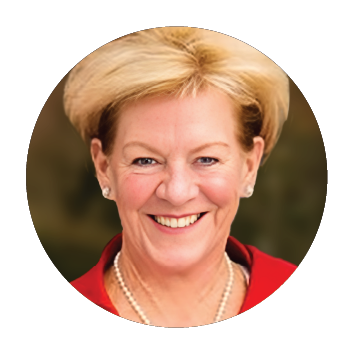
Katy Worrilow
Founder & Chief Scientific Officer, LifeAire SystemsSubscribe for More
Don’t miss future insights—subscribe to our blog and join us on LinkedIn: Stewart Gandolf and Healthcare Success.
Note: The following AI-generated transcript is provided as an additional resource for those who prefer not to listen to the podcast recording. It has been lightly edited and reviewed for readability and accuracy.
Read the Full Transcript
Stewart Gandolf (Healthcare Success): Hello, and welcome to the Healthcare Success Podcast. Today, I welcome Katy Worrilow. She is founder and chief scientific officer of LifeAire Systems. Welcome, Katy.
Katy Worrilow (LifeAire Systems): Thank you, Stewart. Looking forward to our discussions today.
Stewart Gandolf (Healthcare Success): Me too, for sure. So Katy, you can introduce yourself I think better than I can. I would love to hear just a little bit about your background before we jump straight into it.
Katy Worrilow (LifeAire Systems): No, of course. I'm trained as a reproductive physiologist and with honor to serve as a clinical provider for well over 20 years of in vitro fertilization. So really honored to participate in helping either individuals or couples fulfill their dreams of having a family.
And much of that work is what led to the topic of discussion for today.
Stewart Gandolf (Healthcare Success): So I'd love to talk about that. We were talking a little bit offline before, and you have an amazing technology, which I think is something that I thought would be perfect for our show today, to talk about impacting lives and sometimes... I guess, serendipity, things that change everything and unforeseen consequences in a good way, which is nice.
So I'd love to hear what was that aha moment that led you from being an IVF clinical provider to building an air purification technology company? That's a long step. It's a completely different place. Walk us through that transition from provider to entrepreneur.
Katy Worrilow (LifeAire Systems): It really occurred. It was completely unexpected, completely unplanned. But what drove it was, like most IVF programs globally, we would have undulations in our clinical pregnancy rates. And that's what we're all driven to deliver, the highest level of patient care possible or the highest clinical pregnancy rate possible for our patients.
And we had undulations, but they were more extreme than they should have been. And we had the same staff, same SOPs. We weren't doing anything differently. We were operating in a phenomenal space.
And it took us about 15 to 20 years, honestly, to understand that air quality was a variable that was directly impacting the level of success we could offer. And the aha moment, there is one in particular, I'll never forget it.
We were in the midst of a downturn. In other words, our pregnancy rates were typically, you know, well above 50%. And we were now running at like 8% or 13%. I mean, that's a significant drop. And I was leaving the hospital campus. It was about 6, 6:30 at night. I was leaving the hospital campus and I, they were, we were a level one trauma center. So they were resurfacing the medevac pad and I could see warm fumes coming up off the asphalt.
And I stopped and I asked the gentleman, I said, when did you start this process? How long is it going to take? And do you have an MSDS sheet? In other words, a composition sheet on this asphalt.
And he said, “Call my supervisor in the morning.” I did. I got the MSDS sheet. And one of the most common constituents in fresh asphalt is toluene. Now, that's very typical. That's very common. But toluene is highly cytotoxic, cell toxic.
So I then went back to our IVF laboratory and saw that we had parts per billion. Now, Stewart, if you can smell anything right now in your office, that's parts per million. So this was three logs less than that. We can't detect this. We had parts per billion levels of toluene in our IVF space where we were trying to culture the embryo for up to six days.
So that's a very daunting task, but that was the first aha moment. I had a source. It was on the other side of the campus from our IVF program, but I had a source and then I had a presence in our IVF laboratory. And so from that moment on, I looked back in time. And I looked at all of our dips in clinical pregnancy rates and looked what else was happening on the hospital campus, typical hospital activities, construction, road resurfacing, maybe a change in the Medevac traffic.
What activities happened on the hospital campus, completely out of our control, and then looked at low levels of air quality in our space because we were monitoring this, but we didn't realize parts per billion were so essential.
And there was a direct correlation with every single drop in our clinical pregnancy rate over an extensive period of time, eight to 10 years. And that was the aha moment. That's what led us to understand that low levels of air quality, in other words, your biologicals, which are your bacteria, viruses, fungi, as well as your chemical pathogens. Toluene is an example.
Your chemical path, just low levels can be impactful to first the human embryo, but now we've since learned to our health. That was really the aha moment.
Stewart Gandolf (Healthcare Success): So was that brand new? I mean, did anybody else know that it was how important air quality was? Was it generally accepted this was important for IVF? Or was it something that they just didn't understand the impact of it? Or was it something that nobody was even thinking about?
Katy Worrilow (LifeAire Systems): There were some earlier pioneers who had identified air quality as a variable that we needed to control. But I think dissecting out the levels of that was what was new and understanding actually y the low levels that could still be impactful, so that that's what this work was adding to that and clearly defining the air quality that was necessary to achieve.
Stewart Gandolf (Healthcare Success): Wow, that's amazing. So then that is an amazing step forward. Jumping forward—or let's talk about how to explain what nine-log reduction means and what does that matter compared to standard HEPA filters like explain maybe the technology a little bit more and that as well.
Katy Worrilow (LifeAire Systems): Well, nine log—we call it nine log kill, nine log remediation—that means for every one billion infectious pathogens going through any technology—in our case through our duct work in duct technology—only one is going to survive.
So you feed the technology one billion infectious pathogens, one survives. That's nine log, 10 to the nine. For reference, six log is typically referred to in healthcare as sterility. So this is three logs beyond that. So it's a very aggressive level of kill. And the reason we chose that, honestly, was because this all started to protect the human embryo. So it was a very selfish goal to protect the human embryo. Therefore, we set the design bar, the technology exceptionally high, which is why I wanted nine log kill.
So we actually chose the anthrax spore as our target to kill because it's extremely difficult to kill. And if you can provide a kill of the anthrax spore, you provide a nine log kill of all the other viruses and bacteria and fungi with which we are concerned, like C. diff, MRSA, staph, strep, COVID, influenza.
So we chose nine log to make sure that we were covering all infectious bacteria and viruses. And again, that was done because we began this journey with the sole intention to protect the human embryo.
And you asked how this differs from HEPA filtration.
HEPA is probably, I mean, was launched decades ago and has probably become kind of the gold standard in healthcare. We actually had ALPA filters in our IVF program, which is a step above HEPA. But most use HEPA filtration. HEPA is a capture model. So it's going to capture based upon the size of the pathogen, whether it be, you know, viral, bacterial, fungal.
It's going to capture those. It doesn't kill them. Our mission was to destroy the pathogens. Like I wanted, if there was anything still coming through the air filtration system, I wanted it to be completely non-infectious. So our issues with a capture model, whether it be HEPA or ALPA or a lower level, say a MERV filter, our clinical issues with that is that the pathogens were being captured right above the space we were trying to protect.
And some of those could actually continue to proliferate or grow right above our space and then produce, for example, I'll give you an example:fungal spores. They're large enough to be captured. But then they can produce fungal VOCs or fungal chemical pathogens, which can be equally as toxic to us and to our health.
So I didn't want anything. I didn't want a capture model. I wanted a kill model so that nothing infectious could come through that system. So I hope that explains the difference.
Stewart Gandolf (Healthcare Success): Yeah, no, it does for sure. So how long did it take you to come up with the technology to do this?
Katy Worrilow (LifeAire Systems): Years. It was not overnight.
Because I began with kind of the box of air. And through the 15 to 20 years of research, that taught us what air we needed to deliver to the human embryo. I then said, all right, this is what we need to deliver. Let's work backwards and make it happen.
And I want to set the anthrax spore as my target. I want below detection chemical pathogens. And Stewart, there are over 90,000 chemical pathogens. So that's a very high bar to set. I want this to happen on a single pass of air. So as a clinical provider, I didn't want my air to go through any technology 5, 10, 25 times to achieve something. I wanted whatever enters.Do… Does whatever enters it does not enter by clinical space. So single pass remediation and to do so without producing byproducts.
So there was a very significant list. So it took years to design the technology, which you asked me to describe it earlier. It basically replaces so many feet of your ductwork and it's downstream of your air handler.
So it's between your air handler and whatever clinical space is that you've chosen to protect.
Stewart Gandolf (Healthcare Success): So how does that scale? Is it on a room by room basis? Can it be for a wing of a hospital? Is that technology changing? How does that work?
Katy Worrilow (LifeAire Systems): It's all about cubic volume of air. So, you know, whether it's in an IVF laboratory or an OR or a NICU or an ICU or, you know, we're now placed in an international airport.
So it's all about cubic volume of air in that space. And then what we do is we model the size of the unit or perhaps, you know, the number of units to deliver that kill to deliver the metrics that we guarantee.
Stewart Gandolf (Healthcare Success): So with IVF is obviously been proven to be very, very critical.
What about other applications like a standard OR or other things that happen in hospitals?
Katy Worrilow (LifeAire Systems): Absolutely. We're now launched in multiple acute care spaces. ORs, NICU, ICU, med surge, cardiac care, OB, emergency medicine, children's emergency medicine. And with each installation, we learn the impact of the technology on their illness, infection rate, length of stay, ROI, you know, specific to that acute care space.
And the one thing that I personally enjoy is our database is evergreen. We are constantly getting data in from our installation base, whether it's IVF or acute care healthcare or senior living or the airport.
We're constantly getting their data in that we continue to analyze and then push the technology.
Stewart Gandolf (Healthcare Success): So, well, the applications, you mentioned it's in the ductwork. And so there's obviously a lot of latent systems everywhere. And I think we talked last time in the pre-call about senior living, how difficult it is there.
Give a sense of what kinds of applications are better for your technology, which are more challenging, and what does the future hold for this in terms of just installation and scaling?
I'm really curious about that because I'm assuming everybody wants this, it's just a good question of affording it and having it apply
Katy Worrilow (LifeAire Systems): Right, and there are some other—for I'd say probably half of our installation base, are what we refer to as retrofits, so they're existing spaces. Those are obvious they can certainly be done—like i said, it's half of our installation base, but they can be more challenging because you need to find the space and in your older buildings there may not be the space above the ceiling so all of our units are also manufactured to be an all-weather unit so whatever could have been just above the ceiling can also be placed on the roof.
So in challenging retrofit situations, we just recommend that they go to the roof. And there's typically plenty of real estate up there. New construction is probably the easiest. And we just get designed in. So what's important to us, whether it's an existing building or new, is that we work with and completely support the hospital engineers or the senior living facility engineers and architects. And we work with them until the unit is actually energized and then loaded with what makes it deliver.
We'll work with them hand in hand to support that process.
Stewart Gandolf (Healthcare Success): That's amazing. We talked a little about some of the pathogens that you can kill with this technology. What about emerging threats like novel viruses? And how do you predict for something that's not existing yet, for example?
Katy Worrilow (LifeAire Systems): That's a good question. Again, it goes back to the selfish design to protect the human embryo. So by choosing the anthrax spore, that remains one of the most difficult biologicals to kill. So because our system has been proven to kill the anthrax spore, novel viruses, other bacteria, fungi are easily killed by the system.
So, for example, we were asked, with the COVID pandemic, what is the kill of our system? Our existing customer base reached out to us and said, are we safe working in this space? You know, what's your kill of COVID? And it's actually a 145-log kill. It's exceptional. But it all begins with what was your starting point?
And because we started with anthrax. That's why, you know, the kill of novel viruses. I mean, the influenza virus mutated to a significant degree this year. So that's, you know, that is absolutely not an issue for this technology to completely destroy.
Stewart Gandolf (Healthcare Success): It's amazing. So the I'm curious, we talked about the amount of time, but how did you go from this idea to get funding, to get support, to get research? That's a long-term daunting journey, I'm assuming. How did that happen?
Katy Worrilow (LifeAire Systems): I view everything through, I guess, my own lens and, you know, how we judged new technologies before remotely considering to bring them in because it could impact our level of patient care. So I really look at things through my own lens: What data, what operational studies, what publications, what third-party testing? What would I need to see to remotely entertain bringing a new technology into our clinical space?
And honestly, Stewart, that's how we do everything today. Whether it's a new product, a new offering, we always lead with data. And you are correct. To conduct an accurate, IRB-approved, fully operational clinical study is daunting.
It takes years and it takes funding. And to me, you either do it right or you don't do it at all. And so after launching the company, our first raises, our first capital raises were specific to support these operational clinical studies. It was not to go commercial. It was to develop the data, whatever the study was going to say, develop the data, publish it in peer-reviewed journals. And lead with that.
So it is it is a long process. It has been very intentional. But in my mind, that's the right way to do it when you're when you're placing new technology in any aspect of healthcare or care of each of us.
Stewart Gandolf (Healthcare Success): Yeah, for sure. So let's talk about the business model since we talked about the expense and the time regarding this.
How do you price and deploy a system that achieves this kind of purification across lots of different environments, from IVF to airports? That's a pretty broad spectrum. How does that work?
Katy Worrilow (LifeAire Systems): It's really about which system is best for their needs. For example, an orthopedic OR may be concerned with both chemical pathogens from the SOPs that they're, the cauterizing and the tools that they're using. They may be as concerned with volatile organic compounds or chemical pathogens as they are biological. So they may need all five stages of our system.
A med surg unit may only be interested in the biological kill. So that's one section of our unit. So the price is really dictated not by the vertical or the application, whether it's an airport or a hospital, the pricing is dictated by which system they need and the size of the system they need.
So that's related to their space. And we also obviously meet all of the engineering requirements, if not exceed. So, you know, we're going to meet their air changes per hour, all the ASHRAE regulations, and that too. I mean, all of that rolls into which system is going to be best for their application. And that's really the only thing that dictates price.
Stewart Gandolf (Healthcare Success): Got it. And then in terms of the economics, like if you're looking at, obviously we want patients to get better. We want pregnancies to occur. But is there an ROI there, for example, length of stay or other metrics that can help to help justify the economic case to invest in this technology?
Katy Worrilow (LifeAire Systems): There is. First from the study, which is published. Well, there are several studies that are published. And then, as I mentioned earlier, from our ongoing database.
So we're realizing ROI specific to ORs and surgical site infections and the NICU and MedSurg. But from the studies, which did analyze cost, there was a 30.2% reduction in HAIs or healthcare-acquired infections on the floor that we protected versus HEPA protection.
And all of our studies are compared against HEPA protection or a high-level MIRV, you know, whatever the hospital deemed their gold standard. We didn't dictate that. Whatever they deemed their gold standard.
So with a 30.2% reduction in HAIs, that drove a statistically significant reduction in length of stay: 39.7 to be exact.
That also drove a reduction in readmission rates. Now, that length of stay for the hospital serving as the reference site drove a 23% cost savings per bed. So that was a significant profit, significant cost savings to them. And what we do is we share those numbers, you know, with the individuals with whom we're speaking and then work at specific to their application.
Stewart Gandolf (Healthcare Success): So is this now technology grown to the point where it's built into an entire hospital or a wing or how does that work? Like how do they prioritize and how does that work?
Katy Worrilow (LifeAire Systems): You really want to prioritize your acute care areas. You know, when you say it wouldn't be, I mean, you could certainly apply it to an entire space, but it's really more appropriate in your acute care spaces, your ICU, med surg, NICU, Ors versus hallways, community areas.
We are being built into a very large waiting room of an expanding emergency room, adult emergency room right now. Makes sense, given everyone coming together in that space. So that is definitely warranted. But most of our applications and installations are in selected acute care spaces, which I feel makes sense.
Stewart Gandolf (Healthcare Success): That does make sense. It's funny, though, you mentioned that. Every time I go into, I haven't been to an emergency room for a while, so that's good news. But even every time I go to an urgent care, I think, oh, it's COVID season and flu season and great. Everybody looks nice, but I'm not sure this is set safe, really.
Explain the market share, because this is really big now with IVF. And does it continue to grow? Give me a sense of your segments in the market share and what the opportunities are for you going forward.
Katy Worrilow (LifeAire Systems): Well, we obviously began in IVF, so our percent penetration is the greatest there. And our technology in one form or another is present in about 41% of IVF programs in the United States.
We’re very honored and very proud to be participating in their mechanism of patient care.
We do have a global presence. We have installations in Canada, Europe, China, I mean, throughout the world. And then with healthcare, again, we lead with data. So we would not launch until we had the peer-reviewed published data.
And so now we're just beginning that process in healthcare. But we're installed in multiple locations of acute care centers, spaces that I mentioned earlier, across multiple campuses, as well as in senior living and airports. And frankly, the airport application reached out to us because they saw the publication of healthcare. And their goal was to have, you know, kind of the gold standard being deemed, you know, healthcare-appropriate. They wanted that for their passengers and staff.
And as a result, actually, their staff callouts have dropped dramatically in their TSA agent area, that's the most infectious point where we all come together. So their TSA agent callout data has dropped significantly.
Stewart Gandolf (Healthcare Success): That's really intriguing. You mentioned senior living. Any specific comments on that? Because we work a lot in senior living as well as IVF. And I'm curious, on senior living, is it just the sickest patients? Again, you have scale, right? To do every room, I'm assuming, is pretty expensive. So do you identify hotspots or how does that work? And what is the opportunity there as senior living continues?
Katy Worrilow (LifeAire Systems): So in senior living, one of our systems, actually probably the middle-sized system, one of our systems was able to protect an entire floor. So it protected all of the resident rooms, the hallways, the common areas, the community spaces, the nursing stations. It protected an entire floor. So it wasn't that daunting.
As far as, you know, it wasn't one unit per resident room. It was one unit on the roof that protected the entire floor. And the decrease in illness and infection was 39%. And as well as there was a 47% reduction in staff callouts on that floor.
And that's significant because, you know, when you need to recover that the staff member that may have called out ill, you know, are you using a third party agency? Is there increased costs associated with that?
We learned from senior living from our colleagues in that field that personal care incidents can increase because, no fault of their own, but the clinicians brought in may not know the residents as well. So their personal care incidents can increase.
The other thing we've learned in senior living, yes, the impact has been dramatic in a very positive way, but not all senior living facilities have ductwork. So in those cases, we actually have a modular in-room unit now, fully designed, being tested. It's going through the 510(k) process with the FDA as a medical device.
And it's the same technology, just in a modular form, because we still wanted to help those residents and the staff. But if there's no ductwork present, how did we do that? So that's when the modular unit was designed.
Stewart Gandolf (Healthcare Success): That's amazing. So going forward, I'm assuming this is very well known in IVF circles, you're very popular at ASRM and all the other places that this would be taking place. How do you feel like the awareness is at the hospital level where there's always a million different competing priorities, or the airports, of course, is, I guess, pioneer space, but especially senior living in hospitals. Is that a big part of the marketing and the awareness efforts going forward?
Katy Worrilow (LifeAire Systems): It is now. It is now. Now that we have the peer review publications, multiple. And we have a healthy installation base. That's exactly where we are now.
Just first of all, I mean, if you'd asked me 10 years ago, did I have this fascination with air? I would have looked at you in an odd way. But I do. And it's a labor of love because of the learned impact it has on your patients, whether it be the human embryo, you know, up to the elderly and senior living.
And so right now, our mission is to is to continue awareness, continue education. We have active research ongoing with Duke and Lehigh University's fascinating research dissecting—we know it's harmful. We know what happens when you remove the airborne pathogens, chemical or biological. But what is their mechanism? How are they acting that way on us?
And so we're doing that level of research now. And we've been invited as thought leaders and asked to provide testimony at national and state level hearings, which is fascinating just to hear what everyone else is thinking and what we've learned from our clinical studies.
Stewart Gandolf (Healthcare Success): Fantastic. Any other questions or any other comments before we wrap up today?
Katy Worrilow (LifeAire Systems): No. I mean, I've enjoyed our discussions. What began as the identification of a significant issue in human reproduction in in vitro fertilization has really offered a paradigm shift in the significance of our environment, whether it be home, hospital, you know, senior living, airports, transportation, where we work in the office space, just the significance of our environment, in particular, the clinical environment on health and wellness. So we continue to push forward on that.
Stewart Gandolf (Healthcare Success): Fantastic. Katy, I appreciate your time today. That was fascinating. It was really a fun interview with you.
I'm always fascinated with insights, number one, and then just sort of happy accidents—in this case, such a big change in healthcare from the observation, I think, is amazing. Congratulations to your journey. You didn't just have an idea, you followed through and impacted health of many, many lives, so i appreciate your time today.